 Annie Tipple
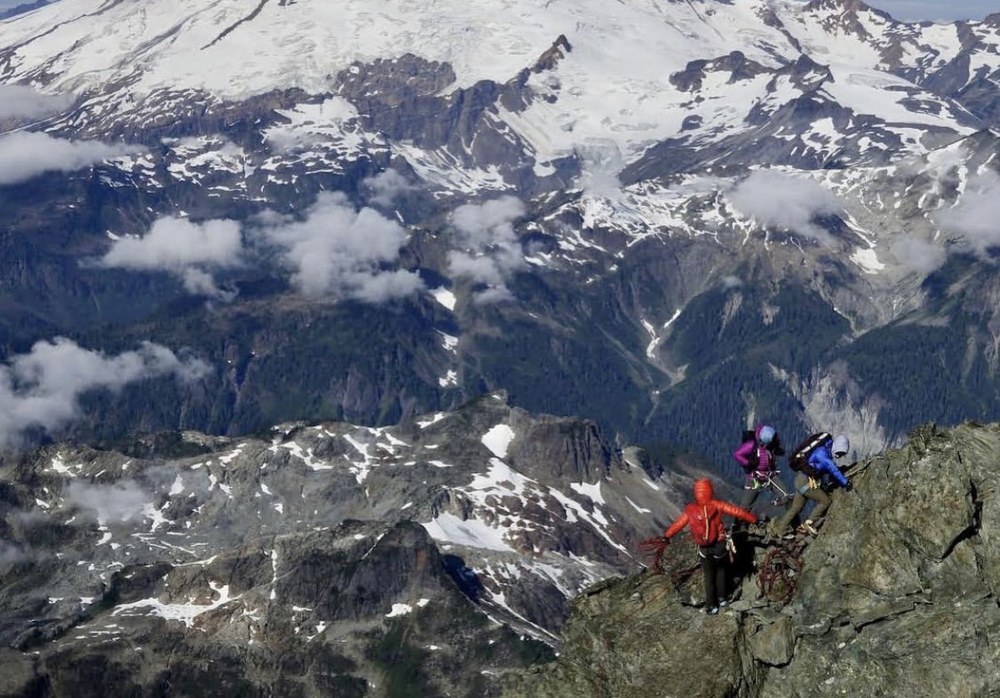
At The Mountaineers, we view every incident report — not just as paperwork, but as an opportunity to learn, grow, and make our community safer. Whether it’s a serious injury, a close call, or even just a nagging “that could’ve gone badly” moment, your report plays a vital role in improving safety practices for everyone.
What happens when you submit an incident report?
This blog explains:
- When to file an incident report
- What kind of information to include
- What happens after you hit “submit”
- Why sharing your lessons learned matters
How to Report an Incident
It’s easy to file a report. Just follow the step-by-step guide here: How to File an Incident Report
This guide walks you through the process based on whether you're a participant or a leader, and whether the incident happened during an activity, an event, or a lodge stay.
Please note: behavior-related complaints are handled by Mountaineers staff and have a separate reporting process. See this blog post for details on submitting a Behavior Complaint Form and the report-handling process.
When Should You Report?
Always report if:
- Someone required emergency medical care
- You had to call 911
- There was significant distress, injury, or property damage
But also consider reporting when:
- A fall or mishap resulted in minor scrapes, even if no one needed evacuation
- The group had to stop and use a first aid kit
- There was a near miss (a moment when things almost went seriously wrong)
- You notice a safety concern that could lead to future issues
If it gives you pause, it’s probably worth reporting. These moments can hold key insights.
What Counts as an Incident, Near Miss, or Safety Concern?
- Incident: An event that causes injury, property damage, or distress
- Near Miss: A close call where serious harm was narrowly avoided (e.g. nearby rockfall, avalanche on a neighboring slope, unplanned bivy)
- Safety Concern: A hazard or condition that didn’t lead to harm this time, but could in the future
In addition to the three categories, the Incident Report form provides six Incident Types to help further categorize the severity of the incident:
- Major: Emergency medical attention or a call to any search and rescue organization or 911 where emergency personnel responded to the incident.
- Significant: Non-emergency medical attention or a call to any search and rescue organization or 911 where the dispatch was canceled.
- Minor: An unexpected incident which could be a minor injury not requiring medical attention, equipment failure, or a lost party.
- Near Miss: A situation where you escaped catastrophic harm. This may be rockfall within two body lengths, an avalanche on an adjacent slope, an unplanned bivy, or any close call that seriously threatened you.
- Safety Concern: A potential problem that could cause an incident in the future.
- Assistance Provided: The incident occurred to another group, and your party gave assistance.
What to Include in Your Report
The basics go a long way:
- Who was involved?
- What happened?
- When and where did it occur?
- How did it unfold?
- What were the contributing factors?
Please note that this information should be objective and should omit personally identifiable information, whenever possible (e.g. changing ‘Joe Climber scraped his knee and Jane Hiker provided first-aid’ to ‘Participant A scraped their knee and Participant B provided first-aid’).
And just as important: take a moment to reflect. Use the “Lessons Learned” section to share what went well, what could have gone better, and what advice you’d offer someone in a similar situation.
Your insights help everyone.
Why Incident Reports Matter
Each report contributes to a culture of shared learning and continuous improvement.
Incident reports help us:
- Identify patterns and improve risk mitigation
- Update course content and safety protocols
- Highlight potential hazards to future groups
- Break the stigma around reporting accidents or mistakes
Most importantly, incident reports help others make better decisions and avoid repeating the same mistakes.
The more reports we receive, the better we all get.
What Happens After You Submit?
You will receive an email with the details of your submission and the form is saved on The Mountaineers website.
Your report is shared with:
- Becca Polglase (Director of Programs and Operations) and Tom Vogl (CEO)
- The Mountaineers Safety Chair and Branch Safety Officers
- Branch Chairs
- The chair (or co-chairs) of the committee that sponsored the activity and related activity safety representative.
Your name is included as the submitter and your submitter information is tied to your Mountaineers login. If you’re concerned about confidentiality, you can describe the incident in an email to the Safety Committee Chair directly at safety@mountaineers.org.
What happens next:
- A member of the Safety Committee (usually your Branch Safety Officer or Activity Safety Rep) will follow up and may ask follow-up questions
- Reports are categorized and analyzed quarterly and at year-end
- An annual summary is published each spring with anonymized data, patterns, and recommendations
You can view these annual reports and more on our Safety home page.
Who Reviews the Reports?
The Mountaineers Safety Committee includes experienced leaders from across our branches and activity types.
This team:
- Reviews incident data to identify trends
- Shares findings with the community
- Recommends updates to practices and curricula
- Helps ensure our programs align with current safety standards
Let’s Keep Learning Together
Accidents and close calls happen, even in well-prepared, experienced groups. By sharing your experience, you're helping the next group be better informed, better prepared, and safer.
Your report might be the reason someone avoids the same mistake. It might be the spark for a meaningful conversation. It might just save a life.
So if something gave you pause — whether it ended in injury, a close call, or a lesson learned — please take a few minutes to file an incident report.
Because every report is an opportunity to learn. Together.
Additional Information and Resources
Blog Post: How to File an Incident Report
To guide participants and leaders in filing Incident Reports that support safety improvements across Mountaineers activities, events, and lodge stays.
Blog Post: How-To: Behavior Complaint Form
At The Mountaineers, we strive to create policies and learning environments that foster experiences where all participants feel belonging. We have comprehensive policies so that everyone understands our expectations for how we should treat one another and for how we handle complaints of inappropriate behavior via our Prohibited Behavior Policy, starting with filing a Behavior Complaint.
Blog Post: Emergency Contacts: The Most Important People
Learn about what it means to be an Emergency Contact, how to designate one for yourself, and how to make sure these important people are accessible on your most important devices.
Webpage: The Mountaineers Emergency Line
The Mountaineers provides around-the-clock support to members and volunteers out on Mountaineers trips. Learn about our emergency contact procedures, which includes an emergency call line.
Add a comment
Log in to add comments.
Love this blog. so helpful and informative. Thank you Annie and the team members who helped to review!
