 Jessica Hirst
Winter darkness lies thickly outside my bedroom window as the world rests in a deep and quiet stillness. My body nestles deeper into the flannel comforter, creating a barrier against the air’s chill, when a rude chirp sounds from my cell phone alarm. I reach out one arm to hit snooze, then slip back into a dream. My phone chirps a second time. By the third, I know I have to toss aside my warm cocoon of blankets and step onto the cold, wood floor.
An hour and a half later, I’m standing at a muddy, blustery trailhead with a heavy pack and talking about wind and snow conditions with my scrambling group as we prepare to ascend Silver Peak near Snoqualmie Pass. The tops of the surrounding fir trees blow back and forth against a slate grey sky as an icy blast of drizzle hits my cheek. Shivering, I pull the hood of my puffy coat up tighter and think about all the sane people back in the city who are cradling warm mugs of coffee from the couch while calmly watching raindrops splatter against their windows.
As a hiker, scrambler, backpacker, and cyclist, I sometimes wonder why I consciously choose to engage in activities that involve a high degree of discomfort. Sure, part of the reason is to experience expansive views of fall foliage that can only be seen from the top of a mountain, or silent, snowy, untrammeled slopes glinting in the low sunlight of winter. But do I also find value in the experience of discomfort itself?
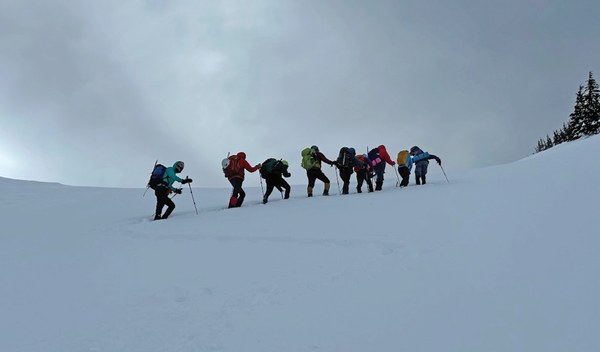 Getting blasted by snow while approaching a ridgeline on Silver Peak.
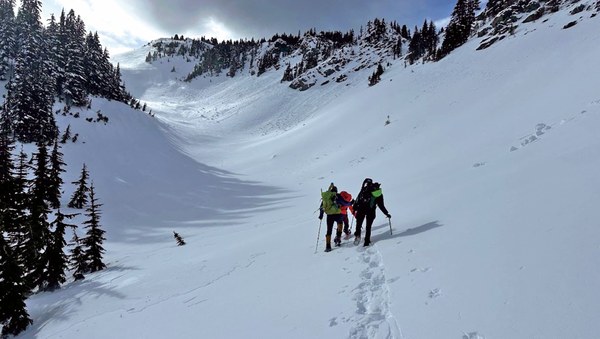 Making steady progress against the wind on Silver Peak.
Choosing discomfort, reluctantly
I’m not exactly someone who takes easily to discomfort. I often think that if I could choose, I would spend most of my life on the couch eating cheese and watching funny videos. I’m cautious by nature — my palms sweat and my stomach churns when driving through rush hour traffic, let alone when navigating a rocky ridgeline or an icy summit push. I’ve always wanted to be a fearless free spirit who’s up for anything at a moment’s notice, but in reality, I’m more of a hermit with an adventurous streak — one that I’ve had to work hard to nurture over the years. (Maybe that makes me a Hobbit?)
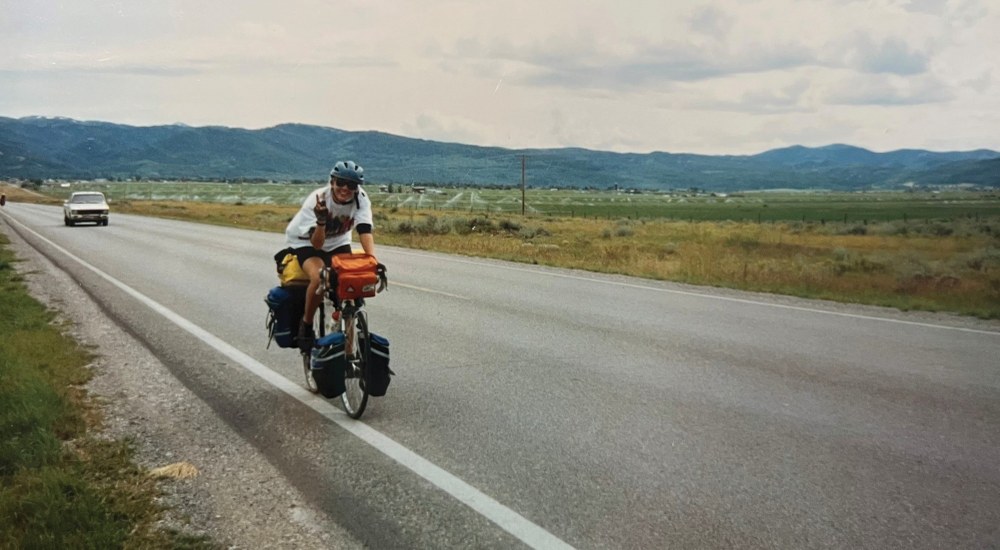
Despite my inclination for comfort, the summer after high school I chose to ride my bicycle across the U.S. with a student tour group. The experience involved many long, exhausting days climbing and descending steep hills, riding across barren plains into never-ending head winds, and getting soaked by monsoon rains after sleeping at soggy campsites. It wasn’t always — or even often — fun in the moment. On the first night of the trip, I cried in my tent and doubted whether I’d made the right decision.
For the first month, I was the slowest rider in the group. I held my own, and eventually got faster, but it didn’t come easily. By the second month, when my muscles were stronger and my tan lines were stranger, I knew I was doing the right thing. Eventually, the Rocky Mountains emerged out of the flat Colorado plains, glowing huge and white against a blue sky. Working for that sight over so many miles made the moment feel powerful and ethereal in a way it wouldn’t have from a car. When the trip finally ended and we dipped our bike tires in the Oregon ocean, I’d never felt happier.
These days, I still find myself dipping into discomfort: scrambling (or sliding on my butt) down steep, muddy, overgrown slopes using veggie belays, despite my fear of heights; standing on top of frigid, windy ridgelines while soaked in sweat from the climb and quickly pulling on layers; or spending yet another gloomy Saturday enduring a conditioning hike up Mt. Si as I question my decision, switchback after switchback. But when I emerge from the forest streaked with dirt and scratched by tree branches, I feel like I did something.
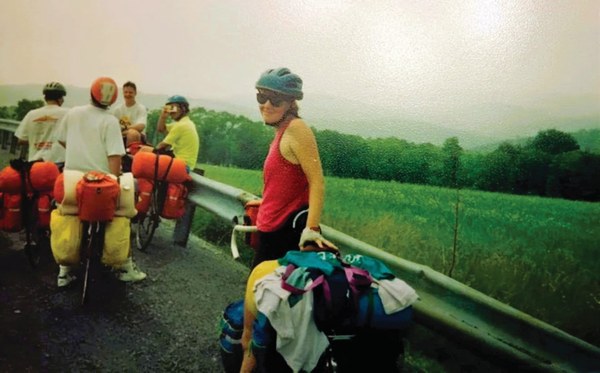 Taking a break before riding toward a giant rain cloud.
Discomfort as growth
Why does it feel satisfying to push through something physically demanding? And why do those experiences feel so difficult (both physically and mentally) in the moment and in the days leading up? (Anytime I have a challenging adventure on the horizon, I tend to dread it long beforehand.)
As someone who seeks out comfort and safety, I’ve wondered whether I’m just trying to prove something to myself, which might be true, but I think my adventure-seeking involves something more. In Buddhism, attachment to comfort — like attachment to anything — is seen as a source of suffering (dukkha). According to the Four Noble Truths (Buddha’s teachings on the nature of suffering and the path to liberation), suffering arises from craving (tanha), which includes the desire for pleasure, ease, and security. While comfort itself isn't considered inherently bad, clinging to it or avoiding discomfort at all costs can lead to a cycle of dissatisfaction and a fear of change.
When thinking about resisting discomfort, my cross-country bike trip comes back to mind. One early morning, we woke up somewhere in the middle of Kansas to rainwater streaming into the bottoms of our tents. An all-night downpour had created a mini river through camp. As the water soaked through our sleeping bags, we hastily changed into bike shorts, stuffed everything into our panniers, and dismantled our tents. By the time we finished, the rain hadn’t stopped, and we were all soaking wet.
Rain pounded my shoulders and water rolled down my back as we huddled around the map to assess our route. We had no choice but to squint through raindrops and ride – soaked to the bone – to our next destination. As mud splattered my legs, I felt myself tense up as though the rain was something to just get through until we could finally — maybe — find a dry place to stop. But then I realized that tensing up wasn’t helping. I could either resist what was happening, or I could accept it, and for some reason that realization made me laugh. Suddenly, the rain seemed almost funny, along with the crazy idea to ride across the country.
In that moment, I let go of my desire for things to be a certain way. I accepted them as they were, which made the day a lot better, even though the rain never stopped.
It would have been nice if after that moment I never resisted discomfort again and lived happily ever after, but of course that’s not how it worked. After that trip, I flaunted my strange tan lines proudly for a while, walking around like a mismatched tiger and feeling like I had in fact proved something to myself. But eventually the tan lines from my gloves, helmet straps, and socks faded. What remained was a small but important inflation in my capacity for discomfort.
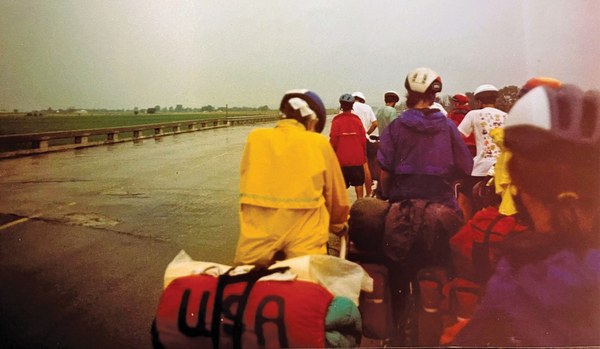 Beneath an all-day downpour in Kansas, with our rain jackets sticking to our bare arms.
When is discomfort too much?
We’ve all heard the warrior mantras: Suck it up, buttercup. What doesn’t kill you makes you stronger. If you are going through hell, keep going. Is it true that suffering in itself builds character?
A few summers ago, while on a group hike up Sourdough Mountain in the North Cascades, I felt more tired than usual. I was recovering from an ear infection, but since I was on the mend, I hoped I would perk up with a little fresh air.
But Sourdough Mountain is unrelenting. The terrain is steep and long, and my group was moving at a fast pace. I was training for a bigger trip later in the season and stubbornly wanted to keep up, so I pushed myself harder than my body wanted to go. By the time we summitted, I was nauseous. I collapsed on a rock and tried not to puke. Descending, I had to keep my eyes locked on the trail or the nausea would get worse.
Did that extra element of pain help build my character? I suppose it’s good to know that in situations where I need to push myself hard, I can, but I likely could have met my training goals just fine without pushing the pace so much. I was glad to have finished the hike, but I probably could have done myself a favor and gone at a slower pace, even if it meant not meeting my pacing goals, staying with the group, or trying to prove myself.
Experiences like these have helped me realize that there’s a difference between productive discomfort and unnecessary misery. A life that’s too easy and comfortable can feel boring and stifling. We need to be able to tolerate discomfort to have interesting experiences. But in the outdoors, it can be tempting to get attached to the suffering itself, as though the suffering is what’s most meaningful.
Discomfort is a part of life, and the more we can embrace it without glorifying it, the happier we’ll be.
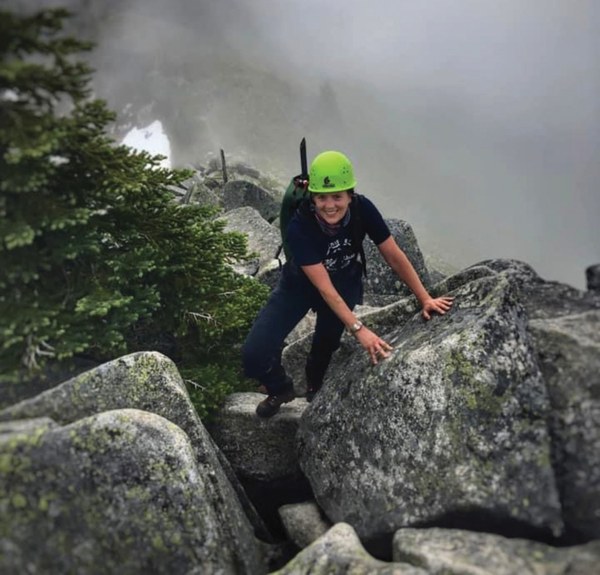 Finding balance on Granite Mountain.
Why I keep choosing discomfort
Back on that blustery Silver Peak scramble, my mind complains loudly – as usual – for the first hour or so about not being home in bed. But then, I get into a rhythm of bootsteps and breath and feel my muscles come to life. We crest treeline and are met with whipping winds and an enormous concave bowl arcing toward a higher ridgeline. Snow blows in wispy gusts as I focus on moving forward, feeling tiny next to the surrounding slopes.
A few of us voice avalanche concerns, and our group stops to assess, eventually determining that the snowpack is stable. Though my legs feel shaky from nerves, I feel confident in my group’s assessment and climb higher, while leaning into the wind and fighting deep snow for every foothold until we make it to the top of the ridgeline. Behind me, the clouds lift to reveal the Cascades, gleaming as if scrubbed clean.
As I approach the trailhead later with tired muscles, I feel accomplished and happy. The discomfort was worth it for the chance to feel what my body can do, experience the wild expanse of the backcountry, enjoy the company of others, and carve out a little more tolerance for cold, fatigue, apprehension, and life’s inevitable tribulations. Naturally, I am even happier that evening back on the couch with a hot bowl of soup. But as a Hobbit, that’s just how I roll.
This article originally appeared in our fall 2025 issue of Mountaineer magazine. To view the original article in magazine form and read more stories from our publication, visit our magazine archive.
