 Danielle Graham
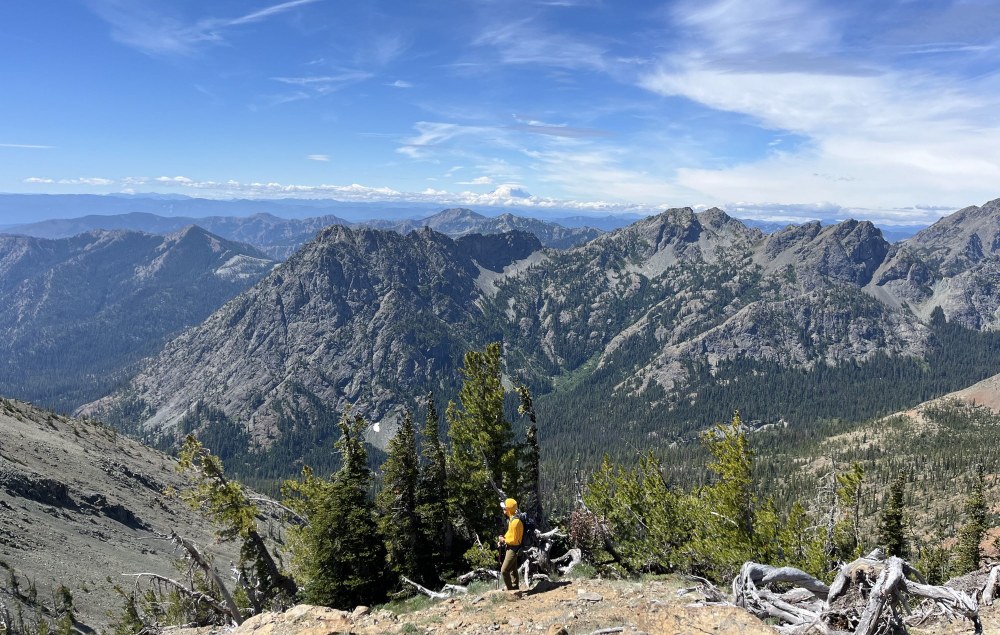
The Roadless Rule is a key conservation safeguard that protects two million acres of national forests in Washington - and more than 58 million acres nationally - from logging and development. Unfortunately, the current administration is planning to undermine Roadless protections by repealing the Roadless Rule.
While Roadless Areas don’t have signage like Wilderness Areas do, they provide many of the same recreational resources and opportunities found in Wilderness. We’re talking about 8,743 climbing routes and bouldering problems, 782 miles of whitewater paddling runs, 26,647 miles of trail, and 19,596 miles of mountain biking. Many of the Roadless Areas that protect these thousands of recreational opportunities can be found in Washington across the state’s five national forests: Olympic, Mt. Baker-Snoqualmie, Gifford Pinchot, Okanagan-Wenatchee, and Colville.
In addition to supporting our outdoor adventures, these areas provide significant ecological benefits, including habitat for resident and migrating wildlife. Learn more about Roadless Areas at risk in this map from our friends at Outdoor Alliance.
As I toggled through Outdoor Alliance’s map, it brought back many memories of my early years in The Mountaineers in Roadless Areas. Included in these ecologically and recreationally important places was my first Naturalist trip to the Teanaway, where I observed the lushness and diversity of species along Bean Creek. I returned to the area the following year to summit Bean Peak as part of my Experience Field Trip for my Mountaineers Scrambling course.
I completed my first alpine rock climb on Kangaroo Peak (along Highway 20) the next year. An early Mountaineers hike in the Olympics was to Mt. Townsend, where I saw rhododendrons in the wild for the first time. These memories continue to the present: I paddled my first Class III whitewater in Washington on the Sauk River this spring on a Mountaineers packrafting trip.
Popular Backcountry Destinations Brought to You by The Roadless Rule
Much of the Teanaway region of the Okanagan-Wenatchee National Forest is currently protected by the Roadless Rule. Mountaineers favor this area for scrambling peaks like Bean, Not-Hinkhouse, and the Three Brothers; hiking through wildflowers and larches in Esmeralda Basin, skiing from the summit of Earl Peak, and backpacking in the Stafford Creek and Navaho Pass areas.
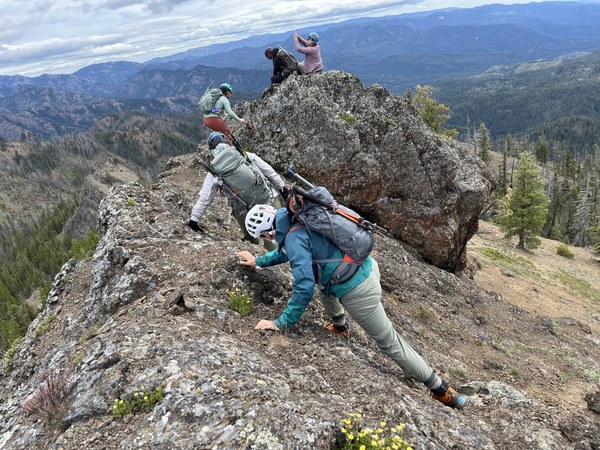 Mountaineers scrambling in a Roadless Area in the Teanaway.
East of the Teanaway, across Highway 97, you’ll find Mountaineers hiking, snowshoeing, bikepacking, botanizing, and backcountry skiing in Roadless Areas like Diamond Head, Tronsen Ridge, and Haney Meadows.
Much of the land along Highway 20, part of the Okanagan-Wenatchee National Forest east of North Cascades National Park, makes up one of the largest Roadless Areas in the state. Washington Pass, 30 miles west of Winthrop on Highway 20, is incredibly popular among hikers, climbers, and backcountry skiers. Climbing and skiing destinations in the area include the Liberty Bell group, Early Winters Spires, Kangaroo Temple, and Cutthroat Peak.
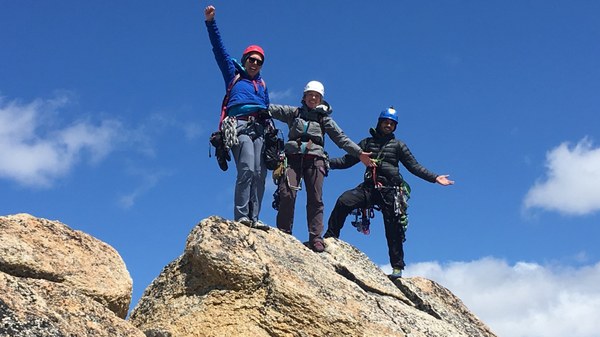 Mountaineers on the summit of Kangaroo Temple.
One of Washington's most awe-inspiring hikes, the Maple Pass Loop, can be found in the Roadless Area along Highway 20. The Birthday Tour, one of Washington’s most popular backcountry ski trips, also starts off Highway 20 at the Blue Lake Trailhead.
Sauk Mountain and Dickerman Mountain, well-loved hiking trails in the Mountain Loop region, are located in a Roadless Area in the Mt. Baker-Snoqualmie National Forest. The headwaters of the Sauk and Skagit Rivers are also found here and surrounded by Roadless Areas. According to American Whitewater, part of our coalition with Outdoor Alliance, the section of the Sauk between Bedal Campground and White Chuck River is "one of the most scenic trips through the Mt. Baker-Snoqualmie National Forest, flowing through majestic riparian forests in a beautiful river valley - it stands out as a true gem of the Wild and Scenic River system."
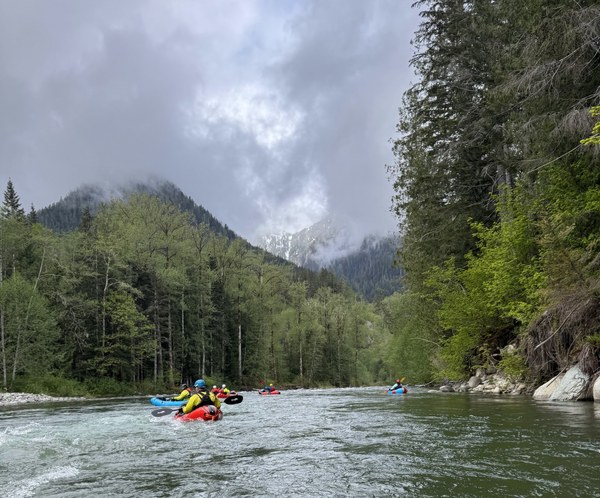
Mountaineers paddle on the Sauk, a Wild and Scenic River.
The Gifford Pinchot National Forest is home to world class aquatic canyons. Some of these, like Dark Creek and Prairie Creek, would be threatened with the loss of Roadless protections.
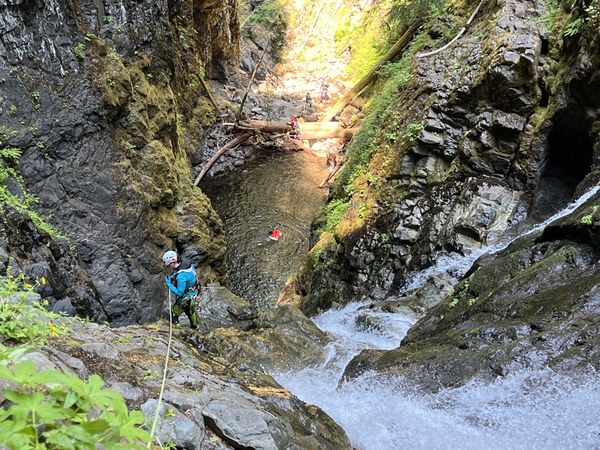
A Mountaineer rappels down Dark Creek’s beautiful basalt.
Areas in Olympic National Forest would also be compromised, including Mt. Townsend, a well-loved peak, known for its rhododendron show in the late spring, wildflowers in the summer, and berries in the fall. Mountaineers head to this area, in the rain shadow of the Olympics, to hike, backpack, and scramble.
Get Ready to Speak Up for Roadless
Your strong connection to Washington's national forests and the backcountry recreation experiences they provide translate to compelling advocacy for Roadless protections, so it’s important that we continue to speak up and oppose the administration’s attempt to rescind the Roadless Rule.
We’re hearing that an agency planning process to roll back the Rule could begin as early as this fall. Mountaineers staff will soon be sharing the opportunity to support backcountry recreation through the upcoming public comment period. I’ll hope you’ll join in participating in this process and sharing about the importance of Roadless protections to Mountaineers adventures.
Add a comment
Log in to add comments.
Thank you for putting this together and for the Mountaineers taking on this important conservation issue. Roadless areas are critical biologically, too. They often protect habitats at lower elevations that are wilderness and, therefore, are critical in conserving biodiversity.
