 Maryanna Brown
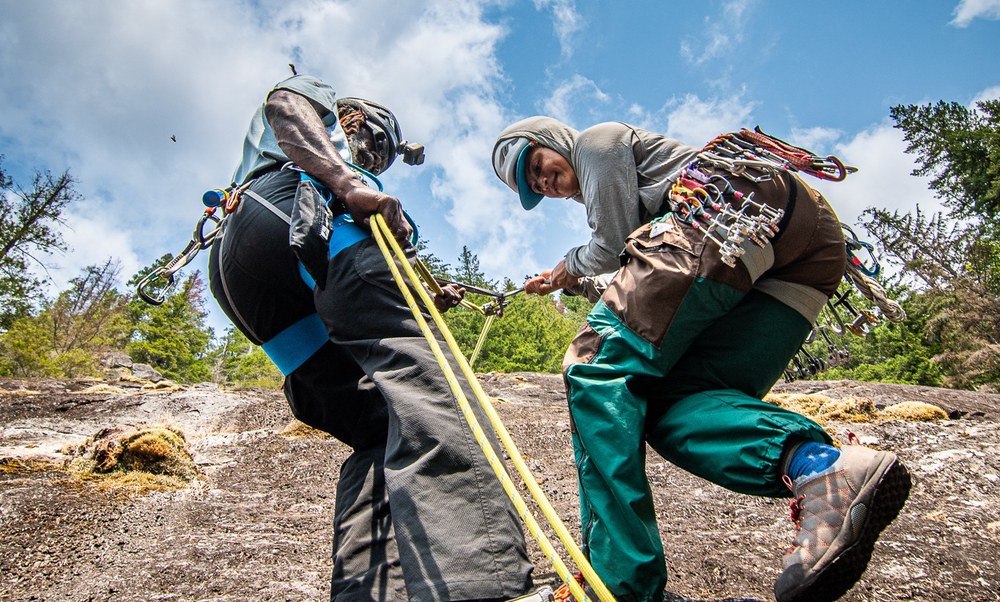
As a kid, I never questioned my place in the outdoors. I grew up in the small town of Palmer, Alaska, running cross country, Nordic skiing, and snowshoe racing outside with my brothers. I didn’t yet realize how rare it was to be a young woman of color recreating in those spaces, because for me, it was all I had ever known.
That changed when I moved to the Lower 48 and eventually settled in Seattle after college. I began learning how to mountaineer and, as a consummate people-pleaser, I desperately wanted to fit in. Having grown up in Alaska in a largely white community, I was well versed in code-switching (adjusting how I spoke and presented myself to match the company I was in in order to belong). I learned the lingo, bought the right clothes, even tried a brief and ill-fated stint of van life. I was able to blend in culturally, even if I stood out visually.
I got into mountaineering and alpine climbing after moving to Seattle, and eventually joined The Mountaineers in 2013 to refine my outdoor skills, especially wilderness navigation (after getting lost one too many times on approaches to climbs). From those humble beginnings, I am now one of the few women of color in a leadership role at a major mountaineering guiding company - not just in Washington, but anywhere. I started a program for aspiring mountain guides of color in 2023 that provides free training, mentorship, and support for required certifications.
While the ease with which I adapt to unfamiliar environments makes me an unlikely person to extol the power of affinity spaces in the outdoors, I have experienced the power of affinity spaces as a volunteer and an affinity program administrator.
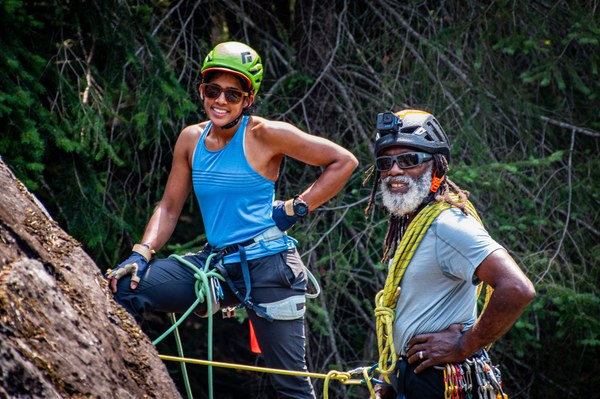 Philip Henderson and Rosie Melookaran at a technical rope systems training. Photo by Bryce Hill.
The impact of affinity
As an administrator for Alpine Ascent’s Black Indigenous People Of Color (BIPOC) Guide Development Program, I’ve seen firsthand how transformative affinity spaces can be. On our inaugural Kulshan (Mount Baker) affinity climb this year, one participant reflected:
“There’s something about going after a big objective with a team — there are usually nerves, pressure, and excitement. And often, I’m the only minority in the group. I’ve become so used to this that I hardly notice anymore. But with the affinity climb, I realized the guard I subconsciously put up in the backcountry never came out. I was just being myself — fully, holistically — and felt relaxed and happy among people who had been strangers just hours before.”
What struck me about the participant’s words was how often people of color are expected to represent an entire group, while others are free to just be themselves. I thought of this again while reading the story of the first all-female ascent of Denali. The women hesitated to publicize their climb because they feared failure would be seen as proof that women couldn’t succeed in high mountains — a judgment placed on all women climbers, not just them. The pressure to represent more than yourself is a heavy burden to carry, even if it’s just in your head.
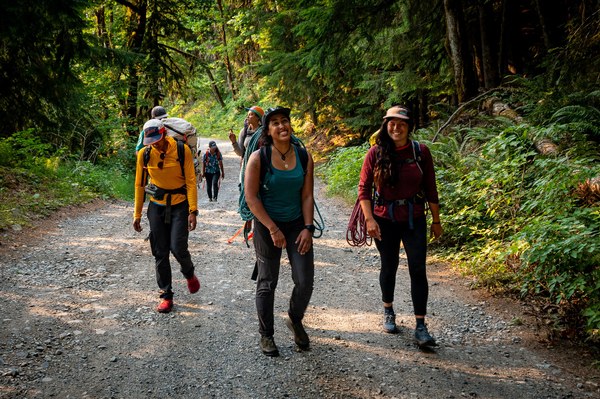 Walking back to the cars after a successful training session. Photo by Bryce Hill.
A different kind of space
When I step into affinity spaces, even briefly, the feeling I notice most is ease. There’s an instant sense of understanding, of shared experience, to build upon. I’ve seen close friendships form in these spaces — bonds rooted not only in climbing but in identity and belonging.
A former participant once explained “talent capture”: when someone with unique strengths sheds those qualities to conform to the dominant culture. I see this often in guiding, where everyone slowly begins to sound and act the same. In an affinity space, that dynamic shifts. There is no dominant culture pressing people into uniformity. Instead, people show up as their full selves, and the group is richer for it.
Another participant, Esteban Usuga, put the impact of affinity spaces this way:
“One of the most meaningful parts of the experience was being in a space with peers who looked like me and shared similar experiences. The BIPOC focus of the program created a sense of belonging and acceptance that’s rare in the outdoor industry. I felt comfortable being myself, knowing my identity was understood and valued.”
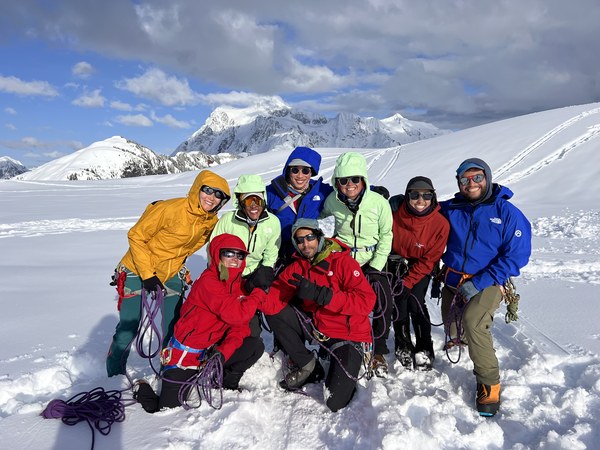 The first 2023 BIPOC Guide Development Program cohort at Heather Meadows after their first glacier training. Photo by Mary Brown.
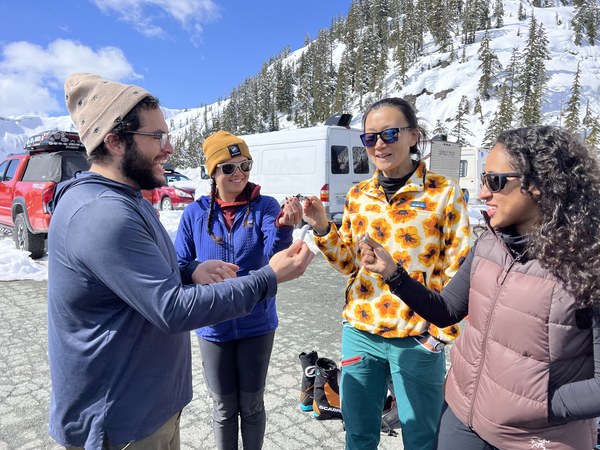 Choosing tent partners using small sea creature toys. Photo by Mary Brown.
Why it matters
There’s an African proverb that says: If you want to go fast, go alone. If you want to go far, go together.
I often wonder how my trajectory in the outdoors might have been different if I had access to an affinity-based community when I was younger. What would it have been like to step into the mountains with peers who looked like me, who shared similar experiences? Instead of contorting myself to fit in, would I have felt free to define my own relationship to the outdoors?
I’ll never know. But what I do know is the importance of affinity spaces today. I’ve seen the joy, ease, and confidence they create. I’ve seen the friendships and skills that emerge. I’ve seen participants walk away not just as stronger climbers, but as people more grounded in their own identities.
And that’s what motivates me to keep doing this work. Because when people are given the space to belong, they don’t only stay in the mountains, they bring their own unique brilliance to them.
This article originally appeared in our 2026: Issue 1 of Mountaineer magazine. To view the original article in magazine form and read more stories from our publication, visit our magazine archive.
