 Courtenay Schurman
In October 2024, my outdoor world shifted. My faithful canine companion injured his paw, and a hiking partner shared she’d be moving out of state, which left me scrambling to find new trail friends. Rather than retreat, I completed the necessary requirements to lead hikes for The Mountaineers and joined stewardship work parties with the Washington Trails Association (WTA). I had no idea that both paths would challenge me, teach me, and expand my relationship with the outdoors in unexpected ways.
The moment I became a steward
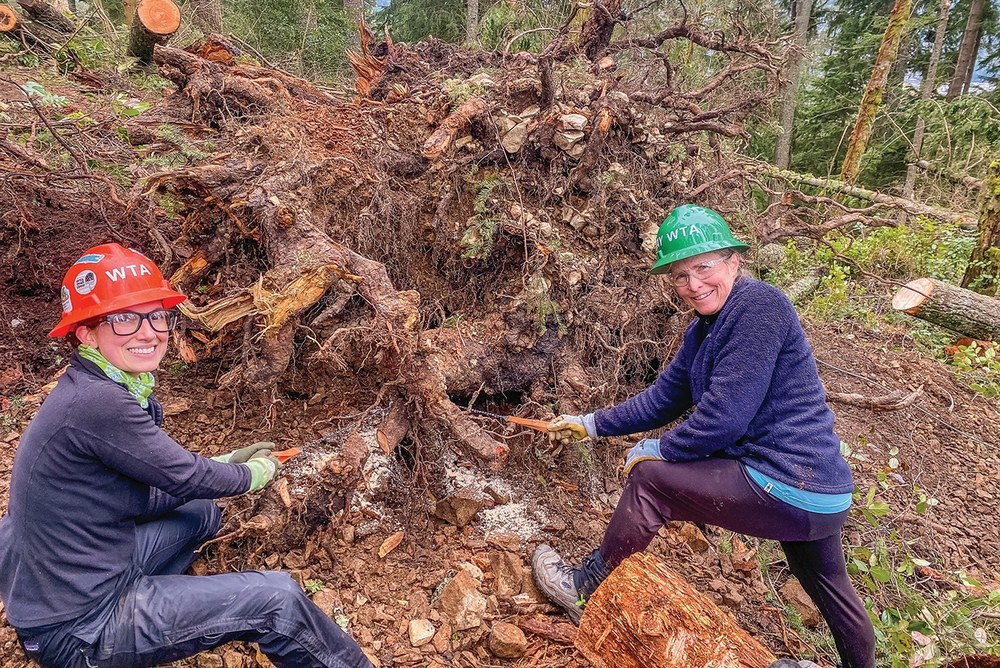
I still remember the thrill of my fifth WTA work party in early 2025 when I earned my Green Hat. The task? Removing a massive, seven-foot-tall root ball off the Eastside Trail on Squak Mountain. With careful coordination, my trail crew spent several hours sawing the rotting tree in half, cutting back its roots, and securing it with a winch. After lunch, we watched with satisfaction as the wire went taut and the root ball tumbled, end over end, down the slope.
Timber!
The moment was exhilarating — not just because of the sheer power of human effort, but because I had played a role in restoring a storm-damaged trail that people hadn’t been able to enjoy since November. As though signaling the importance of our work, three bald eagles circled overhead while woodpeckers foraged nearby. Varied thrushes and robins made an appearance, indicating the approach of spring. Our hard work on this trail, as well as the restoration of other trails on Squak damaged by the storms, would soon be enjoyed by emerging hikers. I felt a sense of pride knowing I was a part of making that enjoyment possible.
During this trip, I realized that trails, like people, need care. And that care doesn’t just happen — it takes hands-on work from people who love these places.
Stewardship has given me an entirely new appreciation for the places I hike and changed the way I move through the natural world. I no longer just walk on a trail — I see the human labor that keeps it open, the drainage that prevents erosion, and the efforts of countless volunteers who came before me. Now, I am not just a trail user, but a caretaker. Whether removing trash, restoring paths, or teaching others Leave No Trace principles, I take care of the mountains and trails anyway I can.
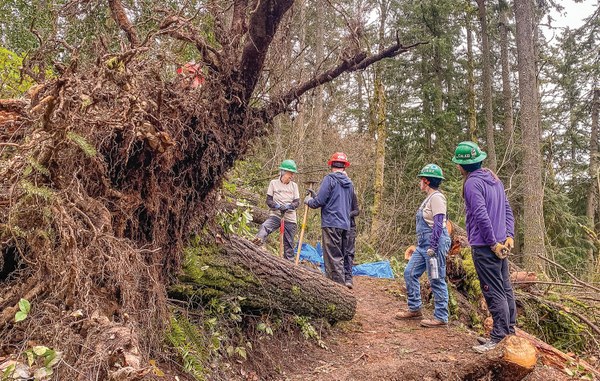
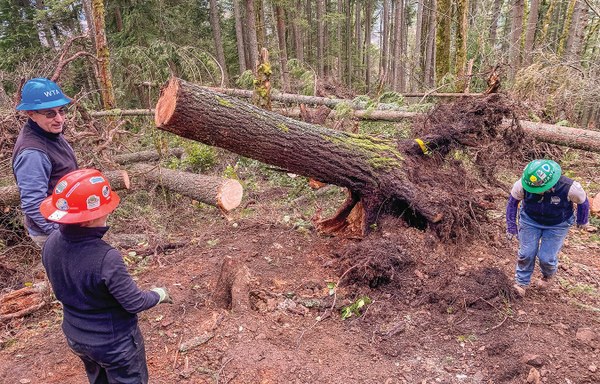 A Washington Trails Association work party on Squak Mountain's Eastside Trail. Duties included removing five large root balls of trees downed during the November windstorms and regrading the remaining trail.
From steward to confident leader
As trail work gave me a new lens on the land, leading hikes gave me a new perspective on people. My first mentored hike in November was a test of patience, persistence, and adaptability. A bomb cyclone had just ripped through the region, leaving downed trees, floods, and power outages in its wake. Twelve people had been on the waitlist for this hike; however, on the day of the trip, we were five strong.
I felt the weight of responsibility – not just for leading a hike, but for ensuring these hikers had a safe, enjoyable experience in unpredictable conditions. I had led climbs and family activities with my husband for The Mountaineers in years past, but this was my first time leading an outing in over a decade. Leading on my own felt like a giant leap of faith.
I remember the overpowering sense of elation when completing that mentored hike – the gratitude I felt toward the hikers who showed up and helped me succeed, the love I felt for the mountains that have captivated me for more than 30 years. Fast forward to today, and my confidence has grown tenfold. My workflow is smoother, my preparation streamlined, and my focus broader. Now, I lead hikes for all experience levels, including helping with the Conditioning Hiking Series, leading birding trips for naturalists, and mentoring new hikers on Mountaineers outings.
As a leader, I bring my stewardship ethic with me. I care for trip participants as I would a beloved trail, paving the way toward a safe and joy-filled recreation practice while paying attention to areas that may need extra encouragement and attention. More than just getting people outside, I see leadership opportunities as a way to steward community by helping people feel more comfortable, confident, and inspired to appreciate and protect the natural world with like-minded recreationists. Like a pebble cast into a lake, I hope to generate a ripple that encourages recreationists to care for the natural world and each other, while teaching others to do the same.
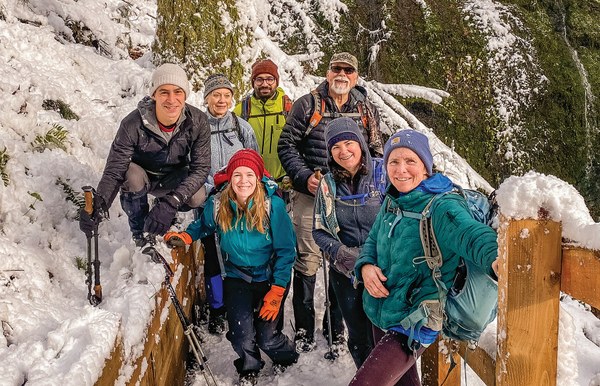 A Mountaineers group at Doughty Falls on Cougar Mountain’s Whittaker Wilderness Loop.
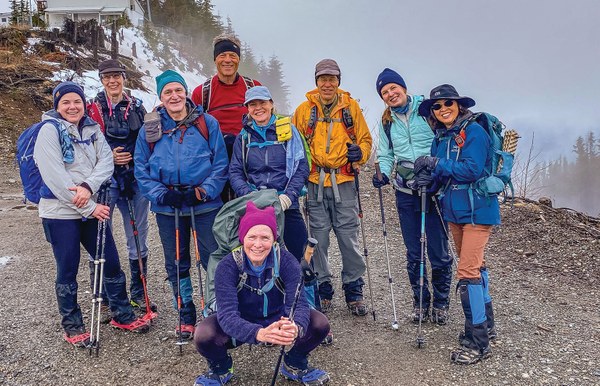 Smiling at the summit of West Tiger 1.
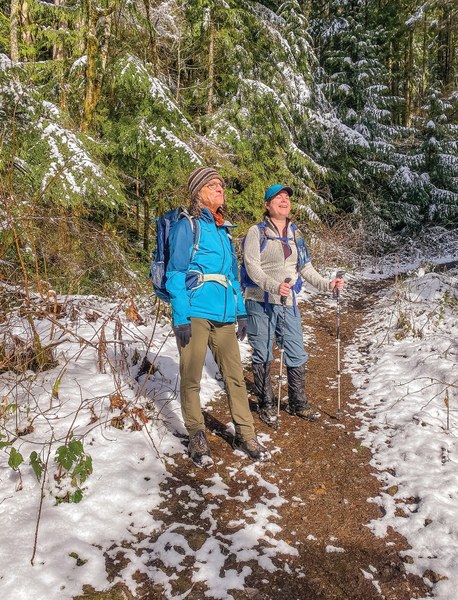 Two partners on an early spring birding hike to Teneriffe Falls.
The challenges that strengthened me
Giving back isn’t always easy.
I see my role as cultivating safe outdoorspeople, and often this involves meeting new hikers where they are — physically and mentally. Some hikers come underprepared, uncertain, or nervous, and navigating these learning curves may be challenging at times. But if other leaders and I can create welcoming and patient spaces that gently guide participants toward informed choices, we make the trails a safer place for everyone. And hopefully in turn, these hikers will share what they’ve learned with others.
Being a hike leader also surfaced my personal areas of growth; digital navigation remains my Achilles' heel. But leading hikes has given me the chance to practice and improve. I still prefer physical maps and reading the landscape over relying on technology, and I will never ditch the “old school” way (it has never let me down like tech has), but at least I am 100% confident that if tech fails me, I won’t fail with it.
In addition to navigation responsibilities, being a leader requires adapting quickly to shifting conditions, logistical challenges, and difficult weather in the off-season (inclement weather resulted in multiple failed attempts to complete my first official Mountaineers hike). I used to be a fair-weather hiker, but this year, I embraced the rain, snow, fog, and cold. My new favorite? Hiking in the snow.
I recently led an early spring trip to Talapus and Olallie Lakes where we had the snow-covered mountain to ourselves. For some participants, this trip was a new foray into winter’s backcountry. Others were surprised at the faint blue of the melting ice on Talapus Lake. These remarks reminded me that the challenge of weather is worth the delight of exploring our favorite places during the off-season. Plus, it’s always a joy to see the familiar through new eyes, allowing me the chance to appreciate Mother Nature all over again.
Growth, I’ve realized, happens when we push beyond our comfort zones. Every challenge offers an opportunity to strengthen our adaptability, resilience, and openness to learn. Instead of retreating into the solace and security of my home, I now yearn for the mountains, which always gift a new experience, a new lesson, or a new favorite place to appreciate.
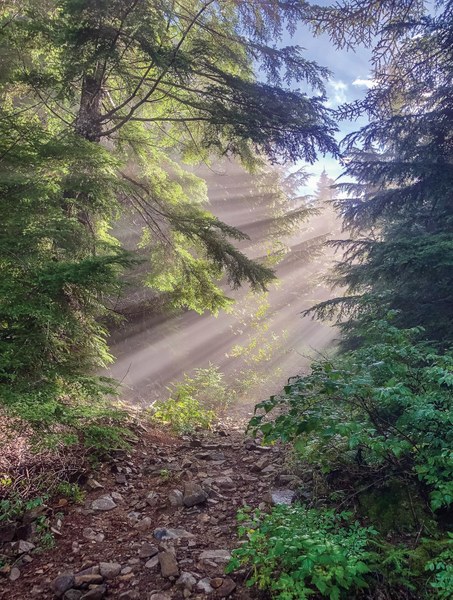 Sunbeams through fog on Mt. Teneriffe.
Lessons from the trails
Stewardship isn’t about expertise – it’s about showing up. Defined as the responsible management, care, and protection of something with inherent value, you can be a steward in multiple ways. Whether it’s leading hikes, restoring trails, or educating and empowering others, every effort matters. If you're unsure where to start, here’s what I’ve learned:
Anyone can be a steward. One of the most surprising aspects of stewardship has been the people I’ve met. The outdoor community is filled with individuals from all walks of life — teachers, engineers, artists, retirees, students — and all levels of experience — from seasoned stewards and experienced adventurers to new hikers and first-time volunteers — who are brought together by a shared love of nature, each contributing in their own way. Giving back has deepened my appreciation not just for trails, but for all the unique people who travel them.
Contribute by leaning into what you love. If you enjoy hands-on work, try a trail work party. If you love sharing knowledge, consider helping with a field trip, leading a hike, or teaching a skill. If you have a knack for numbers, get involved on a committee as a treasurer. And if you’re an introvert who loves words, consider writing trip reports or articles for The Mountaineers blog or magazine.
Stewardship is a great way to learn. Giving back is a two-way street: while I teach, guide, and share my decades of experience, I also learn — from the naturalist who points out mosses, the naturopath who discusses Ayurvedic medicine, or the novice hiker who reminds me what it’s like to raise a precocious two-year-old. I signed up to give back because I wanted to meet people, but in the process, I gained new skills in leadership, trail maintenance, and group dynamics. Volunteering is as much about personal growth as it is about giving back. Identify where you want to develop more skills, then volunteer to acquire those skills.
Even small actions make a difference. Whether it's picking up trash, offering a word of encouragement to a participant, or teaching Leave No Trace principles to new hikers, stewardship inspires me to feel more responsible for the natural places where I recreate. My mindset has changed from "someone should do something about that" to "I can do something about that and teach others how to do the same."
You can start anywhere. If you’re worried about looking silly, appearing uninformed, or making a mistake, know this: mistakes are the best way to learn. I used to fear making mistakes – what did I know about toppling trees or setting up winches? I soon learned that The Mountaineers and WTA activities have numerous qualified and patient leaders eager to teach you everything. It’s perfectly fine to be a complete novice. Put on your beginner’s-mindset hat and have some fun!
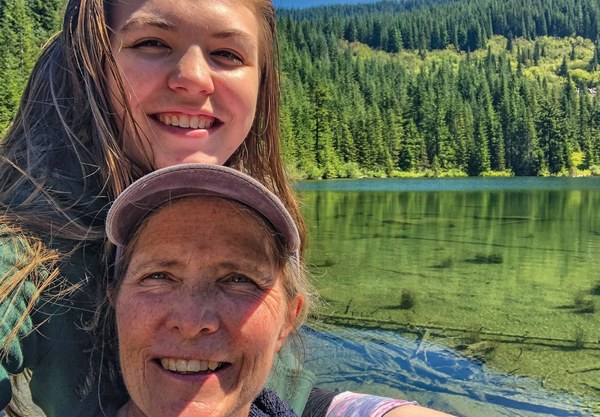 Courtenay and her daughter smiling at Granite Lakes.
A new sense of purpose
Six months ago, I took a step into the world of stewardship and leadership. Now, I can’t imagine my outdoor life without it. Beyond leading hikes and work parties, I’m looking ahead by helping expand educational programs for hikers, backpackers, and shoulder-season adventurers. The more I give, the more I want to contribute. The more I teach, the more I learn.
Stewardship extends beyond the trails, to my environment, family, clients, and community. In late March, my daughter and I visited my parents in North Carolina who were still recovering from the aftermath of Hurricane Helene. We spent a week helping in whatever way we could.
Giving back has made me a better hiker, a better leader, and a more engaged member of my family and my community. If there’s one thing I’ve learned, it’s that stewardship isn’t just about maintaining trails or guiding people – it’s about becoming part of something bigger. And once you step into that role, the possibilities are endless.
This article originally appeared in our summer 2025 issue of Mountaineer magazine. To view the original article in magazine form and read more stories from our publication, visit our magazine archive.
