 Leif Whittaker
Two days after The Mountaineers asked me to write a column on injury recovery, I suffered a stress fracture in my left foot. Although it was the most ironic injury of my life, it wasn’t the first. My medical history reads like a book: back surgery, nerve damage, chainsaw lacerations, a total hip replacement, frostbite, chronic knee effusion, and more. As a coach, I’ve guided athletes back from broken bones, tendon and ligament tears, high-altitude pulmonary edema, severe Covid, and countless niggling aches and pains.
For outdoor enthusiasts, injury is a matter of when, not if, so effective recovery strategies are essential to long-term success. My stress fracture was a chance to retest what I’ve learned about healing and returning to activity.
Patience beats toughness
Toughness is indispensable in the mountains, but it can sabotage recovery. The most common mistake I see is returning to training too soon. Your body is already working overtime to heal, and extra training stress can worsen the injury and impede the healing process. Pain and fatigue also erode workout quality. In most cases, taking a brief break after an injury prevents a much longer one later. Healing is always at the top of the hierarchy.
For many athletes, pain is easier to accept than rest (some of us are hard-wired to blow past stop signs). I suspected something was wrong with my foot after a casual run, yet I did intervals the next day anyway. I’d been running consistently for six months, my metrics were rising, and the workout was on my calendar. I wanted to keep my momentum, and I feared losing fitness. Even when it was clear I was injured, I kept walking without a protective boot and did strength work that required flexing my injured foot. Dumb, I know. But I’ve seen athletes of all abilities make the same mistakes.
Zooming out your perspective can calm the guilt and anxiety that comes from missed workouts. Use a one-month recovery timeline as an example: would you rather stop training for two weeks, let your body heal, and enjoy quality sessions in the final two weeks, or train poorly for a month and risk a chronic problem? Each injury or illness has its own timeline, but the same approach applies. Patience usually wins.
 Backpacking in the Cascades. Photo by Cheryl Talbert.
Modify exercise while maintaining routine
In the fitness world, routine reigns supreme. Our bodies respond best to a consistent stimulus. Showing up almost every day beats occasional perfect workouts. When an injury limits your options, maintain the routine while protecting the injured area. Shift to pain-free activities that still serve your health and performance goals.
Before the fracture, I ran, hiked, and cycled four or five days a week and lifted twice. My weekly training volume was seven or eight hours. With those primary activities off-limits, I strapped on a walking boot and moved into the weight room. I used the time I usually spent on trails and roads to build upper-body and core strength. I still trained five or six days a week, and although my total volume was cut in half, the routine stayed intact. My aerobic fitness fell off a cliff, but strength gains eased my frustration.
Modifying exercise works for the athletes I coach as well. A runner with a swollen knee swapped running mileage for low-resistance cycling, keeping his metabolic engine humming. A climber with a torn pulley dialed up mobility, hiking fitness, and body-weight strength while wearing a finger brace. When impact is off the table, gentle stretching, breathwork, restorative yoga, or physical-therapy exercises can fill lost training hours. Whatever your specific case, a stable routine makes it easier to return to the sports you love once you’re healthy.
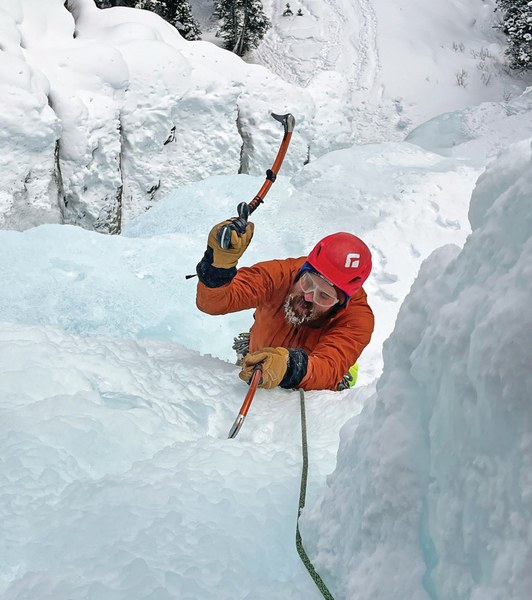 Ice climbing in Canmore. Photo courtesy of Alpine Ambassadors.
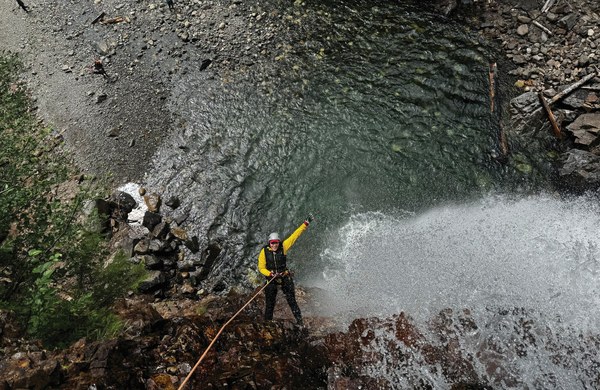 Rappelling down a waterfall. Photo courtesy of the Canyoning Committee.
Pain is actionable data
Keeping a record of your body’s response to different stimuli helps you find the sweet spot between enough and too much. Monitor pain, swelling, and range of motion during workouts and at set points each day. Use repeatable gauges - such as rating pain on a 0-10 scale or measuring girth at a swollen joint - to keep your data comparable. Review your records weekly and flag any downward trends that indicate you’re pushing too hard. Minor pain is often unavoidable, but increasing pain or swelling means you’ve exceeded your tolerance and need to back off. Zero pain, decreased swelling, and an increased range of motion signal readiness for more stress. Keep resetting that line as you heal until you reach the ultimate goal of pain-free movement.
Injury is an opportunity to rebalance and reassess
Being told to look on the bright side is the last thing an injured athlete wants to hear. Frustration, grief, and even depression are normal. Sit with those feelings first; then, once the sting subsides, start hunting for silver linings.
Overuse injuries like my stress fracture often stem from muscular or functional imbalances. Because of nerve damage in my lower right leg, the left absorbed more impact with every stride. The fracture was a cue to give the weaker side overdue attention. I designed unilateral strength sessions that targeted every muscle in my right leg from the ground up. Wearing the boot protected the fracture while I exhausted the opposite side - maintaining routine and addressing imbalance all at once.
Recovery is also a chance to audit your training. Was the culprit excessive volume, sudden intensity, poor equipment, or sloppy form? What can you adjust to avoid a repeat? I realized I needed new running shoes, a slower build into speed work, and more soft-tissue care like foam rolling and massage. Sometimes bad luck is the only explanation, but honest analysis still gives you agency.
Attitude makes all the difference
You may have noticed most of my advice centers on mindset. A doctor or physical therapist can prescribe protocols, but your attitude toward your body shapes the entire process. As hard as it is during a setback, try to appreciate the miles and memories your body has already carried you through. Yes, it has limitations and occasionally rebels, but it’s also an extraordinary vessel - one that will lead you to many more summits if you treat it with love and respect.
This article originally appeared in our fall 2025 issue of Mountaineer magazine. To view the original article in magazine form and read more stories from our publication, visit our magazine archive.
