 Victoria Garvin
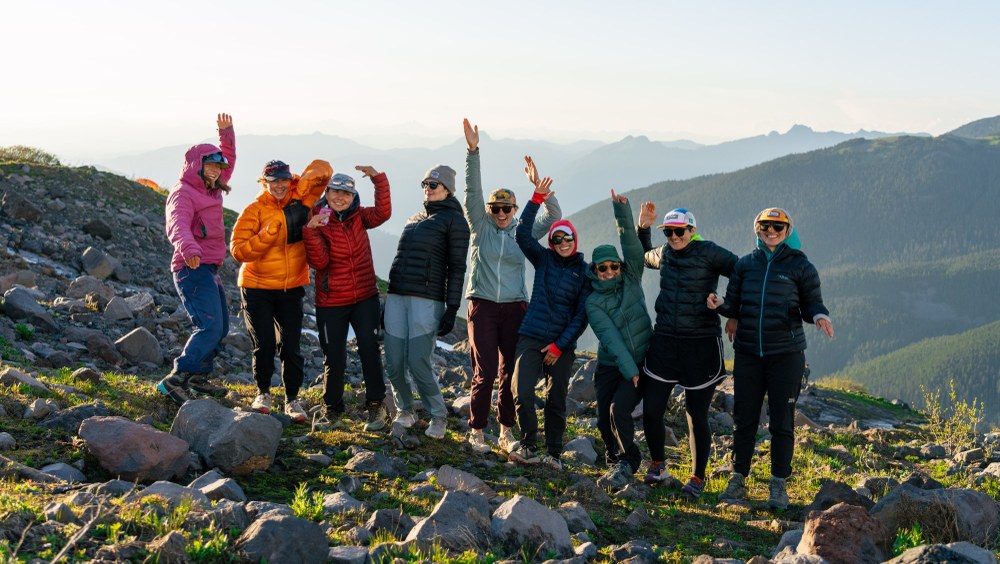
My journey in guiding began in spaces that weren’t designed for people like me. At my first mountaineering job, I was the first woman they’d ever employed. I had to navigate subtle dismissals and over-explanations while being passed up for growth opportunities and bearing the expectation of representing all women.
Over time I noticed my experiences were far different from that of my male counterparts. I had to spend a lot of energy proving my worth, standing my ground, fighting unfair biases, and ensuring I didn't make mistakes that would draw more attention. In hopes of blending in as “one of the boys,” I learned it was easier to deny and resent the qualities that make me unique. This work was exhausting, and I slowly built defenses that would later take years to dismantle.
But the truth is, the mountains don’t demand that you prove your self-worth or build walls to defend your vulnerability. Instead, they require a humbling of self, an opening of mind, and a softening of heart. If we want a more resilient outdoor community, we need to create spaces where individuals feel welcome to show up as they are, let their guard down, make mistakes, and learn.
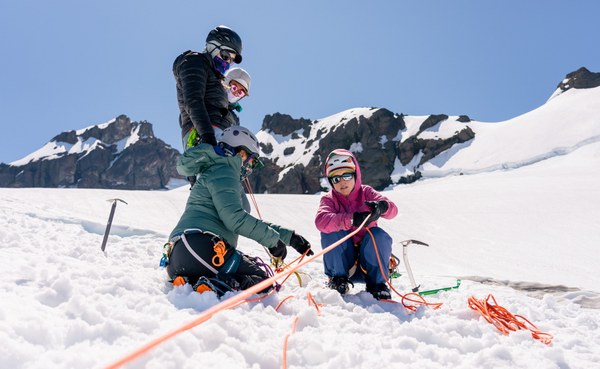 Upward Transition Institute participants practicing crevasse rescue on Mount Baker. Photo by Whitney Whitehouse.
Empowered learning through affinity spaces
The day I met my first woman mentor, my world flipped. For the first time in my career, I felt seen, understood, accepted, and supported for who I was in the industry. Inspired by that experience, I created an informal network of femme mountain partners and eventually founded my own guiding company: Upward Transitions Institute. Over several years of running women+ mountaineering programs (open to women, nonbinary, and trans individuals), I’ve learned that affinity spaces are critical for removing unnecessary barriers to accessing the outdoors.
Affinity spaces are groups and gatherings intentionally organized to serve a specific marginalized community. These designated groups invite individuals to take part in a culture where they are surrounded by others with similar identities and lived experiences, and feel safe to show up as their authentic selves. Instead of putting energy toward “fitting in” or building safeguards and defenses, individuals can focus on what really matters: learning, growing, building connections, and making decisions without the burden of comparison, stereotype threat, or subtle (and sometimes not so subtle) exclusion.
In a sport traditionally centered around heroism and conquest, my trips take a different approach: we still wake up early, climb steep slopes, and practice crevasse rescue until our hands are numb, but we also make space for asking open questions, admitting fears, and laughing when things don’t go as planned. We talk about how to manage menstrual blood in the mountains, how different anatomies support different styles of movement, and other topics not traditionally taught in outdoor spaces. We encourage participants to practice vulnerability, respect the land, and support one another in a way that transcends mountain sports.
Besides, in the mountains, a good trip is rarely defined by reaching the top of a peak. Rather, success is measured by the feeling we are left with at the end of the day. Were you accepted and empowered in your group? Was your voice heard and respected? Did you feel a sense of belonging?
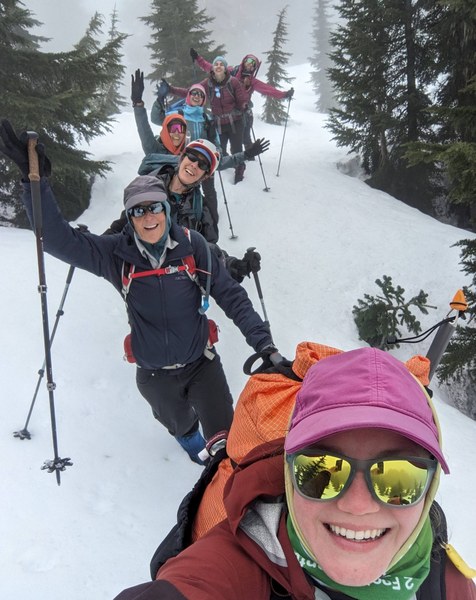 Women's Alpine Scrambling participants scrambling Cowboy Mountain. Photo by Camilla Schulte.
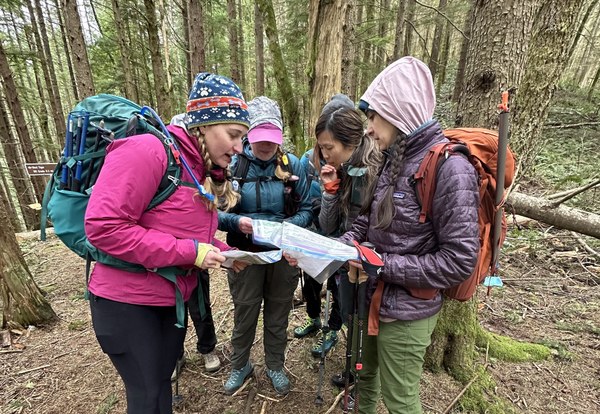 Women's Alpine Scrambling participants discussing navigation at Tiger Mountain. Photo by Glory Dole.
The Mountaineers Seattle Women’s Alpine Scrambling Affinity Pod
Another example of an empowering affinity space is the Seattle Branch Women’s Alpine Scrambling course. Held in the spring of 2025, this course offered Seattle Scrambling’s first-ever women’s affinity group, created to provide an intentional learning space where participants could grow their skills in a supportive and collaborative environment. As the course leaders put it, the goal of the pod was to provide a community where students didn’t just succeed, they stayed.
Participants were attracted to the affinity-based community because, in their words: “We didn’t want to prove ourselves — we wanted space to grow. We didn’t want to be sized up – we wanted to be welcomed in.” And when those conditions were met, everything changed. After completing the course, participants reflected: “We pushed harder because we felt safe to fail. We learned more because we trusted each other.”
Creating an environment where participants feel safe to show up fully and without judgement cultivates a deep sense of belonging and thus an investment in one another’s safety and well-being. “We wanted one another to succeed,” participants shared. “This pod has sparked something bigger than just helping us feel like we belong in the mountains – it makes us want to help others feel that way, too.” That shift — from competition to collaboration, from surviving to thriving, from individual betterment to group growth — is the heart of why affinity spaces matter.
One of the most powerful aspects of affinity spaces is that they bring people into a space they normally would not enter. Participants in the Women’s Affinity Pod noted that other scramblers, even those not enrolled in the course, were drawn to the program. Some members who have never scrambled before shared with leaders and course participants that they would try scrambling if they could join a women’s group. This is a clear sign that affinity spaces are not just for retention; they bring people in.
In a letter to Mountaineers staff outlining the impact of the Women’s Affinity Pod, participants stated beautifully, “Because we knew each other, we could actually say: take your time, I’ve got you.” That is the essence of trust and connection. When you have trust, it’s easier to have the mental capacity to take on more challenges. You can try the harder route, speak up when something feels off, or step into a leadership role for the first time. This is how future leaders are made.
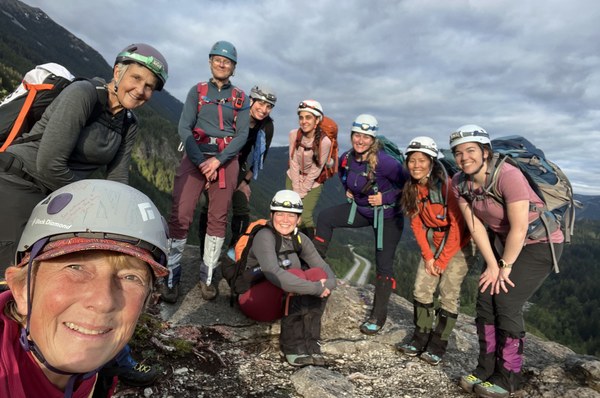 Women's Alpine Scrambling participants enjoying sunset on Dirty Harry's Balcony. Photo by Nina Crampton.
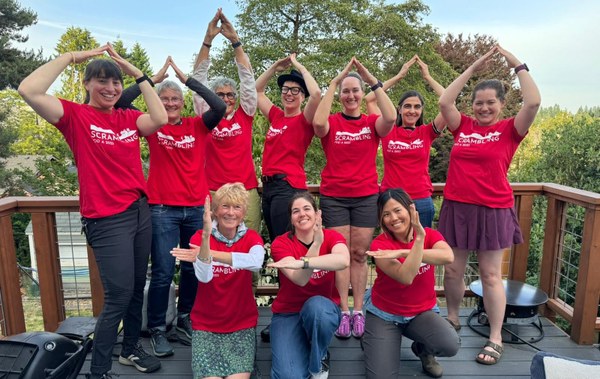 Women's Alpine Scrambling participants celebrating course
graduation. Photo courtesy of Jilian Ryan.
Support that transcends mountains
When I think about the future of mountaineering, I imagine basecamps where everyone arrives knowing they belong. I imagine rope teams that reflect the diversity of the world below the treeline. I imagine a culture where excellence is measured by the number of people we bring along with us.
I've seen so many individuals in my programs show up to the first day of the course nervous, unsure if they can keep up or if they belong. When they leave, they're confident, equipped with the skills to lead mountain activities, and empowered to try new things. I've witnessed strangers become dedicated scrambling partners. I've heard women say, “I never thought I could do this,” and then watched them do it anyway.
If an organization wants more confident participants, more leaders, and more diversity in the outdoors, affinity spaces are one of the most effective ways to get there. As the Women’s Scrambling Pod shared, “All the values The Mountaineers stands for — mentorship, growth, and community — are alive and thriving here.” This is not about segregation; it’s about seeding leadership and giving people the foundation they need to participate fully in mixed-gender groups. Without that foundation, too many talented, motivated people walk away from a sport before they’ve had a chance to grow.
From my experience leading women+ courses through Upward Transitions Institute, and from the feedback of the Women's Scrambling Pod, one thing is clear: when we create intentional spaces for marginalized genders, we don’t just change the experience for those participants, we change the future of the sport. Affinity spaces are not the whole answer, but they’re a powerful starting point. They give people the mentorship, confidence, and momentum to stay in the sport and lead others into it. Ultimately, students learn not only to summit mountains but to lift others up along the way.
If you are a climber or scrambler interested in joining a women's affinity group, the Seattle Winter Mountaineering & Crevasse Rescue climbing module also offers a women's affinity group. Learn more about affinity groups and how to create one at: mountaineers.org/blog/affinity-groups-at-the-mountaineers.
You can learn more about Upward Transitions Institute at: upwardtransitionsinstitute.com.
This article originally appeared in our 2026: Issue 1 of Mountaineer magazine. To view the original article in magazine form and read more stories from our publication, visit our magazine archive.
