 Courtenay Schurman
This season has reminded me how crucial it is to stay safe and hydrated during hot-weather hikes. On one recent outing that involved a lot of exposure, a participant got so dehydrated they needed two liters of IV fluids from the ER. Another stopped talking and moving mid-trail, verging on heat exhaustion. Both were strong hikers, but heat illness and hydration challenges caught them off guard.
What I’ve Learned from Heat and Hydration Mistakes
Like many outdoor athletes, I’ve had to learn the importance of heat safety the hard way.
20 years ago, I climbed up the Inner Glacier at Mt. Rainier and forgot to wear my glacier glasses. Because the weather was cloudy, I didn’t think much of it. But by day’s end, my eyeballs felt like they’d been rubbed with sandpaper, burned by the intense UV reflection off snow, ice, and clouds.
Sun exposure is no joke, and it can sneak up in surprising ways. Places you’d never think of can burn: the tips of your ears and nose, behind the legs (especially if you forget the stripe of exposed skin between shorts and high gaiters), even the roof of your mouth.
To limit sun exposure, I like to keep as much of myself covered as possible. Staying covered may not look fashionable, but I’d rather stay protected from the bugs and sun than get bitten and burned. Plus, when I'm covered, I don't have to worry about having missed a spot with my sunscreen.
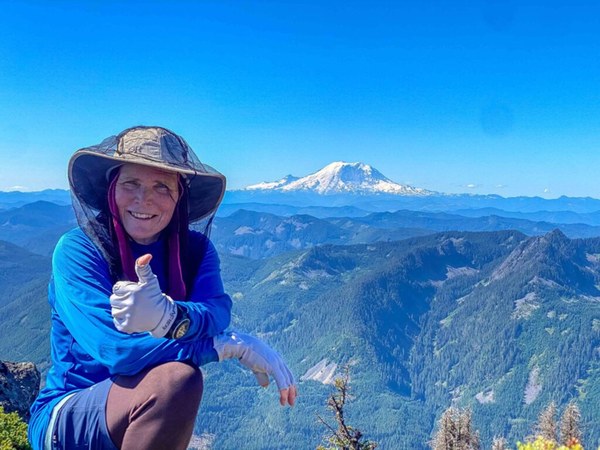 Fully covered and happily Protected from burns and bugs.
How I Choose Safer Routes for Summer Hiking
When planning summer hikes, I think of all the routes I’ve done with my dog and how he helped teach me what works best. I prioritize routes based on these essentials:
- Water access: I choose trails with year-round streams, waterfalls, or lakes where we can filter water, dip our feet, swim, or soak neck buffs.
- Ample shade: Dense tree cover can reduce trail temperatures by at least 10 degrees.
- Early starts: I choose hikes I can reach early enough to be on the trail by 6:30am, which lets us ascend in cooler air and descend before heat radiates off rocks.
- Flexibility: I try to adhere to the guidelines I’ve posted in my Hello Hiker emails, but safety always comes first. If we need to go slower than advertised, that’s okay.
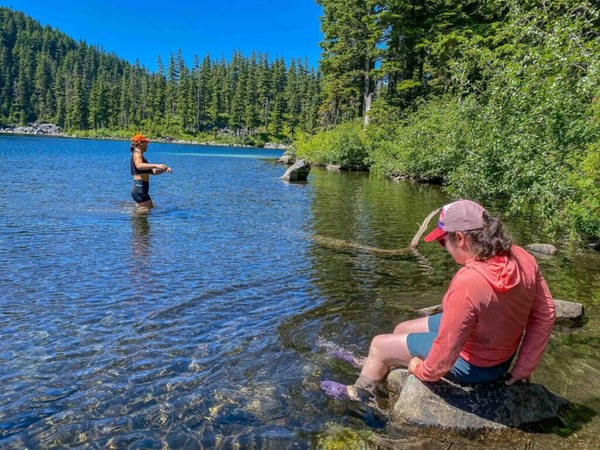
Wading in Mason Lake while a heat advisory was issued in Seattle.
I bring more water than I think I’ll need — a gallon plus extra for emergencies. I also plan to keep backup gallons in the car in case anyone returns to the trailhead dry. It’s a simple but powerful way to support hiking hydration for myself and my group.
While hiking safety can be improved by bringing ample water, hydration is not just about how much water you carry. Staying safe and hydrated also involves planning, pacing, recovery, and group awareness.
Hot Weather Hydration Tools and Habits
Here’s what I carry and practice regularly to stay safe and cool on hot-weather hikes:
- Billed hat(s) for sun protection. I wear a baseball cap in the forest, and a wider-brimmed hat to protect my neck on exposed sections.
- Lightweight, breathable clothing. My sun shirt has a hood to protect my neck and ears, and my tights, though black, also protect me from bugs and blackberry vines or other irritants.
- Glacier gloves. I carry two pairs of white fingerless lightweight gloves, an extra in case I lose the other. These protect my sunburn-prone skin from burning, which can heat up the body and require even more water for cooling.
- Thermos with ice water. Having cold water on hand is good for soaking a neck buff in case there isn’t readily accessible running water. My ice water thermos was a godsend on Rattlesnake Traverse, a warm and exposed outing that reminded me of the importance of hydration before, during, and after a trip.
- Electrolytes in every refill. I like Keppi Electrolytes packets (one per 24 ounces). I dilute one in 40 ounces of flavored water, which I’m more likely to drink readily.
None of these items alone are magic. But together, they create a reliable system that prioritizes hiking hydration and safety for everyone on the trail.
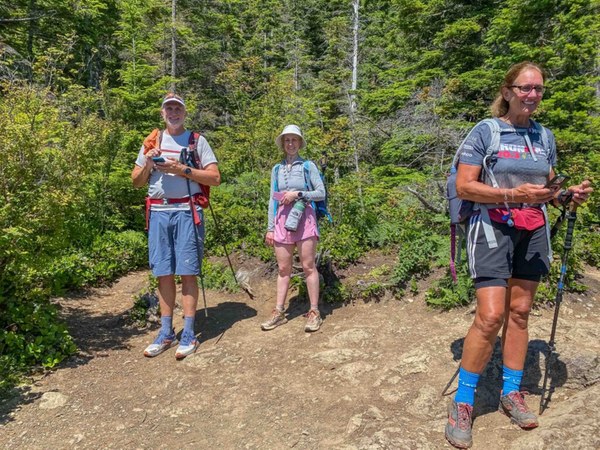
A small group on Rattlesnake Traverse, a route with no running water. This was the first trail I tried my ice water thermos and it worked great!
Hiking Hydration Is About Prevention, Not Perfection
I’ve come to see hydration and heat management not as a checklist but as a mindset. Being safe is about preparing for unknowns — humidity, terrain, group variability — and responding in real time. Some days, that means throwing out your planned pace. Other days, it means taking that extra water break even if you “feel fine.” If you find yourself going longer than about two hours without needing to take a party separation, you are not drinking enough.
Good hiking hydration isn’t about avoiding discomfort entirely, but keeping small discomforts from becoming dangerous. As a coach, I now see part of my role as modeling that kind of decision-making and teaching others how to listen to their bodies early, before things take a dangerous turn.
Let the Heat Be Your Teacher
Summer hiking can be fabulous, but it comes with challenges. If we respect the conditions, plan ahead, and care for ourselves and others, we can enjoy long, adventurous days on trail — even in the heat.
Think about what might go wrong, then take action against it. By anticipating heat and hydration variables, you can more easily pivot and manage any issue that arises. Too many issues, and you run the risk of disaster. Let the heat teach you, not beat you. Be open to pivoting so everyone can succeed, regardless of what Mother Nature doles out.
If you have a favorite trick or tip on beating the sun, heat, or staying hydrated, share in the comments so we can all benefit.
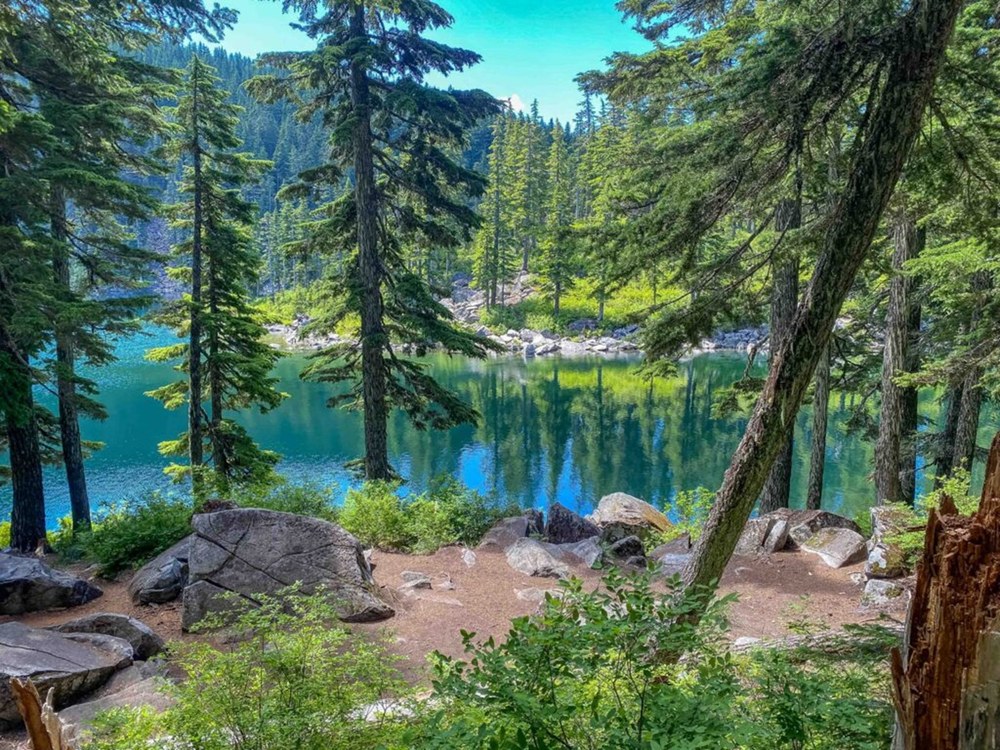
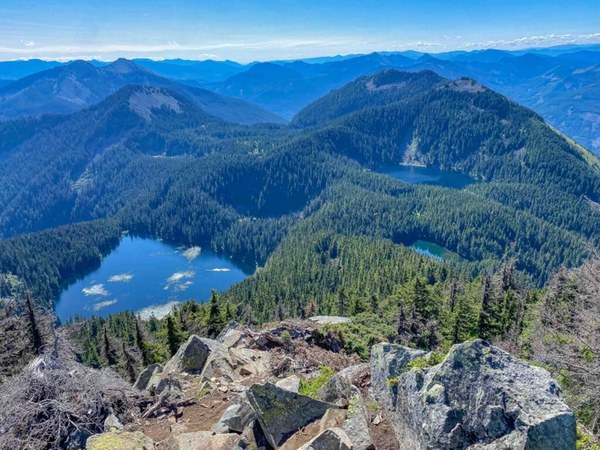 View of the Alpine Lakes area from the summit of Mt. Defiance: Kulla Kulla (left), little Kulla (to its right) and Mason (behind it) where we waded for lunch.
Want to share your safety tips? Reach out to safety@mountaineers.org with your proposed topic. Topics related to all activity types (hiking, kayaking, snowshoeing, canyoning, etc.) are strongly encouraged, along with stories and best practices related to emotional safety and group dynamic scenarios.
