Thomas Bancroft
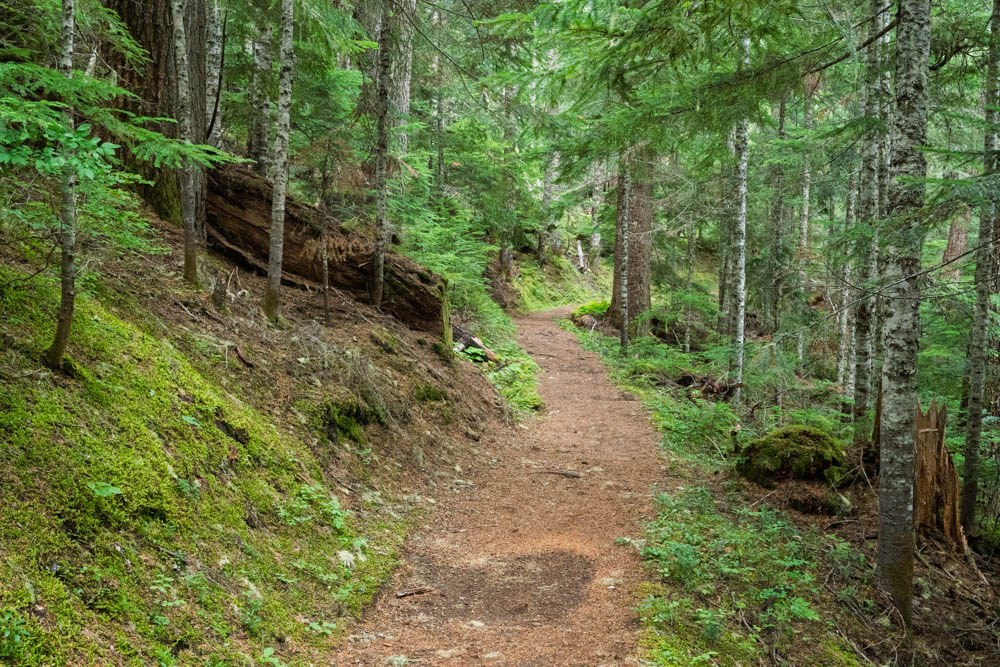
The August air was cool and the sky partly cloudy as my friend, Tom Martin, and I started up the Owyhigh Trail from Sunrise Road. Was I ready for this hike? It would be longer than any I’d done this summer, and with more elevation gain. We’d left one car at the Deer Creek Trailhead and planned to cross the saddle and down into the Ohanapecosh Valley. This trail was new to both of us.

Pacific silver firs (Abies amabilis) and western hemlocks (Tsuga heterophylla) dominated the forest, with a few massive Douglas Firs (Pseudotsuga menziesii) scattered here and there. Dense mats of moss lined the trail. The patches resembled a Rhytidiadelphus species intermixed with Dicranum, likely broom moss. Young western hemlocks grew thick under the canopy. I paused to catch my breath and look back and forth. Eventually, this trail would lead us to subalpine meadows, but the first hours passed through dense woods.
The mid-elevation coniferous forest stirred something inside me. I thought back to my youth, walking and riding horses in the eastern deciduous forests. Our farm had a ravine filled with eastern hemlocks (Tsuga canadensis), and the sanctuary where I worked two summers after college had stands of hemlocks, but most of the landscape lacked native conifers. Did something about that time influence my present view of the landscape?
We continued down the path, which took us around the eastern side of Tamanos Mountain. Conifers grew on the valley slopes; a break in the canopy allowed us to see Shaw Creek.
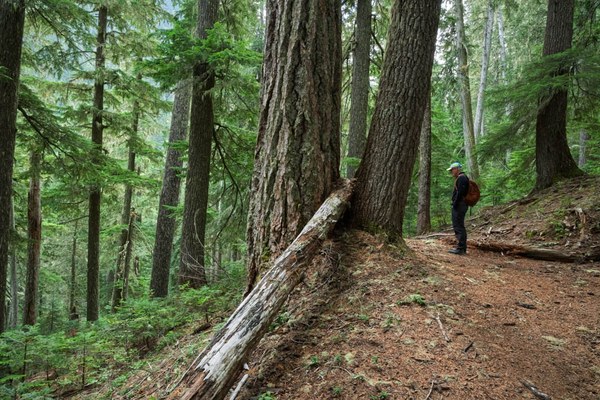
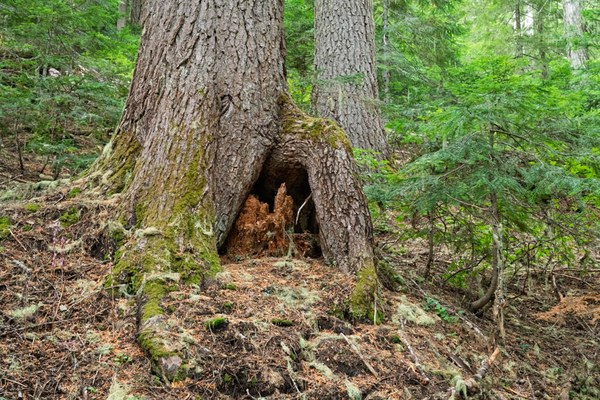
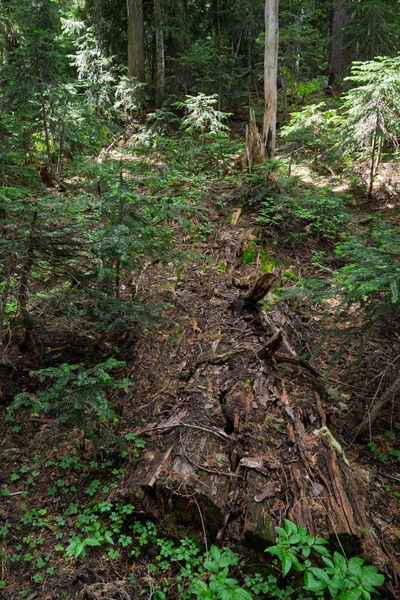
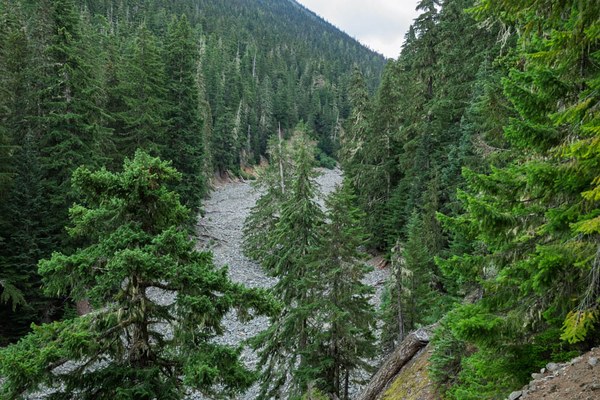
Some of the Douglas firs were massive, four or more feet in diameter. The western hemlocks grew equally large, and some had germinated on old stumps or down logs, rising on extended feet. Down logs can take a century to decompose, their nutrients providing food to the next generation. One dead tree beside the trail had only the remnants of the trunk.

An orange mushroom-like species, resembling an upside-down cone, protruded from the end of a log. It's surface looked smooth. The iNaturalist app said the mushroom might be an alpine jelly cone (Guepiniopsis alpine).
Jelly cones grow on dead conifers, and they have a network of fibers working through the conifer's trunk to feed off the decaying wood, a characteristic of a saprophyte. Some call these mushrooms “Poor Man’s Gumdrops,” but they may not be edible.
As we started up the trail, I worried whether my old legs would hold up. Had I gotten this “old body” into shape? Tom had already moved around the next bend, walking with ease - no puffing or sign of slowing down.

Subalpine Meadow & Black Bear
A meadow opened, and Governor’s Ridge sat across the valley. “Hey, Bear! Hey, Bear,” vibrated across the landscape. I jumped, thinking Tom was trying to call in a bear. Then I saw it: a cinnamon-backed bear grazing on grasses and flowers just beyond some small subalpine firs.
The bruin was less than a hundred yards away and had its head down, concentrating on food. Mount Rainier supports a healthy population of black bears. We took several steps back along the trail to watch what this one would do, hoping it knew we were there.
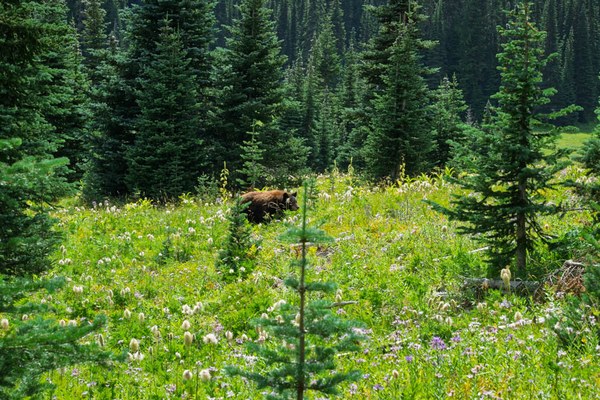
A 1984 article in Mount Rainier Nature Notes estimated that about 100 black bears lived in the park. A male’s home range might be 60 or more square miles, while a female’s will likely be ten or less.
We scanned the landscape in all directions to see if any cubs were around. It is critical not to get between a mother and her cubs.
Black bears are omnivores, and vegetation is their primary food. In late summer and early fall, they feed heavily on berries, especially blueberries and huckleberries, doing what biologists call hyperphagia, eating as much as possible. They need to put on substantial fat before their winter hibernation and can add as much as 30% to their summer body weight.
During winter, the bears hibernate. Hibernation conserves energy by lowering overall metabolism. Body temperature and heart rate decrease, and for the entire winter the bear doesn’t eat, drink, urinate, or defecate. A North Cascades study by William Gaines of the Forest Service found that bears begin hibernating between mid-October and mid-November. Females retire a little earlier than males. Both sexes leave their dens in April or early May.
Gaines discovered the bears made their dens more than 500m from open roads, as winter disturbance can significantly increase energy needs and decrease survival. Sunrise Road, SR 410, and 123 are all closed once snow comes, making this side of the park reasonably safe from human disturbance in the winter.
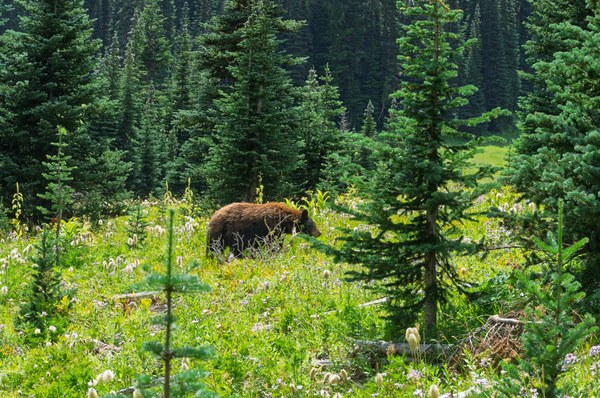
Our bear at Mount Rainier moseyed uphill, toward our trail. It hardly raised its head to look around, instead focusing on the brush ahead. Several times, its nose went down into the grass as if it had found something to nibble. After ten minutes, a clump of subalpine firs (Abies lasiocarpa) obscured its movements. Our tension rose. Was it coming toward us? We waited, watching, and eventually the bear reappeared, still a similar distance away from us. Its cinnamon-brown hair glowed in the noontime sun, and it crossed the trail and headed up the hill toward Tamanos Mountain. We gave it another five minutes before continuing, and spotted it a hundred yards up the slope, strolling away.
If the bear was a female, she may have been pregnant. The embryo implants when the female dens, and the cubs are born mid-winter. If the mother hasn’t put on enough fat, the embryos may be aborted or reabsorbed. Survival requires finding enough food to make it through the winter.
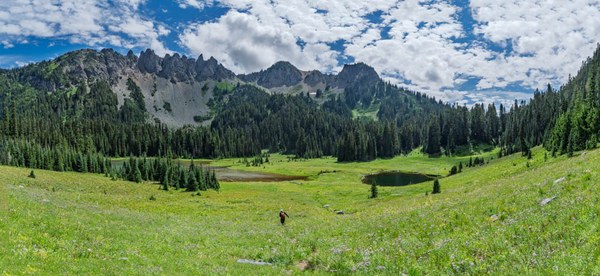
Owyhigh Lake
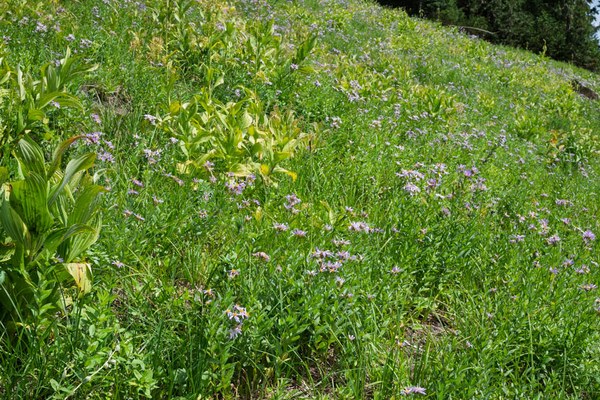
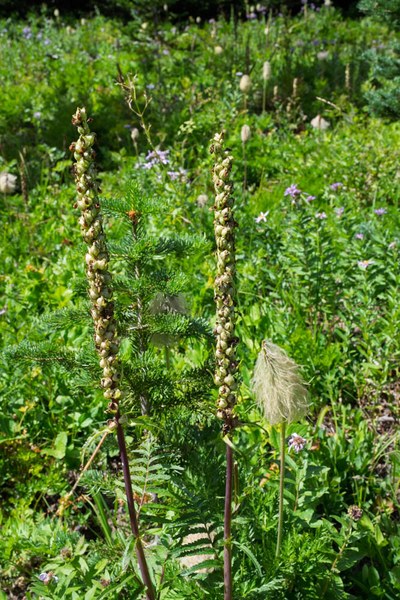
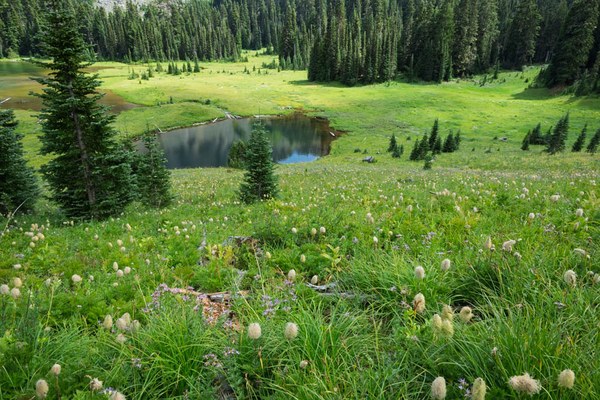
In another quarter mile, an expansive meadow above Owyhigh Lake opened, offering a spectacular view across the meadow, lake, and then Governor’s Ridge and Barrier Peak. Cascade asters (Eucephalus ledophyllus) bloomed everywhere, and the seed heads of western pasqueflower (Anemone occidentalis) gave a fluffy white texture to the grasses. Bracted lousewort (Pedicularis bracteosa) had gone to seed. A few subalpine lupines (Lupinus latifolius) still had blooms, but most had seeds. A side trail went down the hill toward the lake, and a log near the water provided a perfect spot for lunch.
Governor’s Ridge and Barrier Peak climbed 1,500 feet behind Owyhigh Lake. The mountains looked rugged, with sheer cliffs at the top and talus slopes that came down to a band of conifers beyond the water. These are older rocks than Mount Rainier and were deposited during the West Cascade phase of mountain building. According to geologists, many are volcanic breccia or compressed sandstone from the Ohanapecosh Formation (approximately 36-28 million years ago). The “Bedrock Geologic Map” of the park service also suggests that there are some andesite rocks from the Bee Flats in this area, and one source indicates that some rocks from the Stevens Ridge Formation might be present, although they weren’t shown on the map.
The saddle we would pass over on our way to Deer Creek Trailhead was to the right of Barrier Peak. Behind me was Tamanos Mountain. It topped out at 6,790 feet, so it was higher than Governor’s Ridge. It, too, is composed of rocks from the Ohanapecosh Formation. However, a Google search left me confused, suggesting that it might also have andesite lavas from a pre-Rainier volcano that once was in this area. My Gaiagps shows that it has a crater with a lake near its summit, but according to the geologists, Tamanos was never a volcano, and that lake is a result of erosion caused by ice and weather.
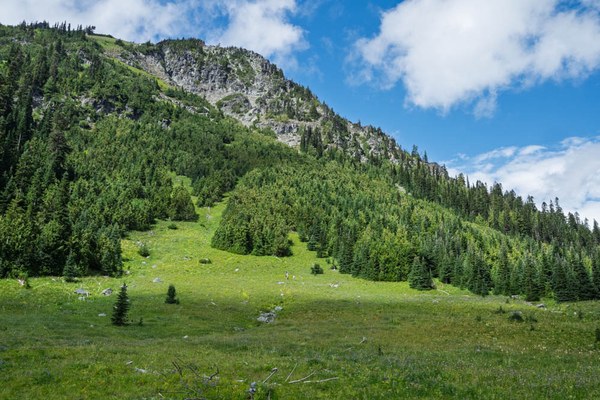
Tom was halfway down to the lake, but I continued to stand. The trees on Tamanos showed that a large avalanche or maybe a landslide had wiped them out several decades ago. A thick mixture of subalpine firs and Alaska yellow cedar (Callitropsis nootkatensis) grew on the slope. The trees were half the height of those on both sides. Had the slide run all the way to the lake? Any animal or tree in its path wouldn’t have stood a chance.
I hurried down the path, checking over my shoulder to make sure no bear (or avalanche) was coming. The lake was crystal clear, and we didn’t find any tadpoles or salamanders in a search along the path bordering the water. These high mountain lakes are critical breeding sites. Cascades frogs (Rana cascadae) and the rare western toad (Anazyrus boreas) lay their eggs in the shallows. Sometimes, long-toed salamanders (Ambystoma macrodactylum) will remain in their aquatic phase and stay permanently in the ponds. Bug spray and sunscreen can be fatal to them, and people swimming with these toxins on their skin can harm or even kill these sensitive animals. Swimming in subalpine lakes doesn’t appear compatible with Leave No Trace principles. I find myself thinking about survival again...
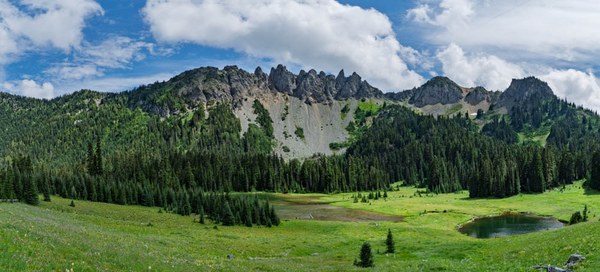
The lake looked calm from the trail. Water trickled out of the upper lake into the lower, which then formed Shaw Creek. A Pleistocene glacier carved this cirque lake. Thick ice formed in this area, flowing down the sides of Governor’s Ridge and behind me from Tamanos Mountain.
The Pleistocene epoch began approximately 2.6 million years ago and lasted until about 12,000 to 15,000 years ago. Patrick Pringle, in Roadside Geology of Mount Rainier National Park and Vicinity, said that large alpine glaciers existed as recently as 15,000 years ago in the park. Another cold snap, known as the Younger Dryas, may have allowed more ice to accumulate between 12,900 and 11,500 years ago. My hand ran through the grasses beside the trail, and I thought about how the vegetation is relatively recent. Nature is adaptable.
Cowlitz Chimneys
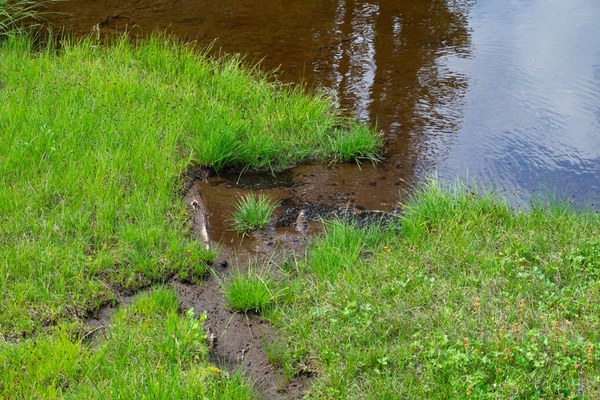
Not far along the trail, we passed over the saddle and began a gentle downhill into the Kotsuck Creek Valley. We paused by a small pool to study the tadpoles. They were at first imperceptible, then I noticed hundreds of black tailed creatures clustered in the shallows. I couldn't get a close look, but guessed they were Cascade frogs. These tadpoles always look lethargic to me, but they don’t need to move a lot. They were probably just starting to grow their legs to complete metamorphosis before the snows arrive.
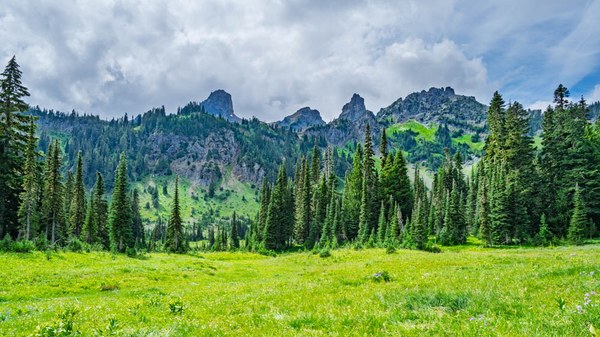
Across a meadow, the four Cowlitz Chimneys rose above the ridge line. I had to do a little “happy” dance for my friend. He just shook his head. This summer, I'd learned about the geologic significance of these peaks, and I’d been looking forward to this hike, where we might see them closer than I ever had before.
Some geologists think the Cowlitz Chimneys are volcanic plugs from ancient eruptions. They're apparently composed of andesite and rhyolite and may have been the source of lava that helped form the Ohanapecosh Formation some 36 to 28 million years ago. What I found so incredible was that these eruptions happened at sea level or even below sea level. Western Washington was apparently an inland sea or bay during the Eocene and Oligocene periods. Mountain building was only beginning.
According to the geologists, the structure of the rocks, the lack of columnar joints and welding, suggested these formations were created in water. Some of the pumice clasts also exhibited evidence of rounding due to water action. The pumice may have formed rafts that then sank. The Ohanapecosh formation also includes breccia with volcanic glassy material made from the interaction of lava with water. The melted rock hitting water generates enormous quantities of steam, which then changes some of the lava into the glassy substance. Ohanapecosh materials indicate that they had been reworked and moved underwater, likely due to currents or landslides. These rocks were then compressed over time, often causing some metamorphism, then folded and uplifted. The Main or South Cowlitz Chimney is the highest, at 7,605 feet above sea level.
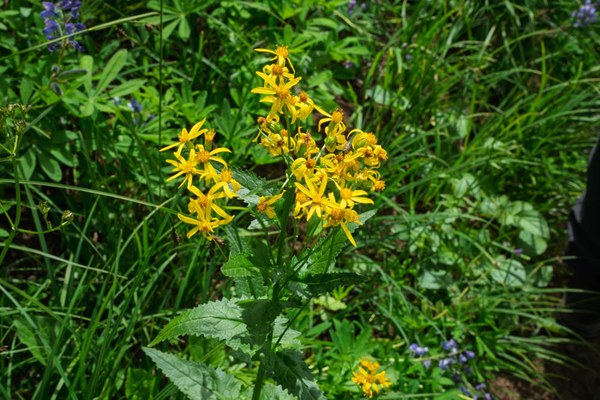
The eruptions that formed the Ohanapecosh were millions of years ago. The Cascades weren’t very high during those times, even through the Miocene. Evidently, the westerly winds brought rain into interior Washington. The significant uplift began approximately 7 million years ago with the formation of the High Cascades, and it continues to occur. Over the previous several months, geologists had detected tremors under Mount Rainier, suggesting magma might be moving. The shaking couldn’t be felt on the surface, but maybe it increased the elevation in parts of the park.
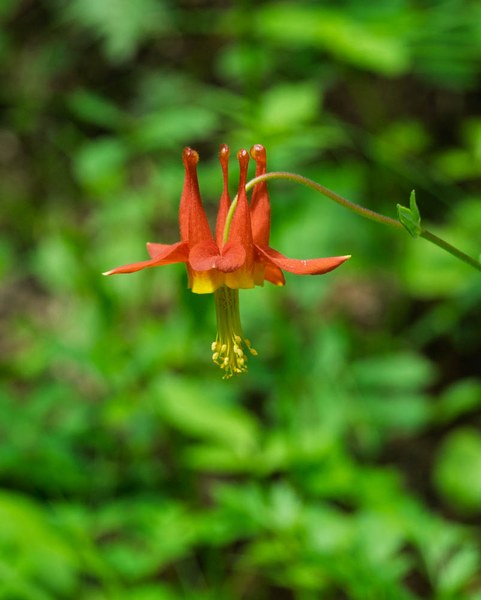
The meadow between the trail and the Cowlitz Chimneys was broad and flat. Alpine glaciers would have formed during the Pleistocene and carved this area. At least 17 continental glaciers descended from the Arctic region between 2.6 million and 15,000 years ago. The Puget Sound Lobe of the most recent, the Cordilleran Ice Sheet, came south of Olympia and east to the edge of the Cascades. Massive snowfields formed alpine glaciers in these valleys.
Pringle has an excellent map (Figure 23) that shows the extent of alpine glaciers during the later parts of the Pleistocene. The Evans Creek Ice was thickest and covered the most area between 25,000 and 15,000 years ago. A more extensive alpine ice sheet, the Hayden Creek Ice, formed between 170,000 and 130,000 years ago during the Illinoian Glaciation.
I looked back and forth at where we’d come and had to go. Crossing the saddle changed the direction of the water flow and also the ice. Shaw Creek flows into the White River, while Kotsuck Creek heads to the Cowlitz River. During the Evans Period, the White River Glacier advanced almost to Greenwater along SR 410, whereas during the Hayden Period, it may have approached Buckley and Enumclaw. The distance is difficult to determine because the Puget Sound Lobe moved over this area relatively recently, erasing any features left by earlier glaciers. The Cowlitz Glacier extended almost to the location of Riffe Lake during the Evans period and beyond Mossyrock during the Hayden period.

Pringle’s map suggests that Governor’s Ridge, Tamamos Mountain, and the Cowlitz Chimneys all stood above the alpine glaciers of the Evans and Hayden periods. The ice carved the sides of these mountains, influencing their shape. The rocks of these mountains were so hard that they survived the scraping pressures of thick ice.
Back in Seattle, I created a digital elevation map from LiDAR data and plotted our hiking track on it. The rounded, bowl-like nature of the valleys was obvious. Glaciers carve a U-shaped valley. The map helped me imagine the snow building here, gradually turning to ice, and then the ice’s weight on the slope started it to move. The ice also must have been continuous across the saddle, helping to wear it down. I raised my hand into the air, trying to imagine how thick the ice might have been here, several hundred feet, maybe close to a thousand.
In 2019, I was able to fly low over the Aleutian and Alaska Mountain Ranges in a small plane. In numerous places, we saw large ice fields at the top of cirques and then the glaciers flowing down valleys. In a few places, some snowfields straddled a saddle, and glaciers flowed in two directions. Just fifteen millennia ago, this area would have looked similar to what the mountains looked like then.
The digital elevation map shows a long slope from both Governor’s Ridge and Tamamos Mountain heading right toward Owyhigh Lake. From Governor’s Ridge, the topography suggests ice from a wide swath converged onto the lake’s location. The pressure from the weight helped make the depression that now contains the water.
The slopes from the Cowlitz Chimneys also seem to converge. There is a flat area on the map partway down the valley, which may have been another lake. We didn’t see one through the trees. It could be mostly meadow. Mountain tarns gradually fill with sediment and vegetation, going from open water to bogs to dry ground and they all would appear the same on this map. It takes time. These water bodies don’t survive forever.
Forest
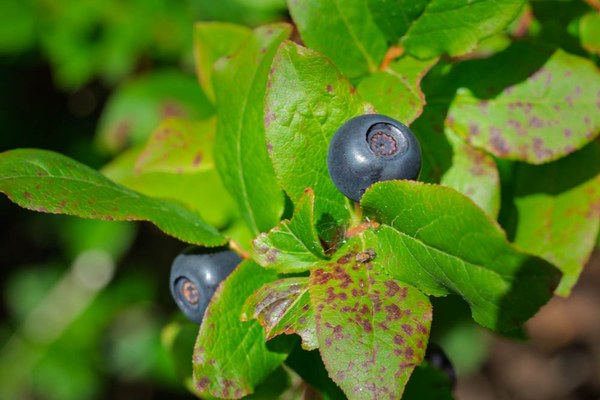
The trail passed back into the forest, where the huckleberries were thick. Tom began to pick them, gathering two or three and handing them to me. I suspected he thought a little sugar would help my legs. I’d hoped he hadn’t noticed my slowing pace. I checked my app, and a straight line was still three miles to the trailhead. I added electrolytes to my water. The science questions whether this really helps counter the slowing down, but I figured, psychologically, it would help.
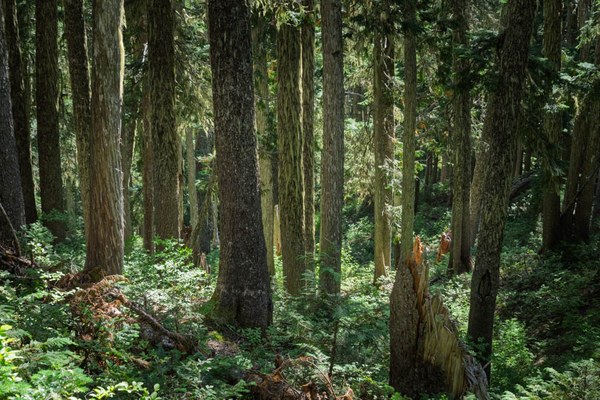
Witch’s hair lichens (Alectoria sarmentosa) draped the Pacific silver fir trunks. The patterns formed by the yellow-green strands twisting down the brown-gray bark always raise my spirits. Perhaps it was that lichens form a mutualistic partnership between a fungus and a green alga or a cyanobacterium. The fungi provide the home, and the partners are photosynthetic, making food for both. Perhaps my subconscious was telling me I needed a partner to make it down. Although the designs, too, make me stare.

The trees grew bigger. A Douglas fir looked to have a diameter similar to my height. How much had this matriarch witnessed in her life? She may be thousands of years old or more. What wisdom could she transfer? She was too far off the trail for me to put my hand on her thick bark and feel her essence, but maybe she would still lend me some strength.
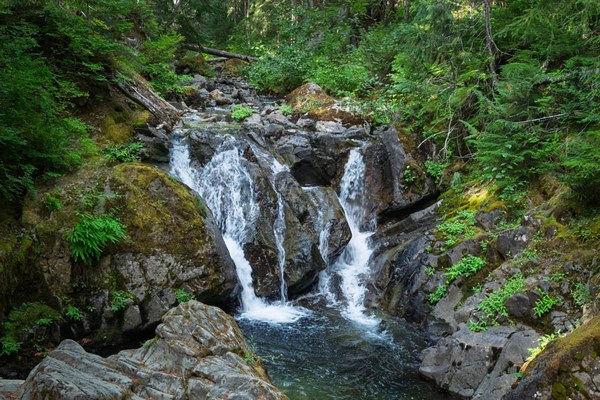
A small waterfall where Chinook Creek crossed the trail meant the valley bottom wasn’t far. The water tumbled over a four-foot drop in the rocks. These were Ohanapecosh rocks. Perhaps granodiorite, but they could be any of several types of volcanoclastic rocks formed during the Eocene or Oligocene epochs. They have survived the erosion of this creek and the Pleistocene glaciers. Ice here might have been a thousand feet thick fifteen millennia ago. Their hardness must be remarkable, the strength to withstand those persistent forces. A patch of maidenhair ferns to the left was a soft contrast of delicateness and yet still survival.
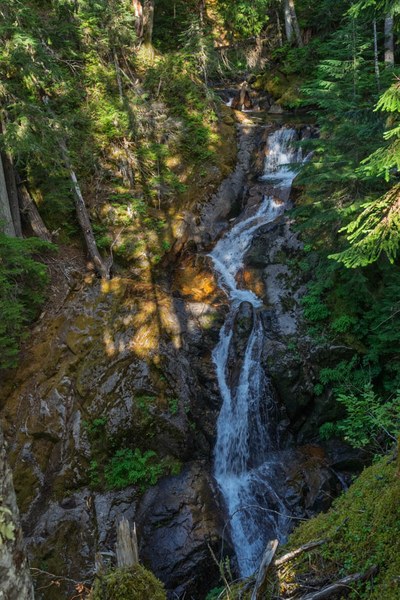
The Deer Creek falls meant the trailhead was close. We’d started the three-hundred-foot climb to the road and our car. Why is it that all hikes seem to have an uphill just before their end? Is that just an added layer of punishment? I rubbed my thighs while watching the water cascade in waves down the rock face. I had survived. A chair and a glass of wine waited at camp.