 Ushani Nanayakkara
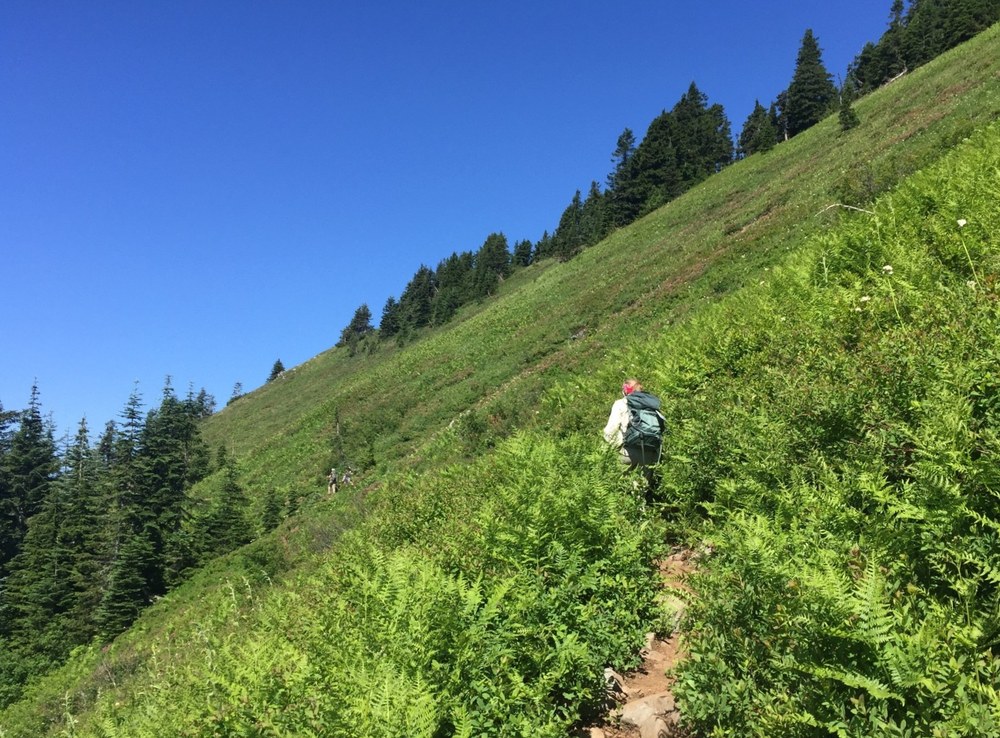
There are two kinds of pacing. One refers to the pace at which we recreate, the other refers to how we balance those activities with rest and recovery days. I learned the hard way that being smart with both is essential to success, especially in preparing for an epic trek.
All Gung Ho
It was the spring of 2018. I was preparing for the Tour de Mont Blanc by hiking and doing squats at the gym. I had it all figured out. I put together a spreadsheet that listed each day of the tour, with distance and elevation gain for each leg, and a check mark for the days I needed to carry overnight gear. I also had a list of nearby hikes that were comparable to the most strenuous days on the Tour de Mont Blanc. Finally, I put together a conditioning plan, choosing hikes with increasing levels of difficulty, including due dates by when I wanted to have these hikes done, with the goal of completing them two weeks prior to my flight to Switzerland. With all this organization, I was convinced that I was on track to be ready for the early August trek.
I hiked many routes of varying distances and elevation gain on Cougar Mountain. Then I went on more strenuous hikes like Mount Si and Mount Washington. I even scrambled up Mount Teneriffe.
The Mount Teneriffe scramble was a spur of the moment decision. It was steeper than anything I’d planned for my conditioning, and yet I still carried extra weight in my pack. I knew I would be slow getting up the mountain, however, the group graciously adjusted their pace to match mine. I stopped and stretched at regular intervals, and did even more stretching back at the parking lot at the end of the hike. To my surprise, I was not sore. Even after my drive home I was able to get out of my car without grimacing. I congratulated myself on a job well done. This was late May and the Tour de Mont Blanc was two months away.
Energized by my accomplishment, I pushed myself further. To mimic back-to-back trekking days, I tackled another hike the following day. My legs complained, but I ignored that warning. Instead, I decided a strenuous leg workout at the gym would work off the ache I was starting to feel. I pushed through the soreness, trying to banish it and lock in on the conditioning.
A Rude Awakening
The following morning, while taking a hot shower, I could feel it coming on. The muscle spasm spread all the way down the left side of my back. And that was just the beginning. The next day, I could barely move. It was May 31. My first day of hiking on the Tour de Mont Blanc was on August 9 and the best I could manage was a stroll around the neighborhood. I’d tackled a hike I wasn’t ready for, a steep scramble no less, then continued to push myself instead of resting. And I paid the price for it.
I could not imagine recovering from this setback in time for the eight-day trek circling the Mont Blanc Massif, a journey of 80 miles with an overall 23,700 feet of elevation gain, and carrying overnight gear on four of those days. I needed a new plan.
First, I had to recover from whatever it was that made my back freeze up. I started with hot baths, ice packs, Ibuprofen, and rest. Once my muscles started to unclench, I added stretches and massages. After about ten days of resting, I was mostly back to normal, only going up and down the stairs at home was still a challenge. And what about hiking? It was time to assess the state of my legs on the trail.
When I finally went on a hike again, a short and easy one on Cougar Mountain, I quickly found that my legs still weren’t functioning properly. Going downhill I could bend my knees a little, but then all strength would vanish, sucked away by some unknown force. It felt as if my legs had short-circuited. This was not good news for the extended downhill stretches I would need to do on the tour.
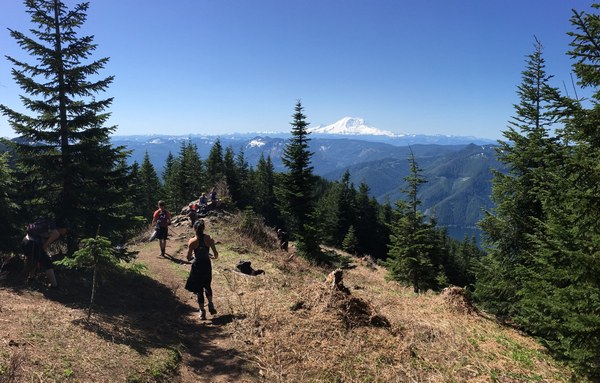 Descending Mount Washington. Photo by Ushani Nanayakkara.
It’s All About Pacing
Committed to getting my strength back, I engaged a personal trainer. She designed training plans to get my knees to bear weight again – a new plan each week to match my progress – and prescribed critical rest days. I followed that program until my departure day for Switzerland. In addition, I created a new hiking plan to adjust for my new starting point, making sure to account for rest days. I spent June working to get my hiking legs back, both in the gym and on the trail. In July I included longer, more strenuous hikes like Mount Defiance and the Rattlesnake Mountain traverse, this time taking care not to overdo it and to be discipled about keeping my rest days.
It wasn’t easy. I was not in the shape that I’d envisioned I’d be in for the Tour de Mont Blanc. I felt the desire to push myself again – to jump ahead and skip a few steps of the plan – but I forced myself to ignore this impulse. I had to accept the fact that I wouldn’t start the tour at an ideal conditioning level. And I learned this:
- Be intentional with the activities you choose to prepare yourself for your adventure.
- Consider incremental increases in difficulty and rest days when creating a conditioning plan.
- Be mindful of your intended pace while on the trail.
- Don’t skip ahead in your plan to tackle more than what you’re ready for.
- Keep the all-important rest days
As I write this article eight years later, I appreciate the reminder. This spring, after returning from an epic ski weekend at Mount Bachelor, where I raced my adult sons down long slopes from open to close, I could still feel soreness in my legs a few days later. I took it easy for a week, patiently waiting for the right time to do my next hike.
