 The Mountaineers
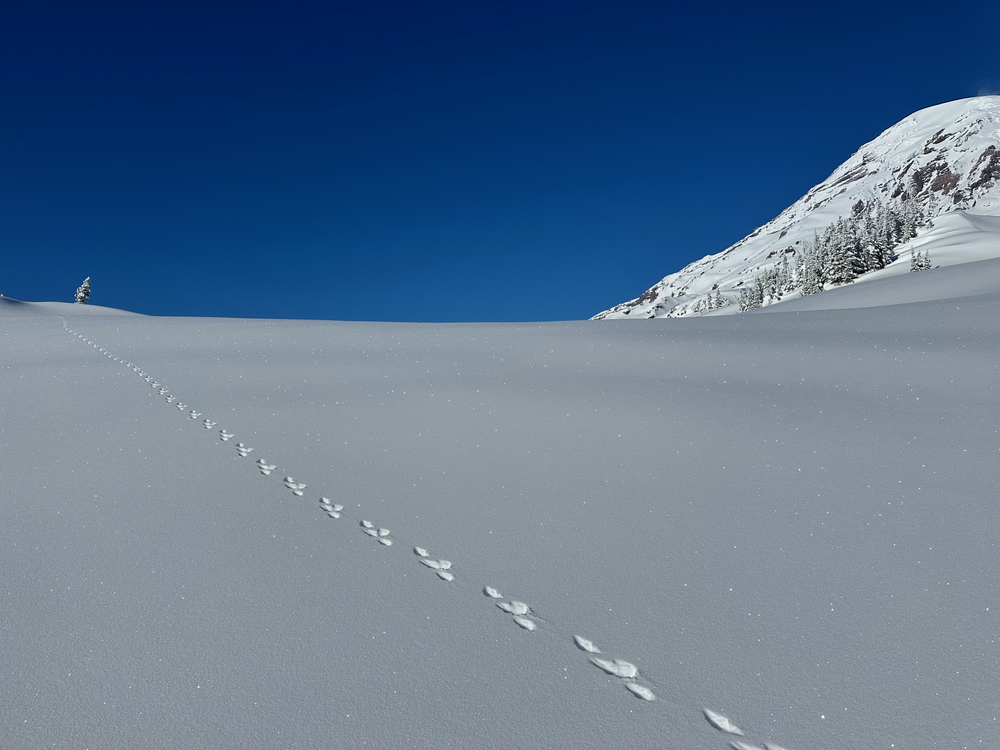
Watching wildlife on our outdoor adventures can be a great way to connect to and foster a deep appreciation for the natural world. Washington’s public lands span unique ecosystems and are home to a rich diversity of wildlife species. Spotting animals like owls, eagles, bears, or mountain goats creates special memories and enhances the outdoor experience. But wildlife encounters - and even our broader presence in wildlife habitat - can pose challenges that affect a species’ ability to thrive across landscapes.
Human-powered recreational activities like hiking, climbing, scrambling, and skiing can affect the behavior and condition of wildlife where you recreate, even if you don’t find evidence of their presence. If you’re like most Mountaineers, you’re a pro when it comes to Leave No Trace and low impact recreation - practices that are deeply embedded in our outdoor education programing and how we show up while recreating. But coexisting with wildlife and doing our part to lessen impacts on these animals and their habitats goes beyond Leave No Trace principles.
To help educate our community about the importance of properly coexisting with wildlife, former Conservation Northwest staffer and Mountaineers volunteer Kurt Hellmann shared his knowledge and perspective with us on our recent seminar in the 2025-2026 Leadership Development Series. Kurt paired his stoke for human-powered recreation with his expertise in wildlife coexistence to share recent trends in the field of recreation ecology, local examples of wildlife-recreation management strategies, and tips for lessening your impact on wildlife.
Recreation Ecology & Wildlife Management Strategies
Before digging into how we can better coexist with wildlife, Kurt grounded the seminar by elevating key recreation ecology principles and recent trends. Recreation ecology is the scientific study of the environmental impacts caused by outdoor recreation and nature-based tourism. “The presence of recreationists on the landscape can lead to short-term behavior responses like physical displacement or disturbance by individual wildlife as well as long-term, large-scale population responses,” shared Kurt. “It’s important for all - including human-powered recreationists - to own our impact.”
Here are some trends Kurt found when digging into current scientific literature around recreation ecology:
- Different types of recreation have different impacts. Animals have a stronger response to less predictable forms of recreation, like those that don’t utilize established trails.
- As the intensity of recreation increases, so does the impact of wildlife. Intensity accounts for both frequency and duration of the activity.
- Season is also important. Wildlife responses to recreation may differ between summer and winter. Wildlife can be more vulnerable in the winter and during critical reproduction stages.
Seasonal closures or seasonal protection areas are a popular mitigation strategy for land managers, which is already being done here in Washington. These closures help protect the critical time and space that wildlife need to be free of human-caused disturbance. For example, the Methow Wildlife Area is closed from Dec 15 - March 31 to support wintering wildlife like mule deer. There’s also been temporary climbing area closures at places like Deception Wall at Exit 38 and Goat Wall in Mazama to provide relief for Peregrine falcons and other nesting bird species.
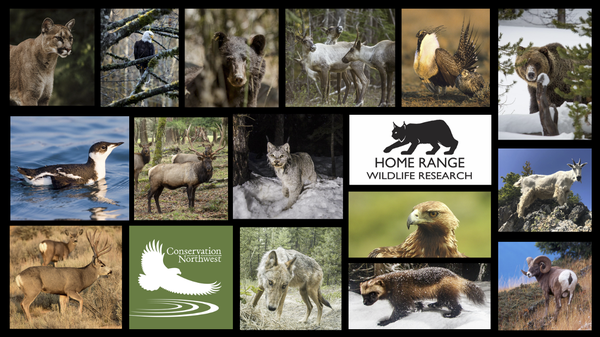
Wildlife photos collected by Conservation Northwest that include photography work by David Moskowitz.
Tips for Wildlife-Smart PNW Trips
Kurt challenged seminar attendees to think deeply about how to incorporate wildlife-smart tips into their recreation practices. While Leave No Trace might seem like an easy sell to the recreation community, it provides a good starting point as well as opportunities to reevaluate and dig deeper on common practices. Before your next outdoor adventure this winter, we encourage you to give some thought to these following ways to better coexist with wildlife while out on trail or in the backcountry.
Leave No Trace and Beyond
- Give animals space and respect all wildlife.
- Observe wildlife from a distance, don’t follow fresh tracks, and know when to go to an alternate route to avoid wildlife.
- Never feed animals and store food properly.
- Pack out trash and waste.
- Stay on trails and other durable surfaces, contributing to predictability of recreation, which is helpful in lessening one’s impact on wildlife.
- Be respectful by limiting excessive noise.
- Control pets at all times.
- Respect seasonal closures.
- Practice proper fire safety.
Going Deeper
- Stay alert for signs of wildlife by being curious and engaged with your surroundings.
- Avoid wildlife during sensitive times of year.
- Avoid dawn and dusk hours for wildlife.
- Consider using your voice during land management planning opportunities and when new management solutions are being considered.
- Share your wildlife observations with land managers or through a community science project.
Learn More
Being a mindful recreationist during your outdoor adventures starts with knowing and acknowledging your impact and considering how to tweak your practices to better coexist with wildlife. You don’t have to incorporate all of these practices on your next trip to make a difference. What resonates with you? What gives you pause? Where do some opportunities exist to seek a deeper understanding and coexistence with wildlife while recreating?
For Kurt, coexistence starts with curiosity. “By being curious and learning a tidbit or two about wildlife, you can enrich the recreation experience for yourself and others,” Kurt shared. “One can gain a whole new dimension of understanding and appreciation for the critters you may encounter on the trail, and for the landscapes they call home.” Get started today with the following resources and community science opportunities.
Add a comment
Log in to add comments.
"Avoid dawn and dusk hours for wildlife." For someone who is an avid birder, I actually PLAN my trips to maximize birdsong listening - daybreak. However, I also instruct people on how to LNT and respect wildlife when we're on the trail.
