 Hannah Abebe
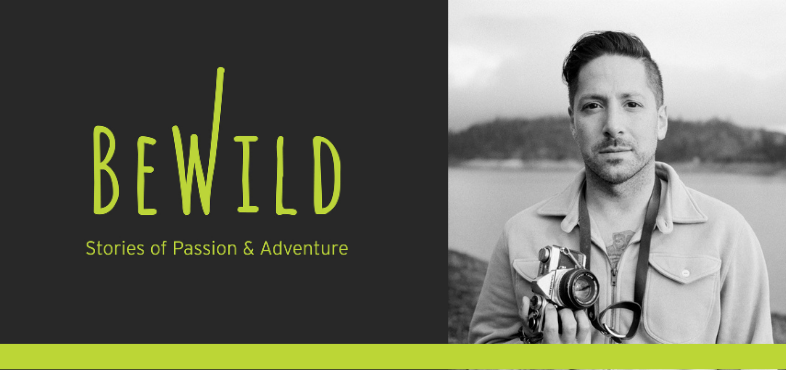
Photographer and author Tommy Corey has built his career around amplifying stories of diversity, inclusion, and accessibility in the outdoors. As an LGBTQ+ Mexican-American creative based in Redding, California, Corey first fell in love with life outside during his thru-hike of the Pacific Crest Trail, a journey that sparked a wholehearted devotion to documenting the transformative power of nature.
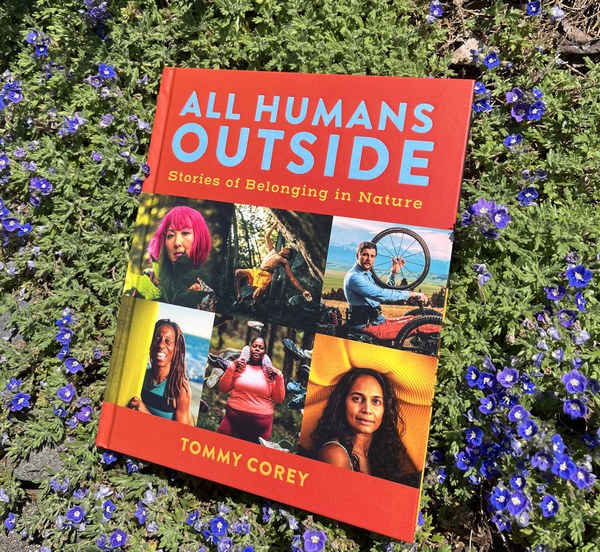
His debut book, All Humans Outside: Stories of Belonging in Nature - published by Mountaineers Books - pairs elevated, documentary-style photography with narratives collected from more than 200 interviews across the United States. The result? A powerful and intimate portrait of the many ways people connect to nature, from conservation and sustainability work to recreation and community building.
On September 30, Tommy will join us at The Mountaineers Seattle Program Center for a special evening in our 2025 BeWild Speaker Series, where he will talk about the creation of All Humans Outside alongside contributors and outdoor advocates Shaynedonovan Elliott, Tasheon Chillous, and Anastasia Allison.
Ahead of his upcoming talk, we asked Tommy about everything that went into creating All Humans Outside, along with a few fun, rapid-fire questions. Here’s what he shared:
Before All Humans Outside became a book, it started as a photography project. Can you take us back to that very first shoot... What you were hoping to capture, and how did that moment shaped the project’s direction?
When I started All Humans Outside, from day one my intent was always to eventually see it in book form. I conceived the idea while attempting a thru-hike of the Continental Divide Trail. I kept thinking, “if I could build my own community, what would I want it to look like?” This book is the answer to that personal question.
The first people I photographed were Melody Forsyth and her daughter, Ruby. Ruby has Down Syndrome, and at the time she was seven years old. We met at a local hiking trail just south of Salt Lake City, close to where they live.
Going into the first shoot, I didn’t have an idea of how all 101 portraits would look or if they would even follow a common theme. I did know I wanted to capture what I saw in each individual and try to visually tell the story of their connection to nature as holistically as I could.
That first shoot with Melody and Ruby helped shape the series and the way I photographed because it reminded me how each of these people see nature in a completely different way than I do. We only had about an hour together, and all the while, it was raining (I remember thinking: I hope this is good luck). That moment reminded me that this entire experience will be unpredictable and I will have to mold to each person I meet along the way. It forced me to slow down and not think about the end goal and enjoy every part of the process while remembering that once the actual book is in my hand - I am going to miss the people and moments that brought it together
As you began working on the book, which story or portrait were you most excited to capture, and which one was the most challenging to tell?
There were so many people involved and stories to tell that I couldn’t help but think about my own story and the pieces of my life that contributed to the origins of this project. My own story was, and I think still is, the most difficult to write. I said in my first presentation after the book published, if I would’ve written a novel people would’ve been really bored. This book was the art I needed to create for people to see who I am because it includes my love of nature, my passion for photography, and my child-like curiosity in people.
You’ve said that Oprah Winfrey was a major obsession of yours as a child. How did her interview style inform your interview style?
I talk about that in my foreword; eavesdropping on my Mom watching Oprah everyday at 4pm while she cleaned the house, I noticed the types of people Oprah would interview: celebrities, business moguls, athletes, and some of the most inspiring innovators of our time. The people that shifted my perspective of Oprah and her show, however, were the people who had committed (sometimes extremely heinous) crimes.
Even as a kid, it fascinated me that she would let these types of people on her show. I remember being utterly confused. When you’re young you learn right from wrong, so why do these people who have done things that are unforgivable get to go on The Oprah Winfrey Show!? Even though I knew these people were bad and they didn’t deserve their 45-minutes of fame; I was fascinated at the way Oprah still spoke to them - with empathy.
As I became an adult and got more into photojournalist portraiture and storytelling, I realized the amount of empathy it takes to capture people and tell stories. If you’re telling someone else’s story without empathy, it’s just exploitation. I know watching Oprah and having her as a role model shaped the way I not just interview people, but the way I speak to them when the microphone is off and the camera is in its bag. This work takes trust, it takes time and it requires connection on the most human level possible - and I think my early childhood exposure to The Oprah Winfrey Show contributed greatly to the stories I choose and the delicacy I try to have in telling them.
Did the process of photographing and interviewing people for All Humans Outside reveal anything surprising—either about your subjects, yourself, or the outdoor community as a whole?
Yes! It’s in the title: “stories of belonging in nature.” In speaking to everyone and then sitting down and writing their stories back-to-back, I realized that you can’t talk about belonging to nature without first illuminating the connection to society and other humans. It happened naturally. Originally, the book was just supposed to be about the interesting ways humans connect to nature, but the theme just wrote itself.
Belonging is a convoluted word. Initially, when I hear it, I think it sounds happy and hopeful, but in reality, I think it’s darker and more sinister than it is kind. Belonging is this intangible orb that controls every month, week, day, moment of our lives from the moment we are born. We come into this world wanting to be nourished, loved, needed, and wanted. As we grow, we still want that same love, need, want and even empathy from others. When we don’t receive it, it breeds depression, anger, and isolation.
What I found from a lot of these interviews is this: When we feel like we don’t belong, we go search for it. A lot of us go searching in nature, the place where we are all born from. We go there to connect again, to feel held, nourished, wanted, needed. It’s interesting how many people explain nature as their escape as much as they call it their home, refuge, and even describe it as a soulmate whom their love for is ever-flourishing.
Storytelling can be a powerful tool for building belonging. How do you see photography and narrative working together to create more inclusive outdoor spaces?
I think our stories are what build belonging, because they invite empathy when someone else can see themselves in us. But storytelling isn’t just about speaking — it’s about listening too. A story only really exists when it’s received. That’s why sharing is so vulnerable — you’re putting a piece of yourself out there, hoping someone will truly hear it. For me, photography and narrative work together because one gives people a voice, and the other makes sure it’s witnessed. I think of this exchange as one of the many symbiotic relationships that exist in nature.
Looking ahead, what conversations do you hope All Humans Outside sparks within the outdoor industry and among everyday adventurers?
I really hope that empathy for each other translates to empathy for nature because in this moment in time, our earth needs us to make drastic changes more than ever for future generations.
BeWild Speaker Series - All Humans Outside With Tommy Corey
For more information about the full 2025 BeWild line up please see our website.
This BeWild Speaker Event is brought to you by The Mountaineers in partnership with the North Cascades Institute and Third Place Books.
About North Cascades Institute: For nearly 40 years, North Cascades Institute has inspired environmental stewardship and empowered the next generation of conservation leaders through transformative learning experiences in nature. Since 1990, their place-based environmental education program -- Mountain School -- has served over 42,000 regional 5th graders, helping them connect with nature and learn about the natural and cultural history of our region. Beyond its school programs, the Institute offers dozens of ways to explore the North Cascades Ecosystem, with hands-on learning adventures from the Cascades Crest to the shores of the Salish Sea. To learn more about the Institute's work and offerings, please visit their website at ncascades.org.

About Third Place Books: Third Place Books was founded in 1998 in Lake Forest Park with the deliberate and intentional goal of creating community around books and the ideas they inspire. A second store opened in Seattle’s Ravenna neighborhood in 2002, followed by a third in Seward Park in 2016. Today, Third Place Books is a general interest bookstore offering more than 200,000 new, used, and bargain books at its Lake Forest Park location and over 40,000 titles at Ravenna. Each store provides a fun, comfortable, and welcoming space to browse, linger, lounge, relax, read, eat, laugh, play, talk, listen, and simply watch the world go by. Please visit their website at thirdplacebooks.com.


