 Tatiana Van Campenhout
Around 3am on the Emmons Glacier, the hour when a headlamp turns the world into a tunnel, my brain shrank to a single job: one foot in front of the other. We were traversing firm snow above a no-fall zone when the rope lead’s voice came through the radio, calm and clear.
“Tats,” Kate said, “I know you’re uncomfortable with exposure. How does this exposure feel? Do you want us to place protection?”
We had discussed exposure the previous night in our pre-climb briefing — what it feels like for each of us and what support might look like if one of us started to feel unsafe. Still, hearing Kate name my fear in real time made me feel seen in a way I didn’t expect.
“I’m okay,” I said into the radio. And I was. But the check-in mattered more than the answer because it displayed a kind of care that makes a hard place feel safer.
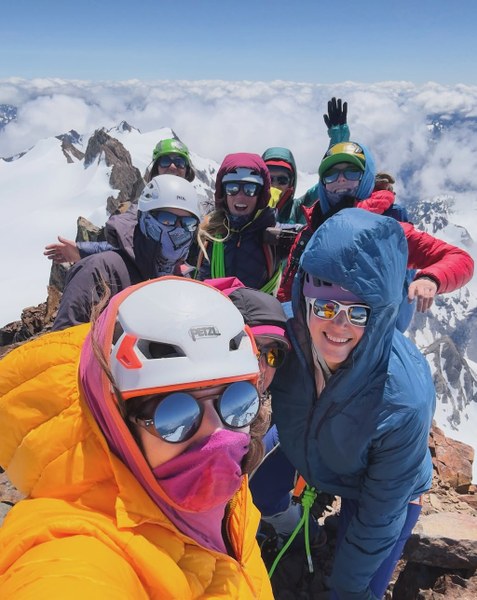 Above the clouds on the summit of Mt. Olympus, July 2024.
Finding my Mountaineers family on Mt. Olympus
The women I climbed Rainier with all joined The Mountaineers at different times and in different ways. Gradually, we found our way to each other through shared connections. The first time our group really snapped into place was when one Mountaineers member, Renee, pitched the idea of a women’s climb of Mt. Olympus in 2024.
Olympus is one of those big objectives that lives on your list for a long time — long, remote, not something you do casually. It’s the kind of climb you only do with a team you trust.Six women said yes, and we instantly bonded over our shared goals: a solid plan, plenty of snacks, and zero unnecessary chaos.
In the months leading up to Olympus, I got sick and wasn’t bouncing back the way I had hoped. My training took a hit. I did the math: five days… big mileage… high elevation… heavy pack… I worried I’d be the weak link and was fearful I’d get out there only to realize I didn’t belong.
The night before our first push, I barely slept. My brain spiraled over the impact of antibiotics on my performance, the consequences of my undertraining, and the quiet fear that I’d be the slowest of the group. Eventually, I gave up on forcing rest and put on a guided meditation. The mantra was simple: you are capable.
The next morning, I told the group how I felt — tired, nervous, unconfident in my fitness — but instead of brushing me off, they met me exactly where I was. “You are capable,” they said, like it was a fact, not a pep talk.
And then Olympus gave me a moment to test that fact. Near the summit there is a rock climb. I’m not a rock climber, and my confidence wobbled as we approached. I stood at the rock base trying to focus when one teammate, Klare, asked, “Are you ready?”
I answered honestly. “No.”
Without flinching, she asked, “What are you?” and before I even had a chance to think, I said it: “Capable.”
That phrase — you are capable — started as something I needed to hear. But on Olympus, it turned into something we gave each other. Not as pressure. Not as a performance. As a reminder: you’re allowed to be scared and still do the thing. You’re allowed to be tired and still belong. You don’t have to be the strongest person in the group to be a meaningful part of it.
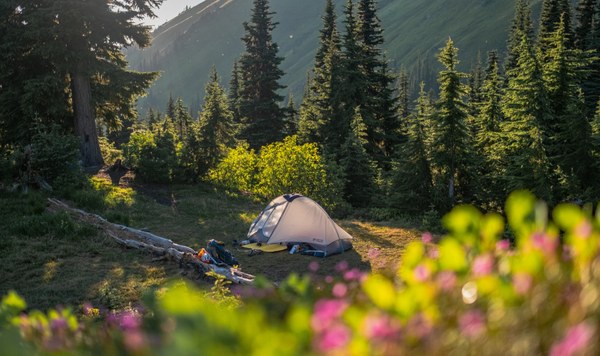 Our campsite at White Pass, Glacier Peak, July 2024.
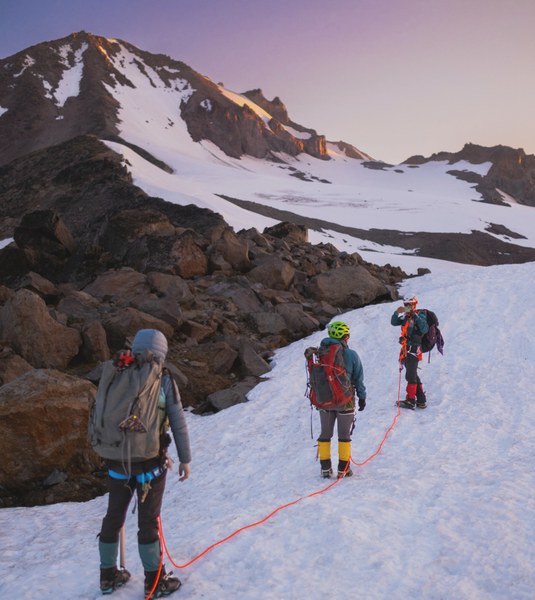 Ascending the Suiattle Glacier on Glacier Peak, July 2024.
Climbing volcanos, bit by bit
A few weeks later, the same group planned another summit: Glacier Peak. This time, I felt more at ease — not because the mountain was easier, but because I trusted the people I was with. I was starting to understand that confidence doesn’t always come from feeling stronger; sometimes it comes from knowing your team has your back.
Before the climb, we met to talk through a go/no-go framework and to align on pacing, plan for hourly self-care breaks, and set expectations for camp timing. We made it a point to discuss risk tolerance before the trip to avoid having those conversations in the worst possible places when we’re already cold, tired, and committed.
Quickly, our group planning evolved from simple logistics to a place where concerns could be voiced early, and support showed up fast. We swapped articles about nutrition, recovery, and the parts of the outdoor experience that can feel invisible in male-dominated spaces. Often, there’s an unspoken pressure to keep up or look as steady and unbothered as the strongest climber in the group. This can inevitably lead to downplaying personal needs like skipping the break, hiding the fear, ignoring the cold, or pushing through being under-fueled. Instead, we built opposite habits: speak up early, say what you need, normalize it, make it safe. This kind of group dynamic created a sense of safety that wasn’t just emotional — it was practical.
People climb Glacier in a day. In two days. In three. We looked at the options and collectively chose the most unserious approach possible: four days. Not because we couldn’t go faster, but because we didn’t want to turn the mountain into a sufferfest for no reason. We wanted time to move well, recover, and actually enjoy where we were — time to sit in wildflower meadows and eat snacks like it was our job.
Somewhere between camp chores and snack breaks, we developed an internal organizational structure — very official, very serious, and completely necessary for the success of the expedition. We assigned ourselves job titles based on our strengths, our personalities, and our willingness to commit to a bit.
As the photographer, I became the Director of Expedition Management & Social Media Manager. Kate took on the Head of Glacier Safety Operations & Navigation. Laura was promoted to Senior Director of Emotional Safety & Hydration Manager. Renee served as Director of Medical Operations & Comic Relief. And Rose stepped in as Executive Director of Rope Management & Trail Stability Inspector. These roles were self-appointed, non-negotiable, and came with zero pay and unlimited responsibility.
After a successful summit of Glacier Peak, The Glacier Gals were born.
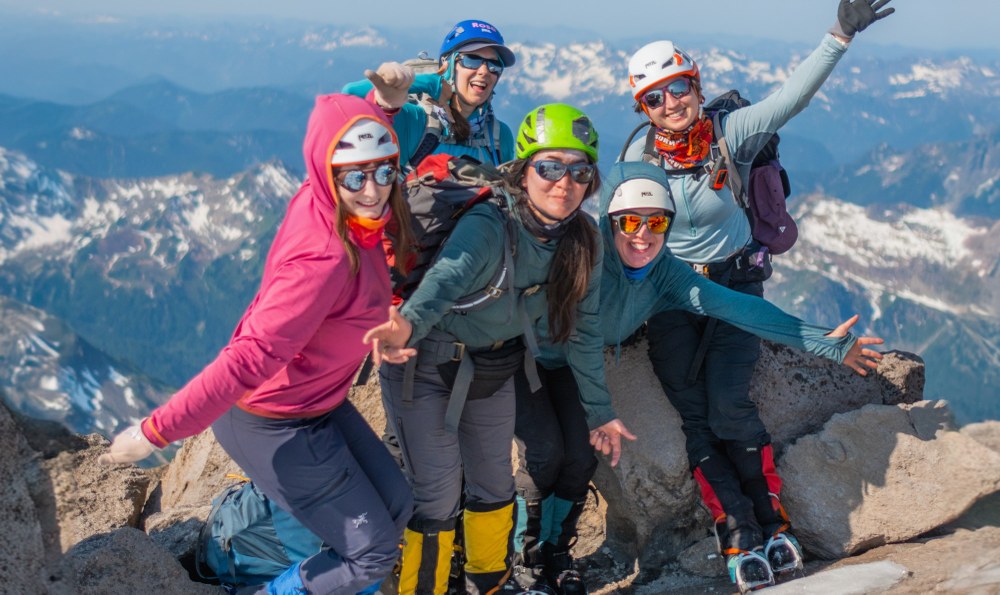
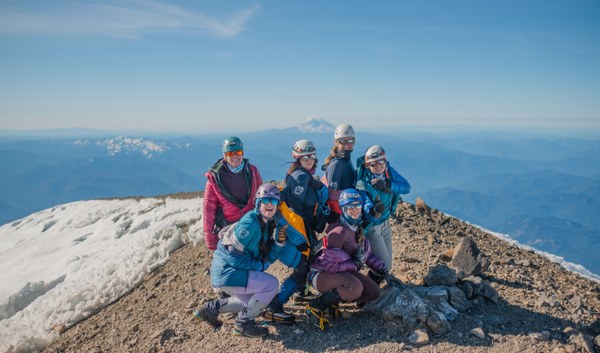 The Glacier Gals at the summit of Rainier, (from left to right: Chelsea
Danielle, Klare Frank, Tatiana Van Campenhout, Jess Umayam, Rose Gear, and Kate Goldenring).
Feeling confident in our group dynamics, we decided to test our talents on Rainier. In preparation for the climb, and as an ode to our Olympus mantra, I tried to use AI to generate a logo that said, “You are capable.” AI produced dozens of versions, none of which spelled capable correctly. Instead, we got: “You are capabable,” “You are capaaapable,” “You are capapabIe,” and a few versions that looked like they’d been typed by someone wearing mittens.
Just like that, our mantra was upgraded: You are capapable. We made sun hoodies with our slogan, accompanied by our new mascot, the Capapable Potato. (A potato, because Jess is famous for bringing boiled potatoes on climbs — one of the most chaotic and effective carb strategies I’ve ever witnessed.)
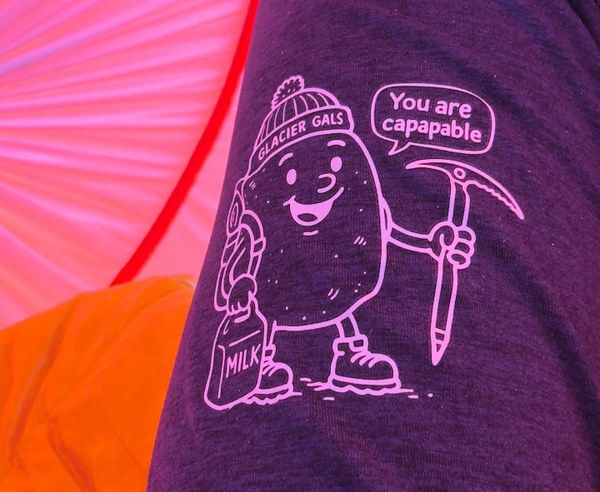 Our mascot, the Capapable Potato.
The details of our mascot were absurd, which was exactly the point. Under all the systems and seriousness, the Glacier Gals are built on a simple Mountaineers ethic: we work hard, we take safety seriously, and we don’t take ourselves too seriously.
We did, in fact, summit Rainier — and we did it the Glacier Gals way: slow, steady, intentional, with everyone showing up for the team. Back at basecamp, we sealed our successful summit with a mandatory, deeply unserious photo shoot.
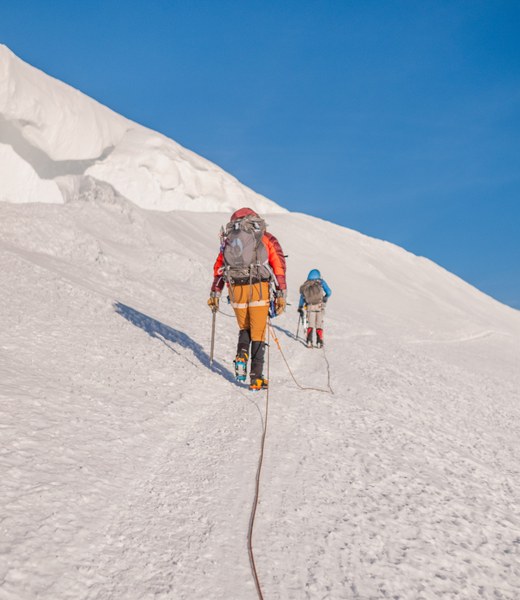 Ascending the Emmons Glacier on Rainier, July 2025.
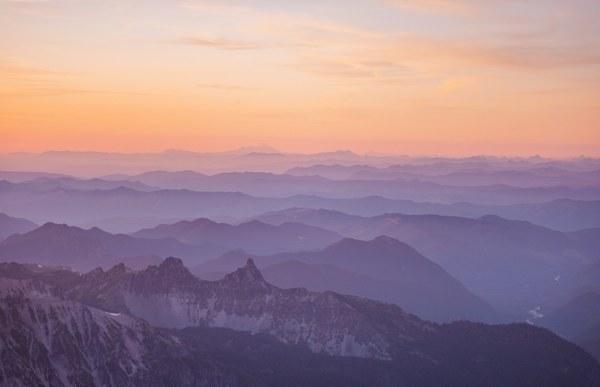 Sunset from Camp Sherman on Rainier.
Support that follows you home
Almost without noticing, our group expanded beyond the mountains. Last September, I got injured and had to take a break from outdoor activities. Suddenly my weekends were wide open, and instead of feeling rested, I felt lost. When I decided to invite the Glacier Gals over for dinner, I realized they weren’t just the kind of community I adventure with, but the kind that holds me even when I can’t show up as my most adventurous self.
It would be easy to look at the Glacier Gals now and assume this kind of community just happened, but it doesn’t. We built this community the same way you build anything solid in the mountains: slowly, intentionally, and with repetition. We showed up for the unglamorous parts. We learned each other’s pacing and strengths. We practiced speaking up early. We made decisions that prioritized the team over the summit.
And over time, things shifted. Strangers in Mountaineers courses became partners. Partners became friends. Friends became the kind of people you can count on — on a rope team at 3am, and at a dinner table when life feels messy and you don’t know what to do with your suddenly empty weekends.
The mountains are what brought us together, but the reason we stayed together was never just about climbing. We stayed because we built a space where ambition and safety could coexist, where competence didn’t require bravado, and where asking for what you need didn’t make you difficult, it made you trustworthy.
If there’s one thing I’ve learned from The Mountaineers, it’s that you can build your own community, but you have to be willing to do it on purpose — to invite, to include, to communicate, and most importantly, to keep showing up. Because the best part of finding your community isn’t the summit photo... it’s the voice on the radio in the dark reminding you that you’re not alone, and that you are capapable.
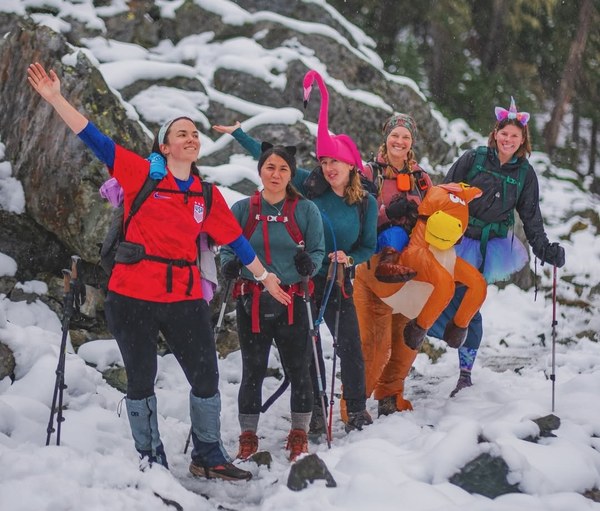 A belated Halloween hike at Snow Lake, November 2024.
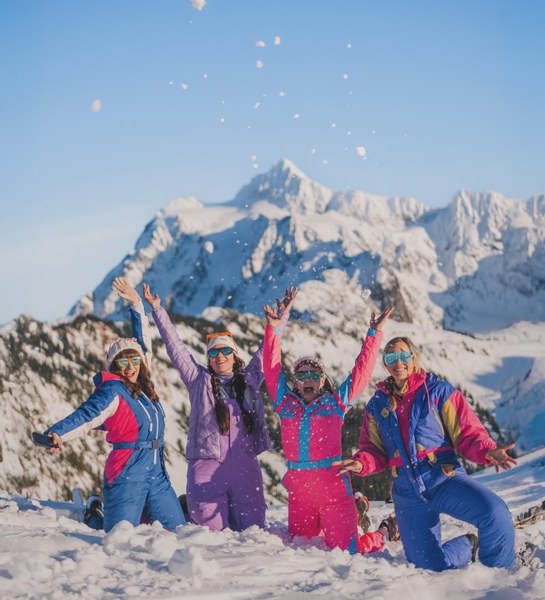 Snow camping at Artist Point to celebrate New Year's Eve, December 2025.
This article originally appeared in our 2026: Issue 2 of Mountaineer magazine. To view the original article in magazine form and read more stories from our publication, visit our magazine archive.
