 Shannon Rolbiecki
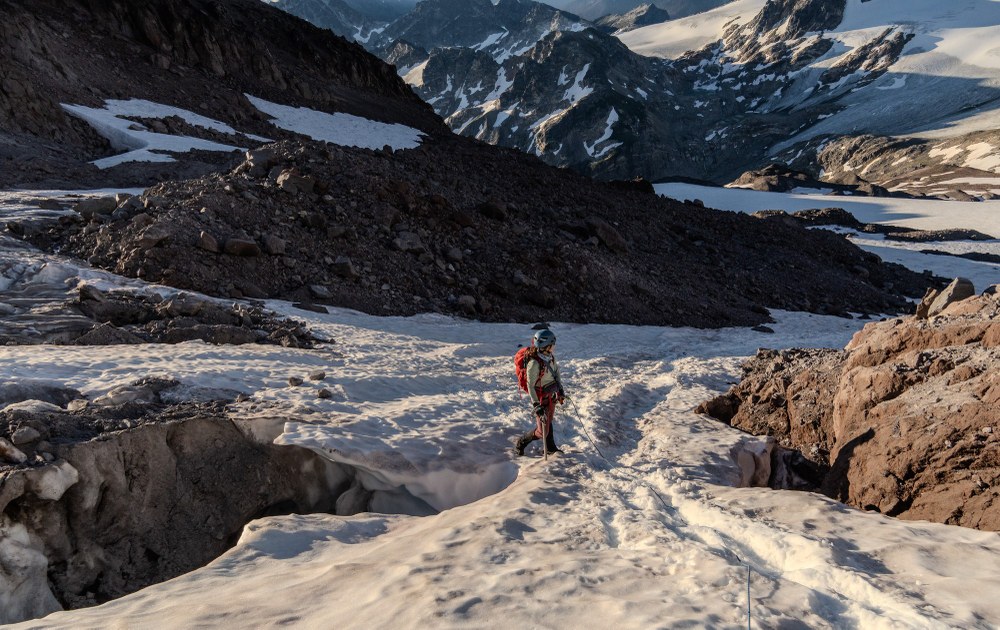
Shaded from the heat beneath two meager trees, I sweatily drop my overnight pack in relief. I’m on day one of a private, two-day climb of Glacier Peak with my climbing partner, a female force of nature I’ve had the privilege of training alongside through Tacoma’s Basic and Intermediate Climbing programs.
Exhausted and dripping in sweat, I shovel a handful of caramel cashew trail mix into my mouth when I notice a group of 12 to 15 climbers carefully rationing their energy while passing our off-trail oasis. “I bet they’re Mountaineers,” I say, mouth full of caramel and chocolate. My climbing partner decides to yell to the group, “Hey! Are you from The Mountaineers!?” After registering some nods, we yell again (with perhaps a bit too much enthusiasm), “Yay! We’re from the Tacoma Branch!”
Backcountry Mountaineers sightings always bring me joy. Knowing I share community and a passion for the outdoors with both familiar and unfamiliar faces on various adventures reminds me of the incredible gift this organization is to so many.
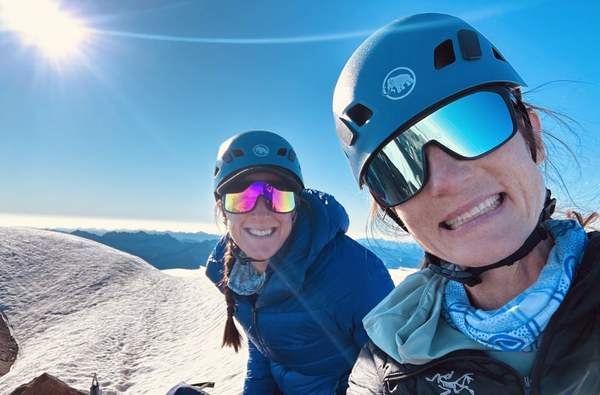 Andrea (left) and Shannon (right) at the summit of Glacier Peak.
How we give back
Throughout my career in nonprofit fundraising, I’ve had many conversations about a culture of philanthropy — what it is, how we build it, and how we sustain it. At its core, a culture of philanthropy is an organizational environment where everyone understands, values, and participates in fostering relationships and securing the resources needed to achieve the mission.
Organizations typically talk about ways people can give back through the three Ts: Time, Talent, and Treasure. After joining staff at The Mountaineers, I learned that we recognize two more: Ties and Testimony. Whether it’s teaching a course, mentoring a new student, encouraging your trail-curious friend to join, or making a financial gift to ensure our programs continue, all of these acts strengthen our community.
As I reflect on my journey with The Mountaineers community, I realize we have a true, self-sustaining culture of philanthropy built on giving back. We may join to take a course, learn a new skill, or simply get outside and explore, but for many members, being a Mountaineer becomes so much more. We start as students and return as mentors, leaders, and committee members. We learn new skills and return to teach courses and help build new ones. We give additional gifts beyond our membership, understanding that the future of our organization depends on contributions of all Five Ts. This is The Mountaineers Way.
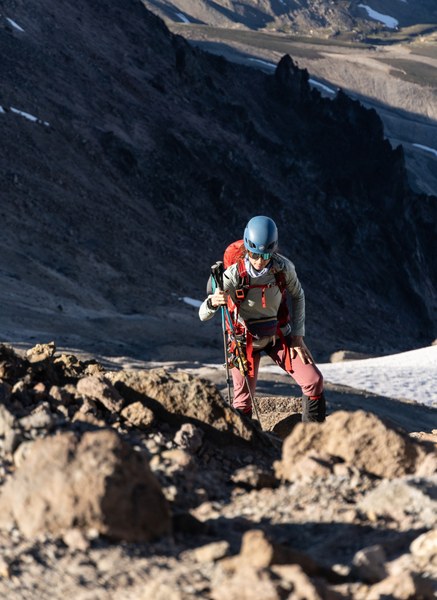 Shannon on the approach to Glacier Peak.
What brings us together
Giving back to our community extends beyond courses and activities. The strength of our community is often found in what happens off trail: checking in on fellow Mountaineers when they’re injured and can’t get outside; organizing meal trains for climbers in recovery; contributing to GoFundMe campaigns for unexpected medical bills; and simply looking out for one another as we battle the darkness of Washington winters, together.
What I find most powerful about The Mountaineers is that our community spans generations and includes people from vastly different backgrounds and political leanings. Yet we come together to share skills, get outside, and give back to keep this community thriving — for 120 years now! Amid difficult, tumultuous, and heartbreaking times, our Mountaineers community often feels like the antithesis of our broader societal divide.
Of course, any community is not always harmonious. We may vehemently debate which friction hitch would win in a fight (Team Prusik!), or grumble whenever a group leader declares, “Be Bold! Start Cold!” Still, we consistently find common ground in the connections we share through this organization, and that common ground is worth sustaining for another 120 years.
Whether you give back by teaching, leading, joining a committee, filling your bookshelf with Mountaineers Books, giving financial resources, or continuing to renew your membership long after you’ve hung up your backpack, you are helping sustain this magical community. You are ensuring that generations to come can continue to experience the healing beauty of nature, swap stories of Type 2 fun, and debate the virtues of wide-mouth versus narrow-mouth water bottles.
Thank you for sharing and sustaining this community with me.
This article originally appeared in our 2026: Issue 2 of Mountaineer magazine. To view the original article in magazine form and read more stories from our publication, visit our magazine archive.
