 Tess Wendel
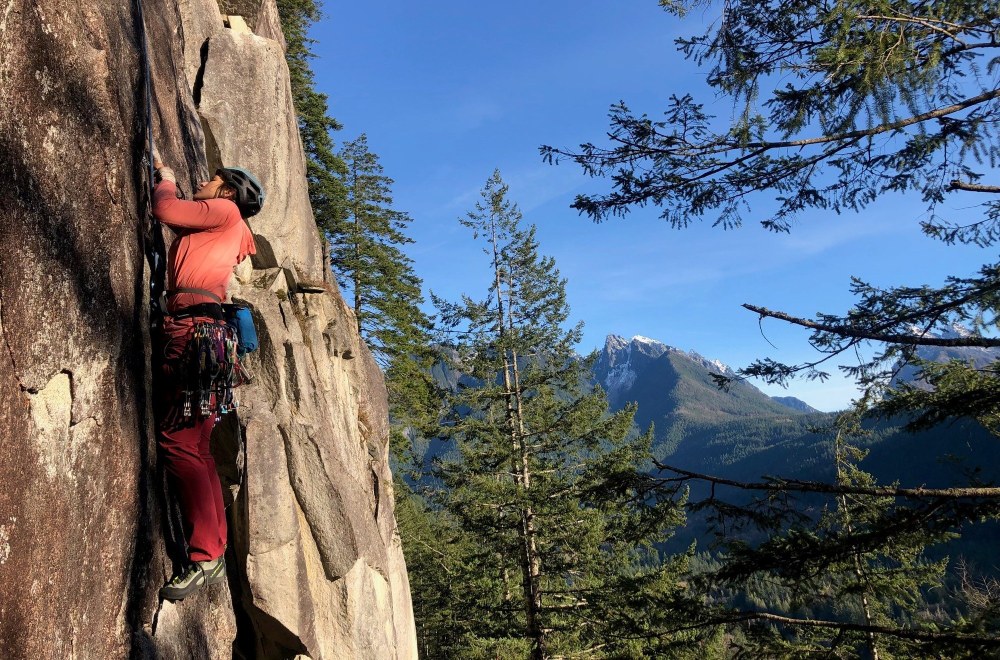
I’ve spent the last eight years at The Mountaineers helping students learn how to trad climb. Volunteering for these field trips is rewarding but can come with moments of anxiety.
Watching a new trad leader usually comes with thoughts like I hope that gear is good! Why don’t they place another piece?! and Yikes, I hope they are breathing! This anxiety is natural when working with people you haven’t climbed with before, especially when those climbers are learning and pushing themselves in a new skill that comes with inherent risks and safety concerns.
Mileage and time on rock are key for ensuring a better introduction to trad, but there are also a number of other best practices that make the crag a safer place and more useful classroom. The following items are organized by things that course leaders, instructors, and participants can do to increase their safety margin while teaching and learning how to place gear.
Basics For course leads or day-of field trip leads
- Reinforce the importance of ground school. Teach new concepts in a safe environment before getting off the ground.
- Don't rush the student. Emphasize to students and instructors that if a student isn’t feeling comfortable doing a lead or taking their final multi pitch evaluation, that is okay. Things can be be rescheduled. It’s okay to learn the skills and not graduate immediately.
- Pair experienced instructors with less experienced instructors when possible.
- Break down the progression if participants are struggling with the sharp end. Progression options for building confidence on lead are included below.
Progression Options
1. Mock lead dragging a rope below while placing gear
2. Mock lead with slack in your top rope (slack should be given only out of range of ground fall potential)
3. Lead on pre-placed gear.
4. Lead part of the route and then hang on the student's gear and rest/relax the nervous system, then place a few more pieces, then rest again. You can also do this by clipping a sling to their gear and stepping in it, essentially aiding on the piece to test how it holds bodyweight.
- Consider the risk and potential outcome of a fall before having a student take on gear of unknown quality. Students can also place a piece just off the ground and hang off it with a quick draw to test gear with body weight and without the risk of a bad fall.
- Practice taking mini falls. Set up a station where students can take mini falls on gear (the student will lead and get caught on lead rope, but is also on top rope as back up). This requires an experienced instructor to set up a harder/steeper route and two belayers.
- Research or scout the route. If you're using a crag that you haven’t been to before (due to permit restrictions, weather, etc.) consider reaching out to the community to get beta on the routes and the cliff (or take the time to scout ahead of time). The details about top rope access and gear beta for creating a safe learning environment are not always on mountainproject.com, so it doesn’t hurt to ask. Many leads have this info detailed in their course materials.
- Practice downclimbing. Consider having participants and instructors practice downclimbing in a controlled environment close to the ground.
- Have two rope teams per route for multi-pitch trips. Radios are encouraged to communicate between two rope teams. At least one rope team per route should have a climb leader or instructor with multiple years of trad-instructor experience.
For instructors
- Utilize alpine draws for increased safety and confidence. Having participants lead a climb that has a bit of a slabby finish? Consider hanging a couple long alpine draws off the anchor that allow a student to clip to make them feel safer while making the moves to get to the top.
- Give students ALL THE GEAR for their first leads. We want people to practice placing lots of gear. Generally folks are nervous, so there is a chance that someone will fall and we want folks sewing it up! Gear spacing for longer pitches can be addressed once folks have a few leads in and during multi pitch outings.
- If students are at a crux move, encourage placing two pieces next to each other or nesting pieces, particularly if gear is smaller or finicky. These can be equalized if the student is able to do so, but it's not required.
- Provide visual documentation for student feedback. If you are evaluating participant gear, consider climbing the route with a phone and taking pictures or video of suspect placements. A picture is often easier than describing verbally.
- Rappel the route with the participant for their first trad lead to evaluate and discuss gear placements together.
- Have students buddy check each other's gear once they've had practice placing gear with instructor oversight. There can be richer conversations about gear when the instructor-student power dynamic is not in play. An instructor can still weigh in on any issues where there is disagreement.
- Pre-place gear in risky areas. Bouldery move off the ground? Or a ledge halfway through a route? Consider having an instructor pre-place a piece of gear that is a little higher off the deck that a student can quickly clip to protect the first moves and make sure the belayer understands this is a risky spot.
- Ask students to self-evaluate before and after each of their leads. This opens the door for instructors to give feedback about any safety concerns they may have had while observing.
- Discuss how to measure for the right size piece with your hand if a route has a blind placement. Have an instructor on a fixed line who can visually inspect the piece before the student climbs above it.
For participants
- Don’t be afraid to ask for accommodations and share concerns with instructors.
- Practice, practice, practice.
- Lead at the gym on bolts. It helps with the lead head while placing gear.
- Place gear with a loose top rope to help build confidence in your climbing skills and lead head.
- Practice downclimbing! The easiest way to get back on “top rope” or minimize the length of a fall is to downclimb.
- Practice being the perfect belayer. Careful belaying can be a literal life saver.
In addition to these physical safety tips, there are multiple things that you can do to help create a more welcoming environment that will lead to better physical and emotional safety outcomes. Learn more by reading How To: Create Inclusive Experiences
Have additional tips and tricks that we missed? Please add them in the comments below! Learnings like this often come from incidents or near misses, so please make sure to report any safety related issues when you see them. Thank you!
And you're interested in writing a safety blog, please reach out to safety@mountaineers.org with your proposed topic. Topics related to all activity types (hiking, kayaking, snowshoeing, canyoning, etc.) are strongly encouraged, along with stories and best practices related to emotional safety and group dynamic scenarios.
