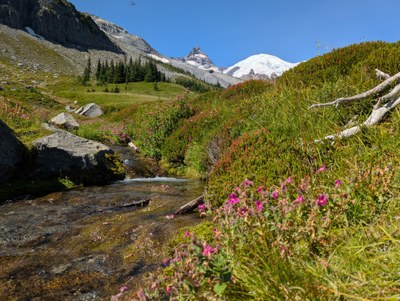
Trip Report
Basic Glacier Climb - Little Tahoma/East Shoulder
Great trip to Washington's 3rd (or 4th?) tallest peak.
 Patrick McLaughlin
- Sat, Aug 9, 2025 — Mon, Aug 11, 2025
- Basic Glacier Climb - Little Tahoma/East Shoulder
- Little Tahoma/South Face
- Climbing
- Successful
-

- Road suitable for all vehicles
-
- Route was melted out all the way to camp on the Meany Arm. Flowers were blooming. The path is still hard to follow through the meadow but can be accomplished by using a good GPS route. Supposedly there's a way to stay on the Wonderland trail cut south of Meany crest and hug its southern wall and scramble up to the toe of the Frying Pan Glacier using a wide ramp.
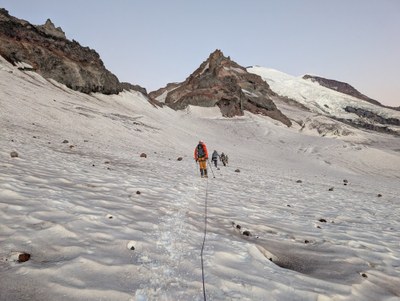
- Frying Pan Glacier had a few crevasses open they were easy to avoid and there was no worry of sliding into them. Biggest concern was rock fall coming off Whitman Crest until the notch to the Whitman Glacier. Had to dodge a rock tumbling down a couple times even at dawn.
- Through the notch, it was best to drop below the exposed scree and stay on snow/glacier. The scree is just too loose and has a creek crossing in it as well.
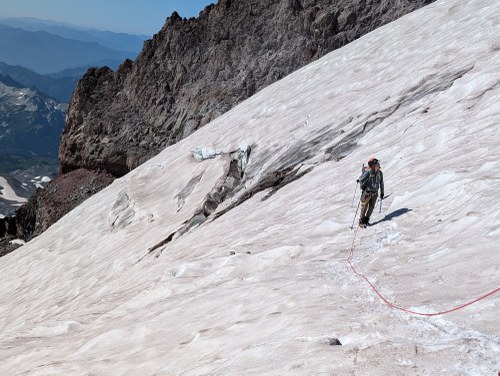
- The snow slope leading up Little Tahoma had a few rocks coming down at the entrance. There's also a few crevasses on the left side. The 10 ft. wide sun cups made switch-backing up the steep slope manageable and the snow was just soft enough to allow for self-arrest. Although one wouldn't slide too far being roped up but to the next sun cup. Recommend two tools either whippet pole and axe or one ice tool and an ice axe, especially if the snow is more firm and less sun cupped.
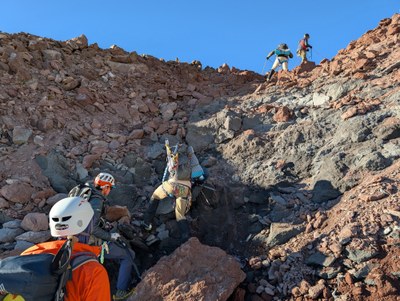
- The rock band separating upper and lower snowfield was fully exposed this late and required crossing with crampons on. It seemed better to go up a chute in the middle that had a creek running down it. Beware of the snow bridge over the creek where if goes under the lower snowfield/glacier should that weaken.
- Snow to rock transition and up the chute requires one-at-a-time travel. Easy to sit aside the chute and wait turns. There's one good 4th class scramble move in there but not exposed. Upper scree slopes were manageable and would suggest staying right along the wall to avoid most loose scree.
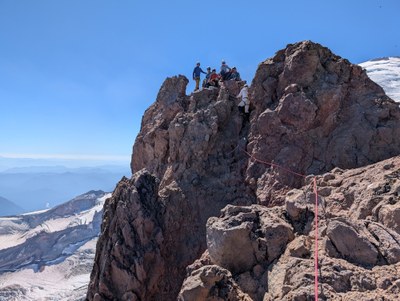
- The summit is a straight forward scramble with not much loose rock. Our group set up a fixed line starting with a triple runner around the big rock on the east side of the catwalk as a belay anchor, double runner to sling a horn on the east side of the saddle, a #0.3 cam just on the other side of the saddle, a #1 cam at the end of the traverse left, a #0.5 cam on the left side of the chute up to the summit, a triple sling around the rock atop the chute and lassoing the summit rock with the rope.
Went the day before to the White River Ranger station to pick up the permit. Showed the gate attendant my annual pass and was able to avoid timed entry by showing my permit in Rec.gov app. At the ranger station, I had to fill out vehicle information, party information including names, emergency contacts (name & phone) and previous climbs/routes. Had to enter the pay.gov tracking ID for everyone's annual Rainier NP climbing permit and verify all the climbing gear we would have with us to include tents and their color.
Day 1 - 6 miles - 2,940 ft climbed
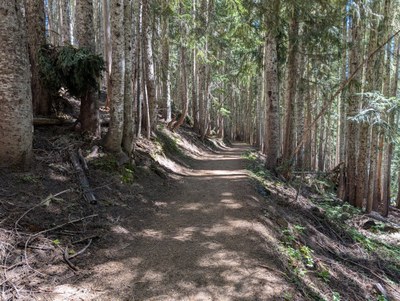
The Olympia Mountaineers group of seven (5 leaders, 2 students) arrived before the timed entry started at 7am, but there was still an attendant collecting park entry fees and checking passes. We left the Frying Pan Creek/Summerland trailhead at 8:00 a.m. We quickly gained the Wonderland trail, which is well-cared for and pleasantly smooth. About 3/4 of the way to Summerland, Little Tahoma comes into view.
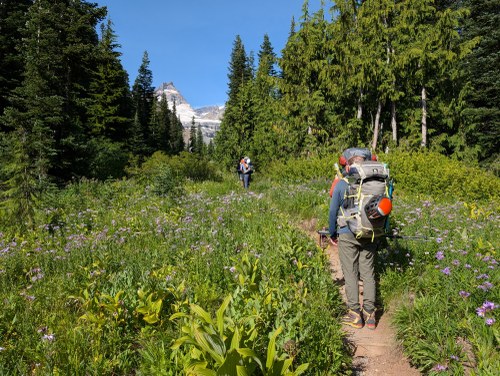
It was anticipated to be a warm weekend, so our first stop was Summerland camp to use the privy and filter water from the creek just west of the junction. After a lovely stop for snacks and water, we set out across following a faint boot path to the slope to climb up to the Meany Arm. There's a couple ways to get to the talus slopes so follow a good GPS route for the time of year or take the alternative around the south side of Meany.
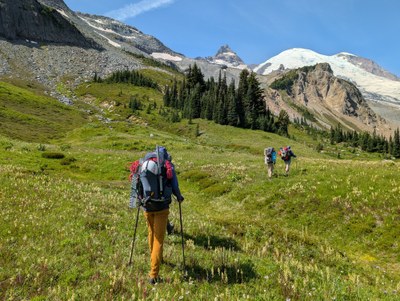
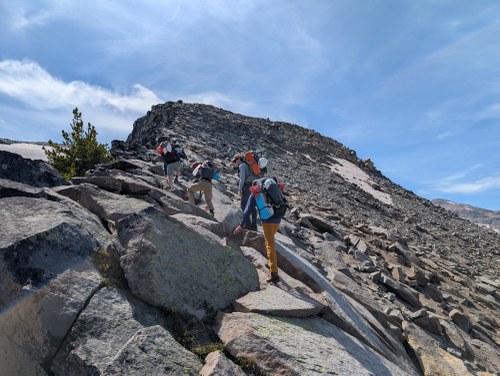
Climbing up the Meany Arm started out as dirt and grass and then became dirt and loose rocks before finally becoming talus. We stopped at the first bowl just below Meany Crest to take another break and have some snacks. Then we hiked up to the saddle to drop our bags and tag Meany Crest.
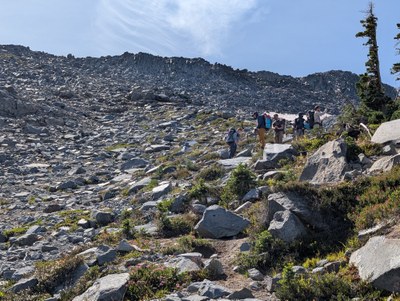
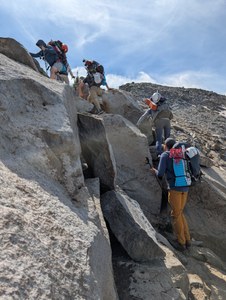
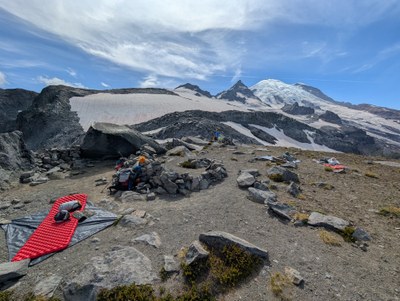
From the saddle, it's an easy scramble over chunky talus to the plateau that holds camp for the next couple nights. We reached camp a little after 3:00 p.m. and filtered water from the toe of the Frying Pan Glacier just 200 feet or so from camp.
After dinner and games, we went to bed around 8-9:00 p.m. A few had tents and few cowboy camped under the Perseid Meteor shower. The near full moon also illuminated camp all night.
Day 2 - 7 miles - 6,767 ft climbed
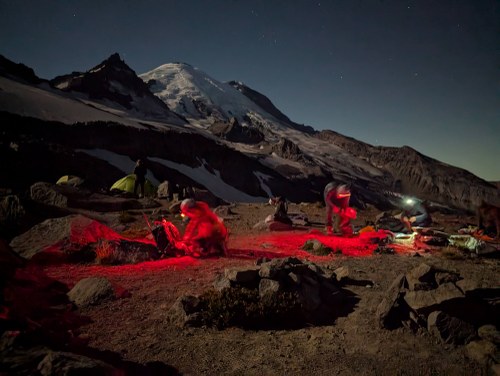
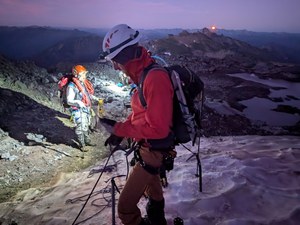
We had a 3:30 a.m. departure from camp to reach the glacier 200 ft. or so away. There we prepared for glacier travel with ropes and crampons. We set out across the Frying Pan Glacier around 4:00 a.m. for the notch between Little Tahoma and Whitman Crest. Traveling along below Whitman Crest it was clear we were to be weary from all the rocks strewn across the glacier. A few small rocks did come down ahead or behind our teams, so we moved fast to the notch reaching it around 6:30 a.m.
On the other side of the notch, rock fall was not much of concern. We crossed a rock band and immediately regretted it due to the loose rock and creek crossing. (Was better to head more south then west staying on snow a long as possible and avoiding the creek altogether). We walked along the Whitman Glacier until reaching our turning point to head up the steep snow/ice toward the summit block. We stopped for a moment to filter water pouring off cliffs before heading up. While we rested a few rocks did come down but this seemed to only be an issue right at the opening.

The steep slope had large sun cups (5-10 ft. diameter) that made it much easier to climb switch-backing up the slope. The first inch or so of snow was mushy and allowed for good traction. We stayed right to avoid a crevasse on the left at the opening. We continued our climb staying right that opens up into a bowl of sorts that was safe from crevasses. We then reached a rock band that usually has snow pathways through, but not this late in the year. We found a ramp on the right to get onto the rock band and found it to be very loose scree as we climbed up it short roped with crampons still on. The sun cups on the even steeper upper slopes were even larger at 8-12 ft. diameter. A whole team of 3-4 climbers could stand together in one cup to rest.
Finally we reached the end of the steep snow and were able to get on the summit block at 12:30 p.m. The rock is still quite loose here and has been the topic of a near-miss report in the past. It was best to unrope and leave all sharp objects behind here. Our team traveled up the large chute just to the left of the round column rock one at a time as it was easy to send rocks down. There was one challenging 4th class maneuver that required some stemming and mantling.
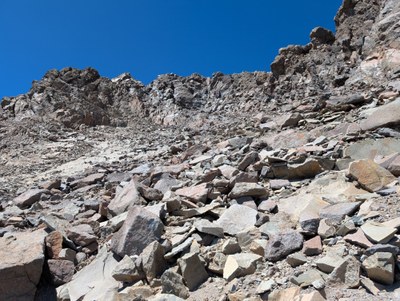
Once through the chute, it was a mix of talus and scree. There's multiple booth paths braiding their way up toward the summit. We felt the best path hugged the right wall and stayed off the more loose scree to the left. The altitude and heat really started to hit some folks here as we were at about 10,700 ft. elevation and had been going for about 9.5 hours with the sun beating down. Atop the scramble, there's another short chute and then scramble up to the east summit ridge where most dropped packs.
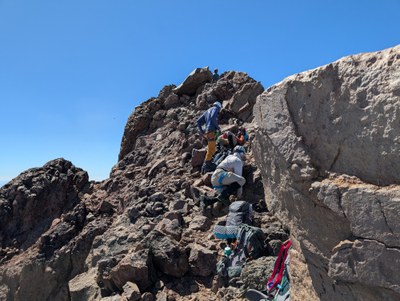
To get to the summit, you have to climb up to the catwalk from the east ridge that's about 5 ft. wide. To the north there's a 500+ ft. shear drop down to the Emmons Glacier and a long, steep, dirt chute to the south. From the catwalk scramble down to a narrow saddle, traverse over left and then up a steep chute to the west (true) summit. We set a fixed line with a three slung rocks and three cams from the top of the catwalk to the summit rock and folks used prusiks to follow the line to the summit and back. The summit seems like it could comfortably fit about 8 folks. Anymore and it would start to get too crowded. Our team reached the summit just after 2:30 p.m.
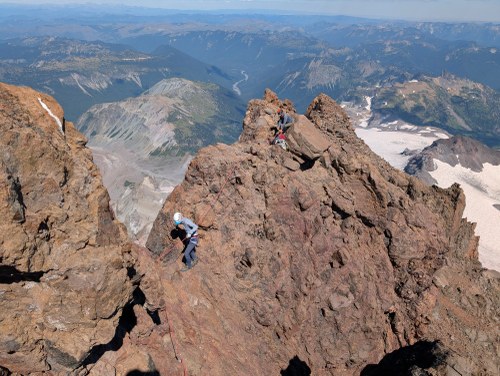
We headed down from the east ridge at about 3:30 p.m. reversing course down the rock back to the chute and eventually snow. Back on the snow, we set up two 60m rappels after one another on single lines using snow pickets. The last and most experienced leader pulled up the snow pickets and carefully walked down the slope. The two rappels only got folks just above the rock band, so we plunge stepped and down climbed to the rock band. The snow was quite mushy at this point and long slides were not a big concern and there were no crevasses on the upper slope.

We went one at a time through the middle of the rock band where a creek was running from the upper to the lower snowfields. The creek walls provided solid rock to scramble along.
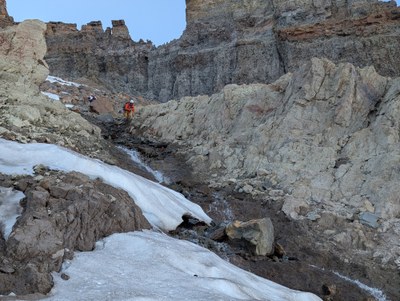
We stayed unroped for the lower snowfield as long slides and crevasses were not seen as huge risks if we stayed on our uphill path. Rock fall remained the biggest issue and being free to avoid rocks was of main concern. We reached the bottom of the slope at about and headed back for the notch careful to stay low of the rock band we crossed on the way out. We filtered water where the creek came down the rock band and into the Whitman Glacier. Then we climbed a short and more direct route up on more solid talus to the snowfield just below the notch and then went over the notch to the Frying Pan Glacier. Dusk was upon us as it was now 8:00 p.m. We dawned our headlamps and continued our glacier walk back to camp. Staying well below the rock fall slopes. At about 9:30 p.m., we reached camp and quickly replenished our Calories before going to bed. We were visited by a fat rat scurrying along the wind wall back and forth as we settled in. We were sure to keep our food protected and didn't have any issues.

Day 3 - 6 miles - 1,348 ft. climbed

Woke to a beautiful sunrise before hitting the snooze button for 2 more hours. Packed up camp and departed for the parking lot at 9:30 a.m. We stopped in Summerland for water and snacks and pushed on to the trailhead reaching the cars just before 1:00 p.m.
Photos courtesy of: Kimberly Glock, Martin Fisher, and Patrick McLaughlin