Trip Report
Sea Kayak - Deception Pass
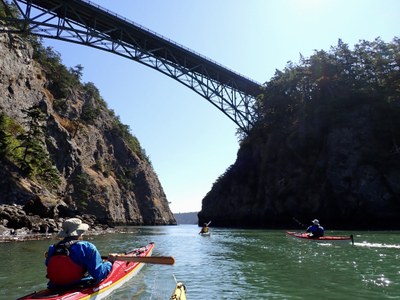
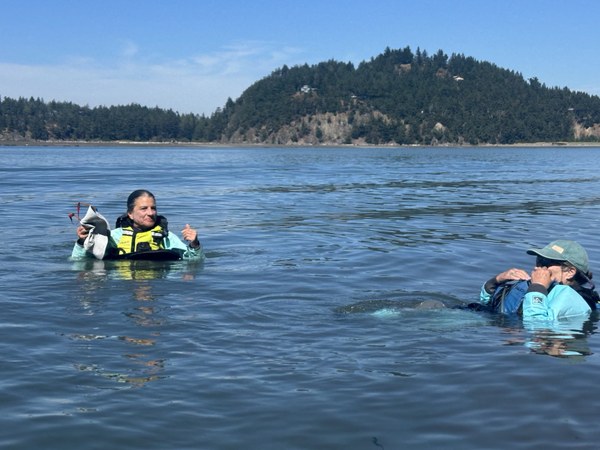
Success on the second annual EMSK Bridge to Bridge paddle! This year we went west to east, from Bowman Bay to La Conner. A fun, 10.6-nautical mile paddle with eight enthusiastic (and mud-resistant) EMSK members: Cathie F, Karen S, Michelle M, Charlie R, Maria E, Dewet P, Rebecca S, and yours truly.
 Doug Palm
- Sun, Aug 10, 2025
- Sea Kayak - Deception Pass
- Deception Pass
- Sea Kayaking
- Successful
-

- Road suitable for all vehicles
-
Winds were calm and the water velvety for most of the way. We had a bit of rough water rounding the west side of Yokeko Point but that’s to be expected on a flood. Currents were always in our favor and we managed a top speed of 6 knots at one point.
Trip report for the second annual EMSK Bridge to Bridge paddle.
After staging our car shuttle, we launched promptly from Bowman Bay and went through Canoe Pass at slack before flood.
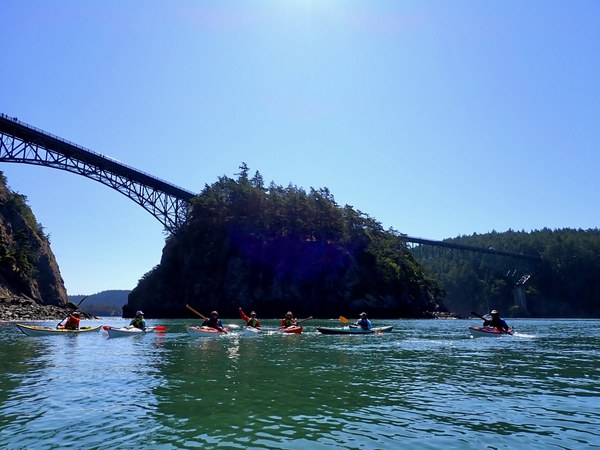
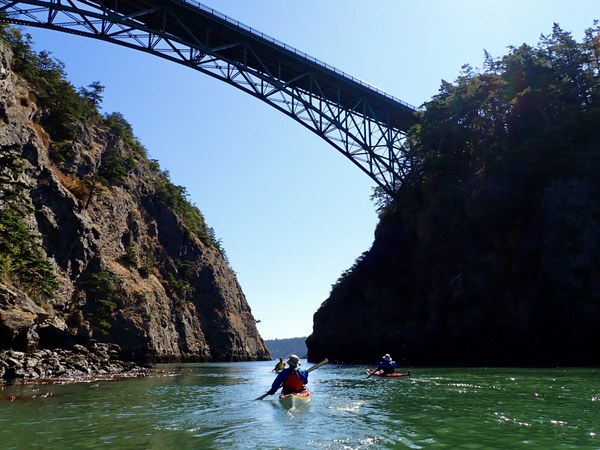
We paddled along the north side of Cornet Bay on a bearing to Yokeko Point, then crossed during a gap in the usual weekend gauntlet of powerboats to reach Hoypus Point for a short break.
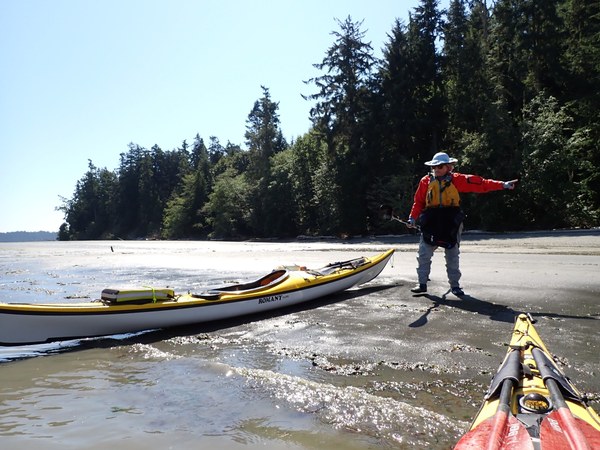
From there, we paddled to the north side of Hope Island for a long lunch while we waited for the tide to rise enough for the next part of our trip.
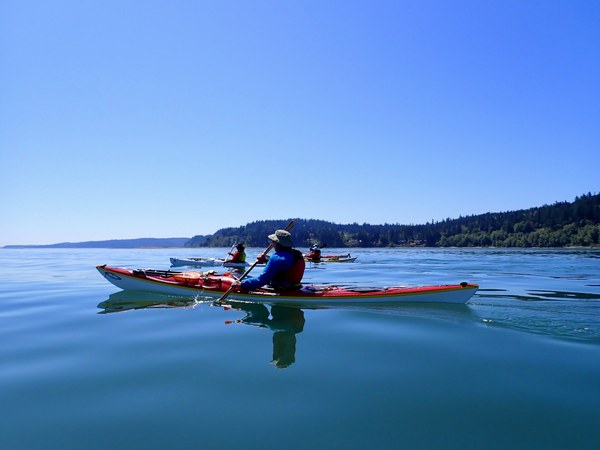 Midway from Hoypus Point to Hope Island, crossing the building ebb there at about 4 knots.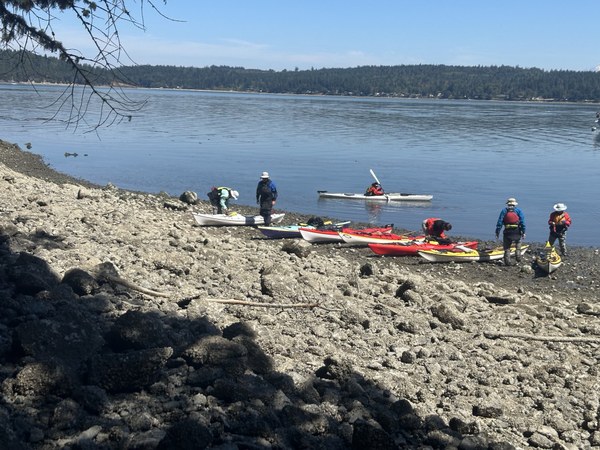
We continued to the east side of Hope and crossed partway on a bearing to Sneeoosh Point to catch the mid-channel ebb current. We followed it down along the diagonal edge of the mudflat to the end of the Swinomish Channel before turning east along the jetty to reach Goat Island. At one point, we reached 6 knots, thanks to a current assist off the southeast end of Hope.
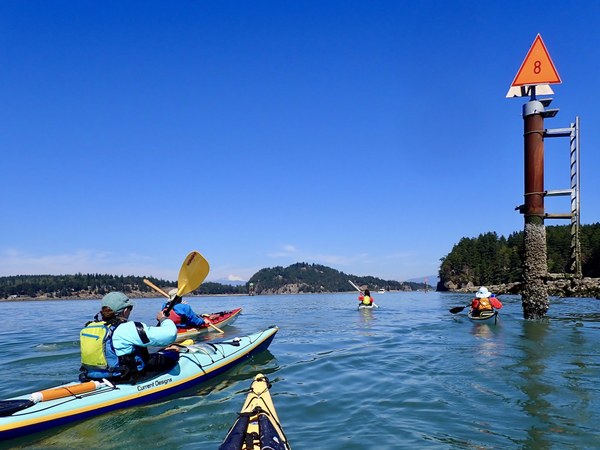
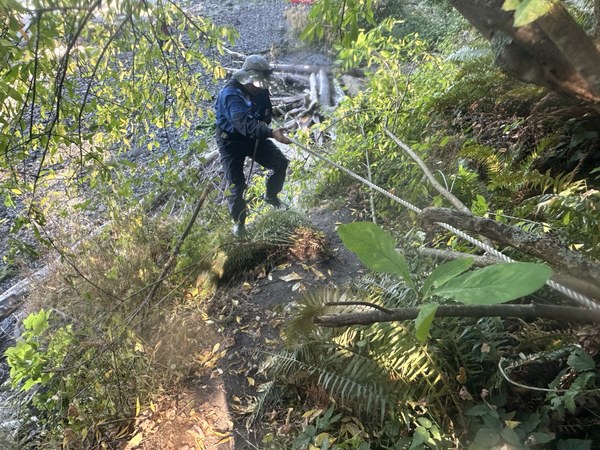
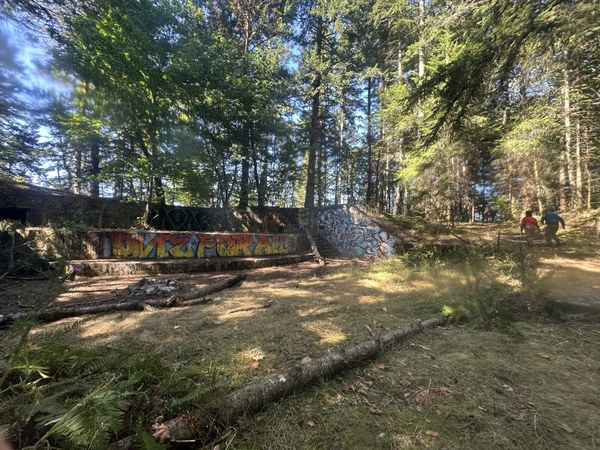
After a quick tour of Fort Whitman, we caught the incoming current to La Conner, with a brief stop to peek at the fishway in the dike between McGlinn and Goat islands.
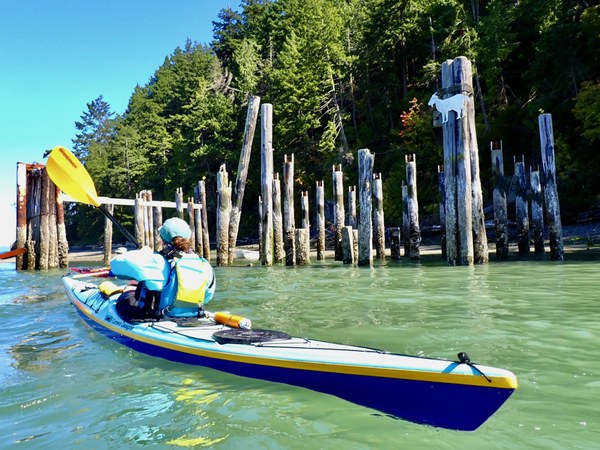
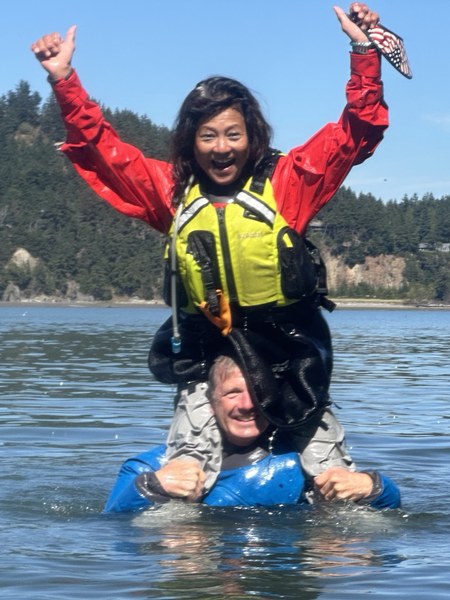
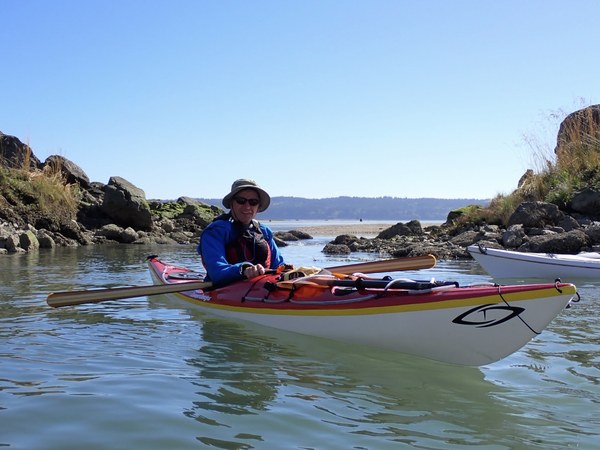
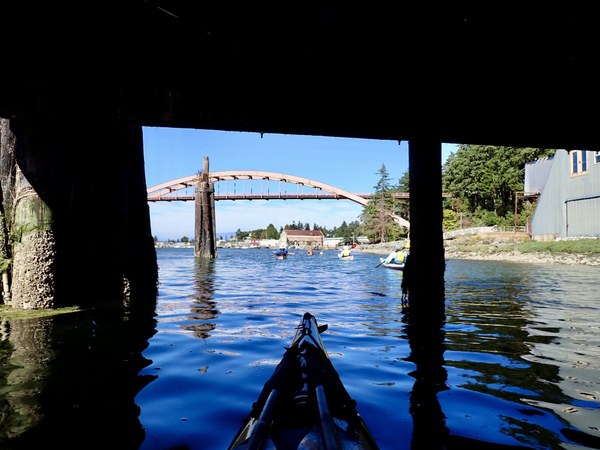
We ended one minute earlier than the posted time, so not too shabby!
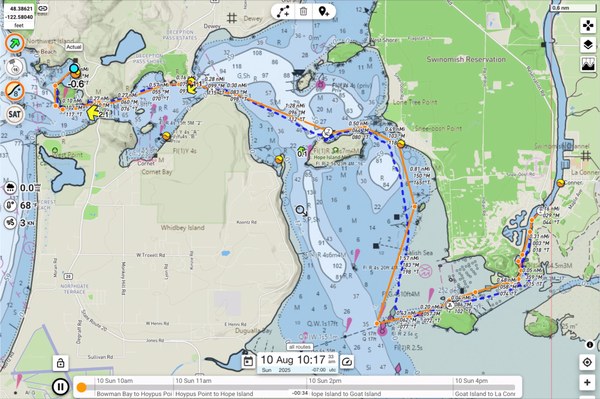
Tools used in planning included NOAA for tide and current predictions; NOAA Custom Chart Tool (for overall area and detail charts); NOAA Marine Point Forecast and Hourly Weather Graph (for official National Weather Service forecasts, including wind speed and direction, gusts, wind wave heights, significant wave heights, fog, cloud cover, and more); Windy.com (for ECMWF weather forecast model and multi-model comparisons, including wave heights); DeepZoom (for route planning, post-trip plan vs. actual analysis, and for visualizing current and tide conditions over the course of the trip for comparison with NOAA’s predictions); NANOOS.org’s NVS “Way Water Moves” (for a three-day “peek ahead” update on current patterns and event timing based on recent barometric pressure, river outflows, and other factors); Garmin GPSMap (for speed, distance, average speed, etc. while underway, and for track recording); Google (for history information and interesting factoids); Garmin Explore app (to automatically download the trip track to a smartphone); and just for fun—Claude Sonnet 4 and ChatGPT 5.0 (for miscellaneous cross-checks and help with the shuttle plan).