Trip Report
Intermediate Alpine Climb - Goode Mountain/Northeast Buttress
A double-Bulger trip with summits of Goode Mountain and Storm King
 Isley Gao
- Thu, Aug 7, 2025 — Sun, Aug 10, 2025
- Intermediate Alpine Climb - Goode Mountain/Northeast Buttress
- Goode Mountain/Northeast Buttress
- Climbing
- Successful
-

- Road suitable for all vehicles
-
- GPX track: Gaia
- Crossed Grizzly Creek via narrow log a little bit upstream
- Crossed North Fork Bridge Creek by taking shoes off and wading through, around shin-knee deep
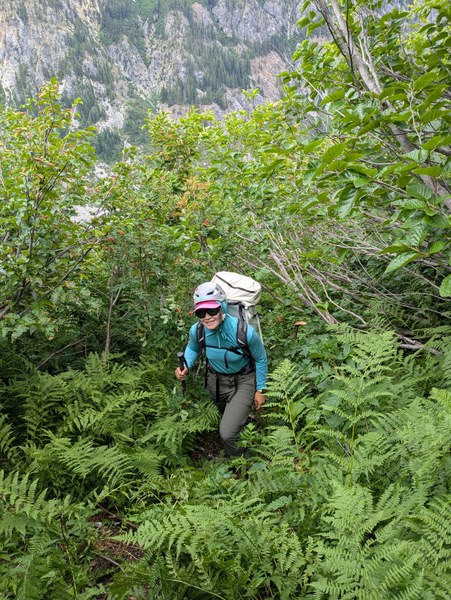
- Overgrown alder tunnel between North Fork Bridge Creek and Day 1 bivvies (5500') is still overgrown
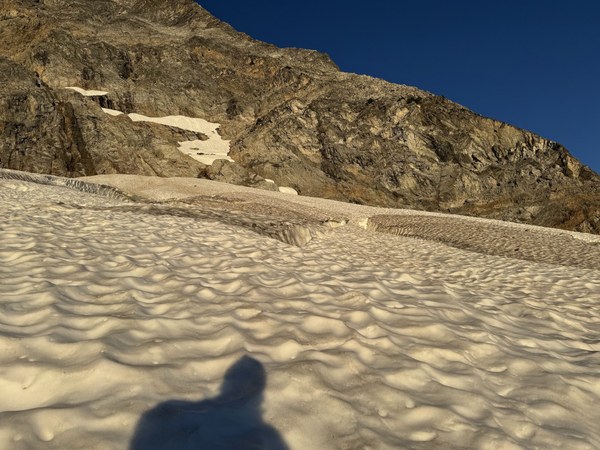
- Glacier is in good shape with navigable crevasses, about ~30min of glacier walking. Aluminum crampons on approach shoes worked well.
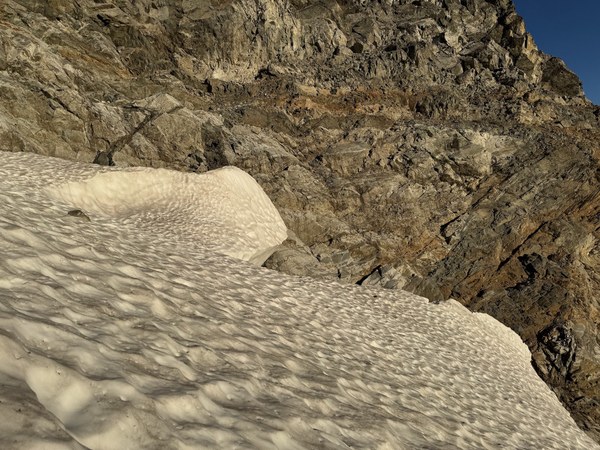
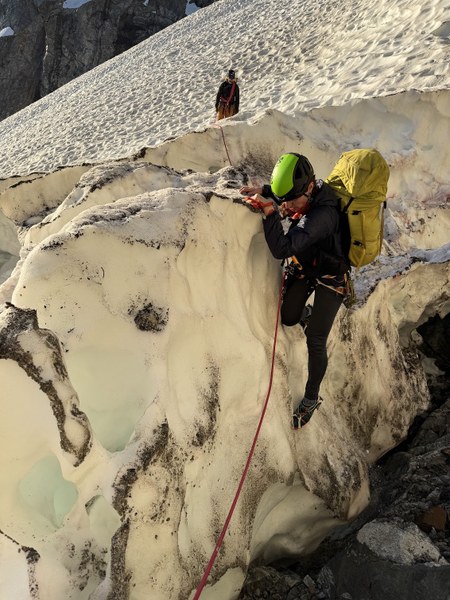
- Getting from glacier over to rock required a big down step on firm snow.
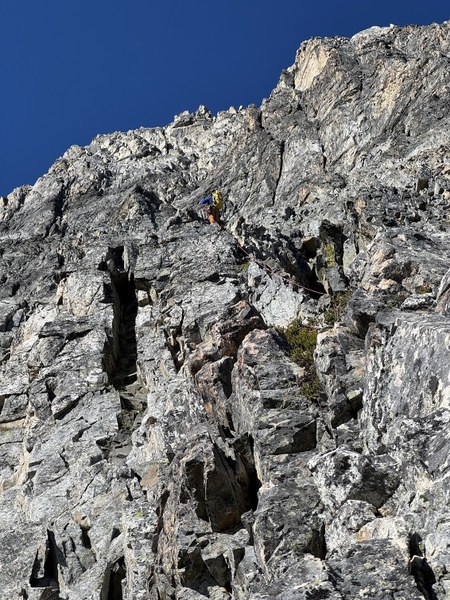
- Climbing on NE Buttress is generally solid, but has loose sections
- Don't need to climb into the Black Amphitheater (a ledge with a band of dark rock surrounding it) unless you are bivvying there. We mostly stayed on or close to the ridge
- 3 raps to notch, 3 more raps to SW couloir, then down scramble
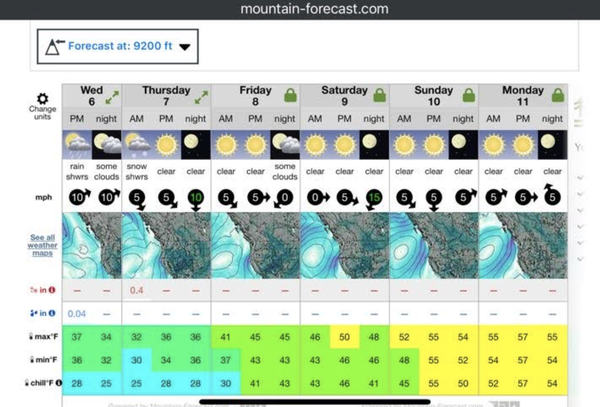
- Weather leading up to our climb: rain showers forecasted on Thursday, with clear, sunny conditions Fri-Sun
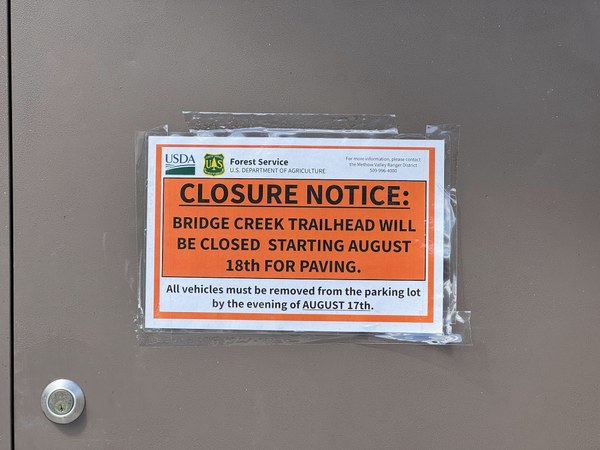
- Bridge Creek TH will be CLOSED starting evening Aug 17. Sign posted on vault toilet doors
Day 1: Bridge Creek TH -> ~5500' bivvies camp
We left Seattle bright and early and arrived at Marblemount Ranger station around 6am to an almost full parking lot. We pulled a number from the entrance (#8!), waited in the car, and then waited by the entrance after opening for our number to be called. Despite how busy it was, we were able to get our first choice camps: 2 nights for Goode XC Zone, 1 night at Park Creek camp.
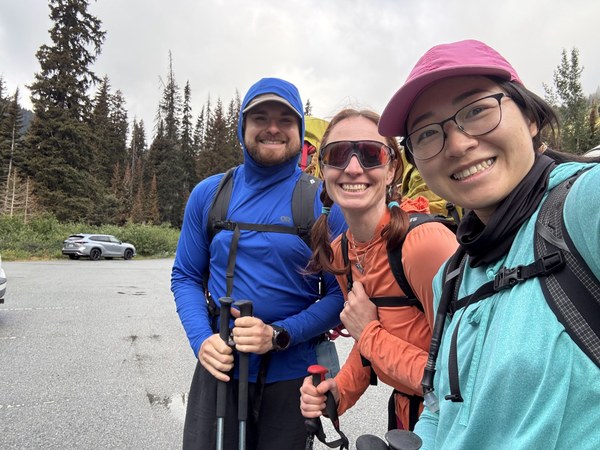
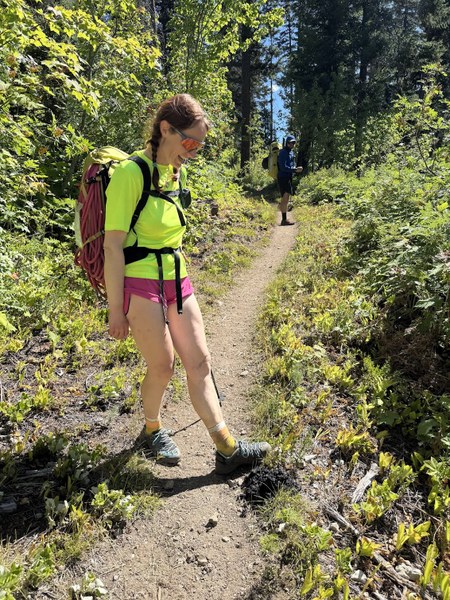
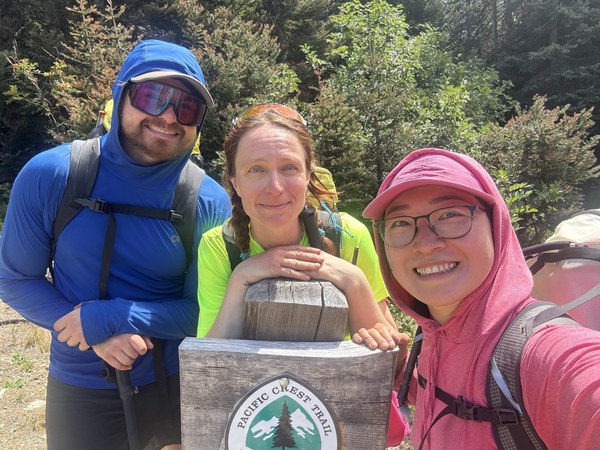
With the fee paid and our permit attached to Jule’s backpack, we were ready to go! We parked the car at Bridge Creek TH and set off on the PCT, coming across many thru hikers! They all looked way cleaner than we expected, maybe from having recently resupplied and cleaned up in Stehekin.
A few miles in, a ranger on the trail checked our permits and let us be on our way.
It took us about 3 hours and 10 minutes to stroll down to the North Fork trail junction where we branch off the PCT toward Grizzly Creek. Along this route someone had kindly come through and whacked all the overgrowth away.
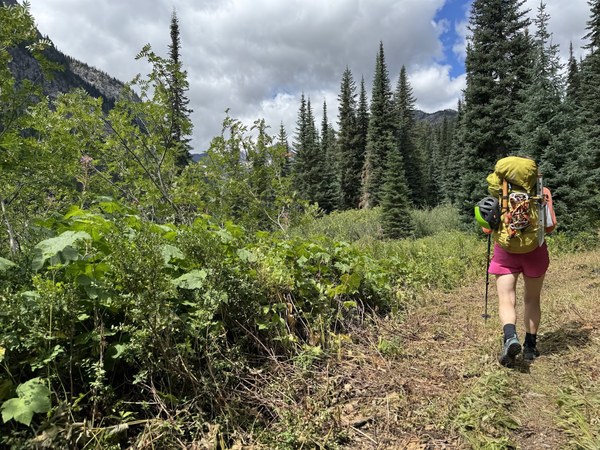
The Grizzly Creek crossing (first major creek crossing) was straight forward. There is a log a little bit upstream that we could see from the trail. It is inclined and a little narrow, but just wide enough to walk over and avoid having to wade through the water.
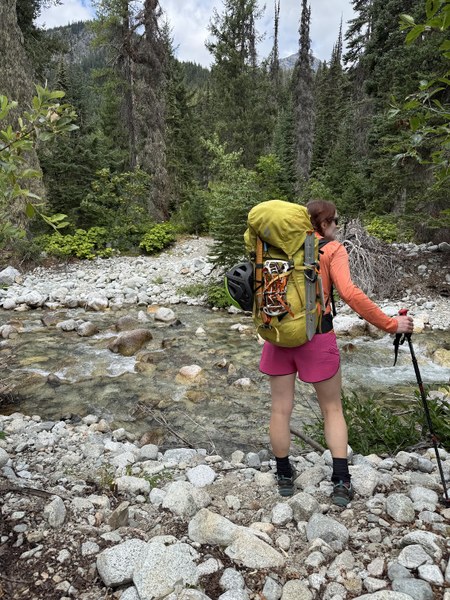
The next creek crossing did not have any convenient logs, so we took our shoes off and waded across. For medium sized people like ourselves, the water came up to shin/knee height.
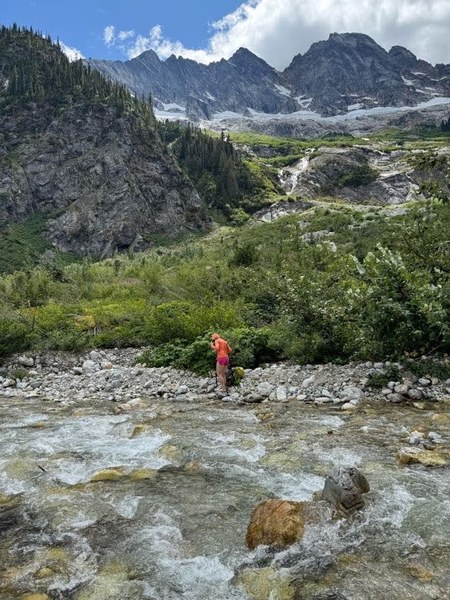
From here the route becomes quite steep, as we left the maintained trail and clambered up rocky, heathery trail mixed with overgrown alders toward our bivy spot for the night. We bivvied at 48.48929, -120.89770, ~5,550’. There were 2 spots here that could fit 1p tents. A little farther up there is another spot. Not a ton of big wide flat spots, which was fine for us in our little bivy bags.
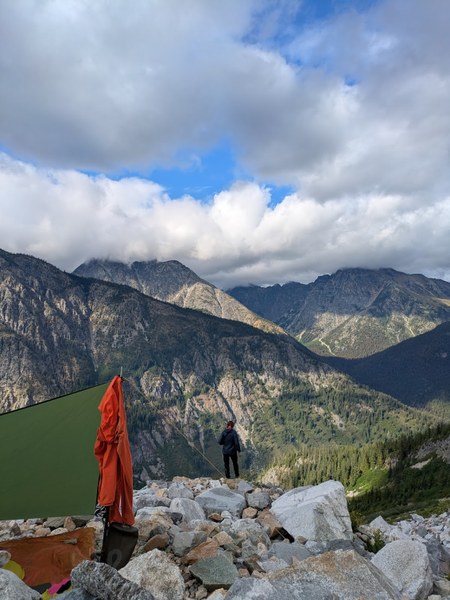
Day 2: ~5500' bivvies camp -> Goode summit -> Heather bivvies camp
The next morning we left camp at 5am and scrambled up slabs toward the glacier. We roped up and donned crampons at 6400’ where the snow starts. All of us wore approach shoes for the entirety of the trip, and had universal aluminum crampons that we strapped tightly to our shoes. These proved to work amazingly for the 30 minutes of low angle glacier walking!
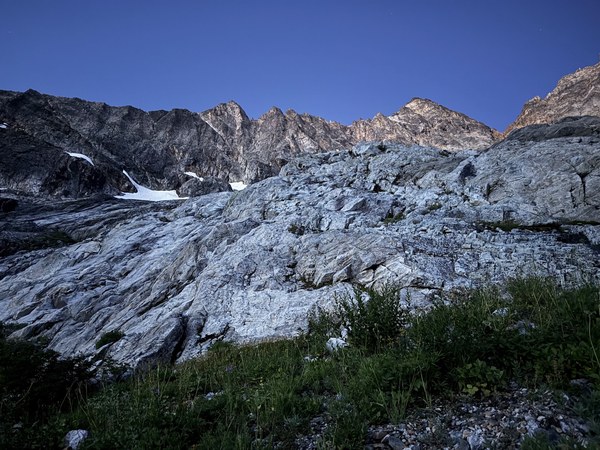
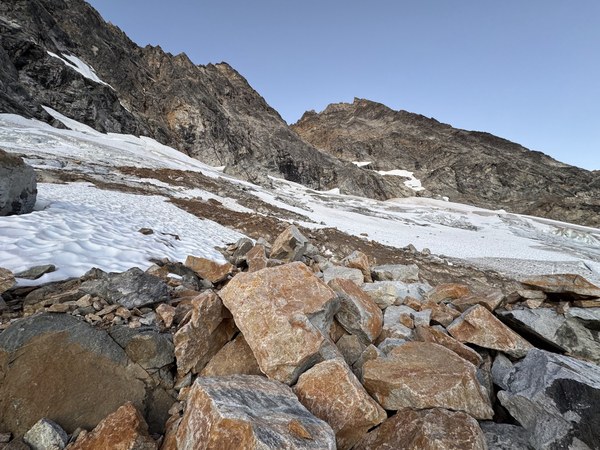
The glacier has peeled away from the rock, revealing a big gap, but if you get closer you can see where the drop off is less steep. We were able to take a big step down and then another big step over to the rock at around 6800’, where we racked up and transitioned to rock climbing.
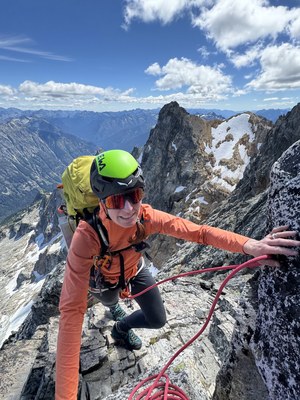
For gear, we brought .1-2 cams, doubles of .3-.5, nuts, 8 single alpine draws, 6 double length runners, 1 quad length runner, and cordelette for anchors, which let us climb looooooong simul blocks with our 60m rope. The climbing is generally 4th class with a few fifth class moves. Despite the low grade, we were happy to have the rope and protection especially considering some seemingly sturdy holds were in fact loose once weighted.
In total we climbed 5 simul blocks, staying on crest of ridge the whole way until getting to the first (first from the top, closest to the summit) rappel station, then trend right to the summit.
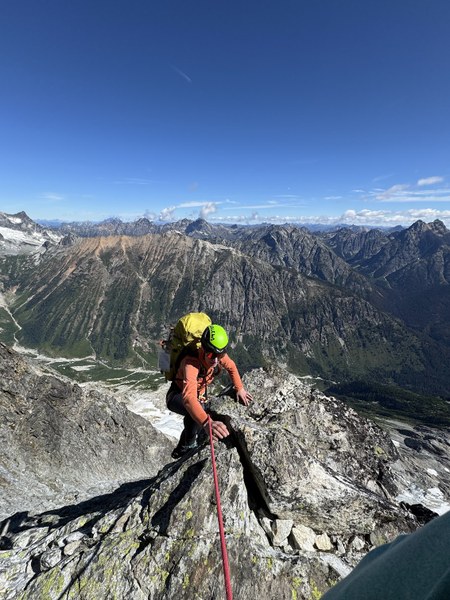
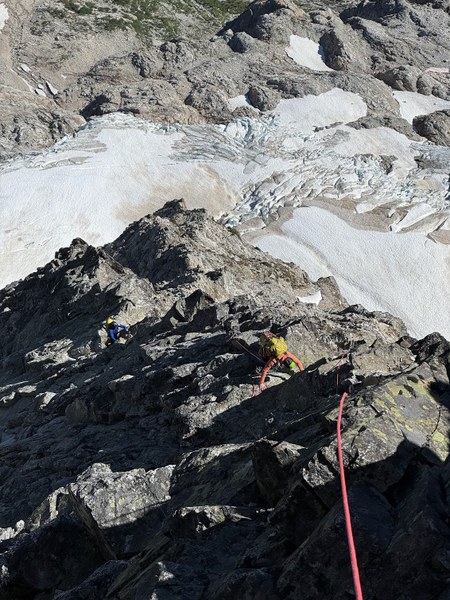
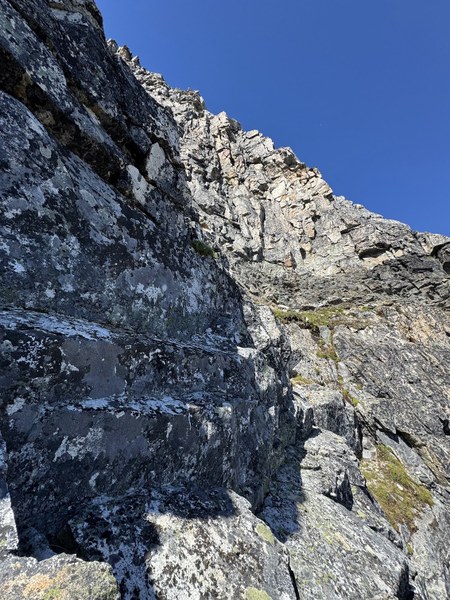
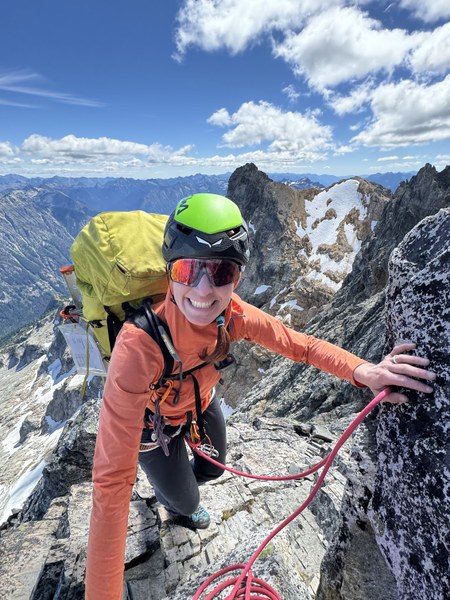
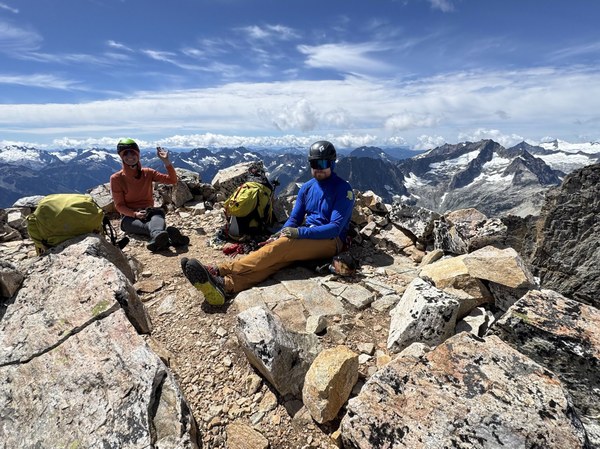
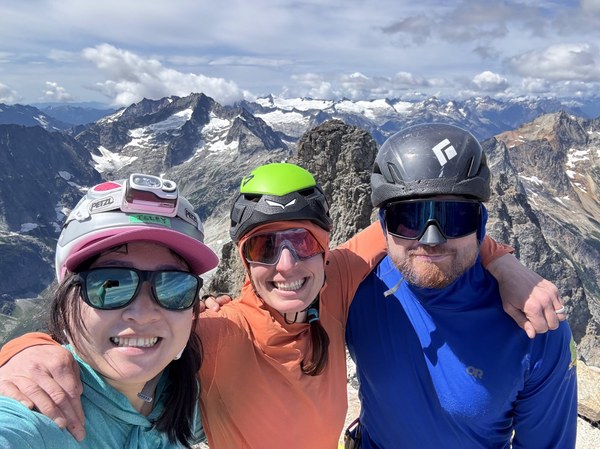
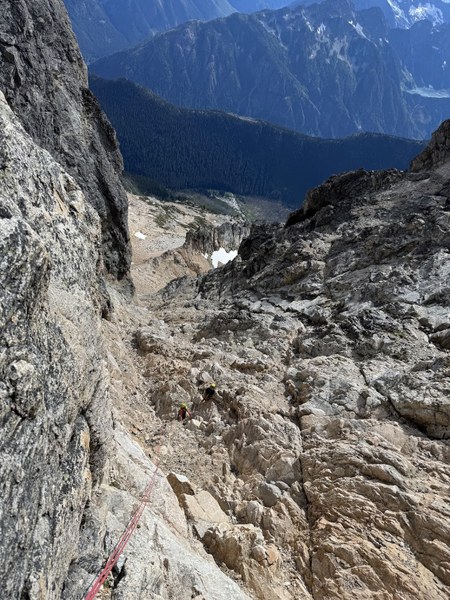
The summit has some nice rock rings for those hoping to bivy on the summit. The rangers warned us that people have reported rats here. After a nice snack and rest, we did 3 rappels toward rappeller’s left, then belayed the exposed traverse which got us to Black Tooth Notch. All of the raps are tat on blocks. From the notch, it was another 3 rappels to the southwest couloir, and then a 3rd class choss scramble down.
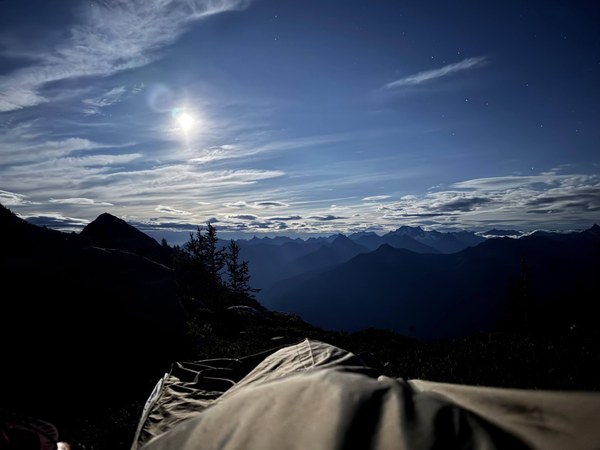
The first reasonable bivy spot is around 7600’ where a big snow patch ends and feeds into a nice pool of running water that continues down. We planned to camp lower at 7320’ where the trail forks to Storm King. These sites also seemed more established, with ample space to pitch tents and spread out. The full moon was out on this clear night and it was so bright!
Day 3: Heather Bivvies camp -> Storm King -> Park Creek Camp
The next morning we stashed overnight gear at camp and headed uphill toward Storm King. We followed the contour over boulders, scree, and dirt toward the VERY loose gully heading toward the summit.
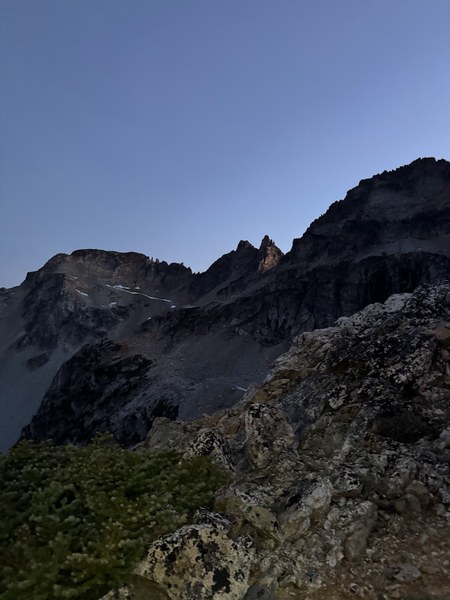
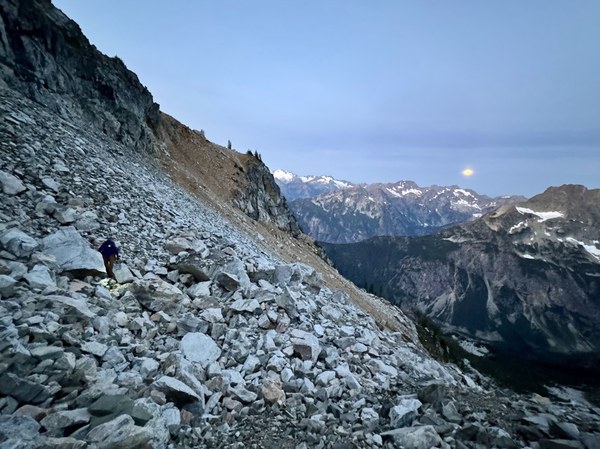
We followed the beta to take the gully to the right of the gully with the pinnacle. Coming up toward it, the decision is obvious. The pinnacle gully looks way steeper, whereas the gully on the right is more gradual.
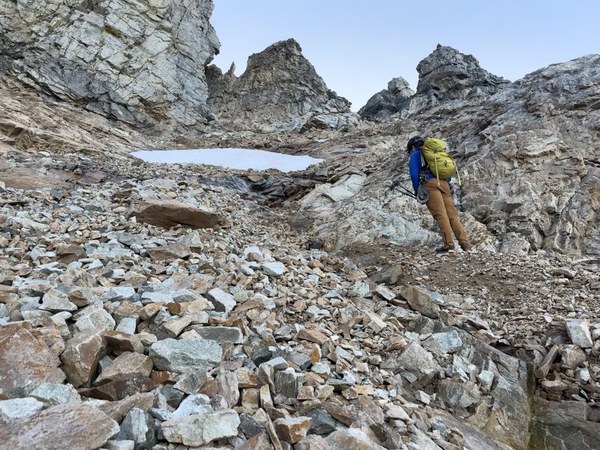
Crawling up this got us to another notch, where we are supposed to drop over on the north side and head left on a ledge. Our party decided to sling a block by the notch and simul this ledge, placing pro sparingly as a just in case. We made it to a cairn marking the 4th/low fifth climb to the summit, which we also protected. We all made it on the summit at 8am!
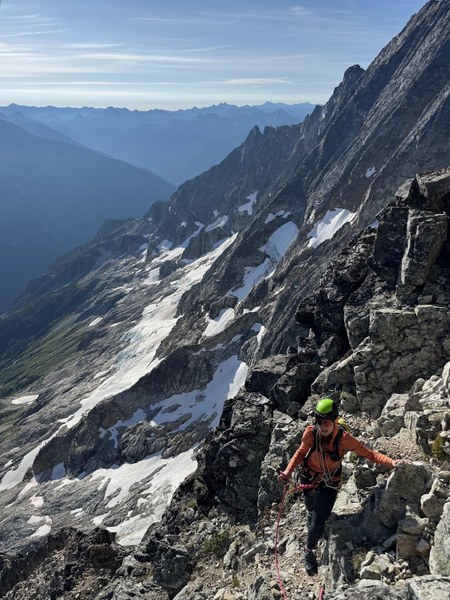
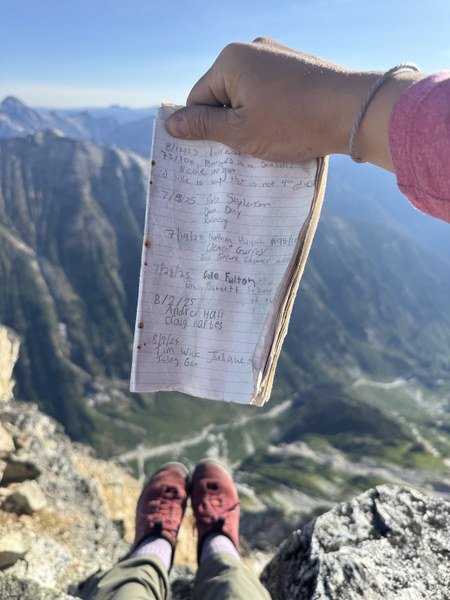
We rapped off the tat on the summit and butt scooted the last bit back to the cairn, and then simuled the ledge back to the notch. 30 minutes of very annoying scree skiing, talus sliding, and dirt glissading later, we were back on generally stable rocks and boulders, making our way back along the contour toward camp.
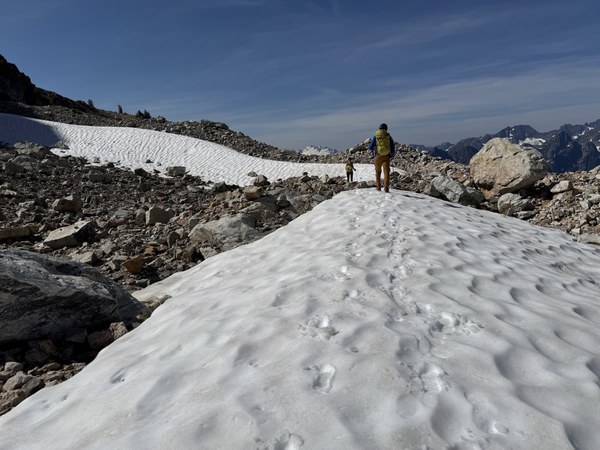
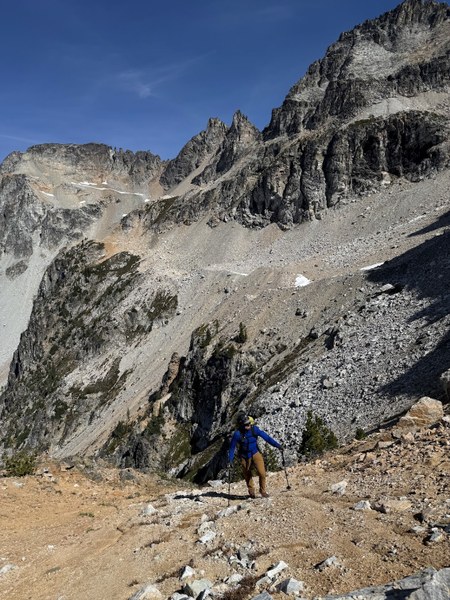
We got back to our stashed gear at 11am for a 6 hour round trip.
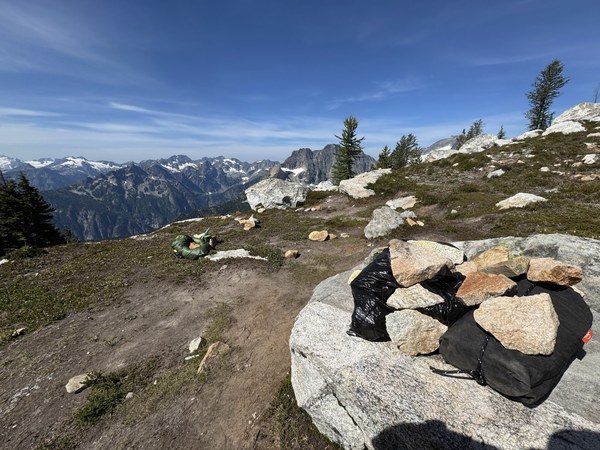
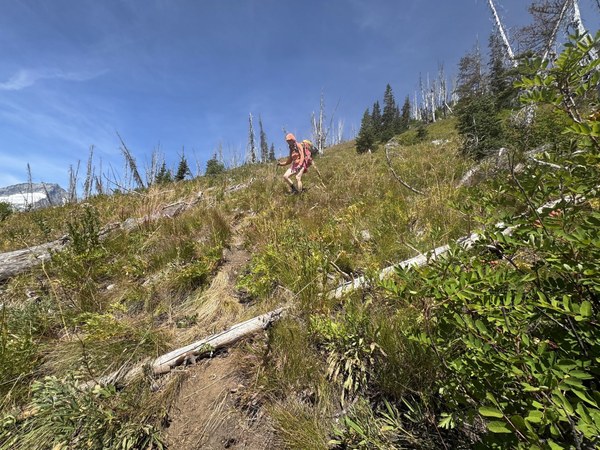
After a lunch break we repacked our gear and stepped back on the trail. The trail sometimes is obvious and wonderful, other times gets lost completely. Once in the burn area we generally tried our best to stay on the ridge and head downward. There were many downed trees and old burnt logs to hop or crawl over, but eventually we made it to the junction where it meets the Park Creek Trail, and the trail significantly improved. Shortly after we reached a creek at 4000’, where Tim was so warm he dropped his pack and sat right in the water.
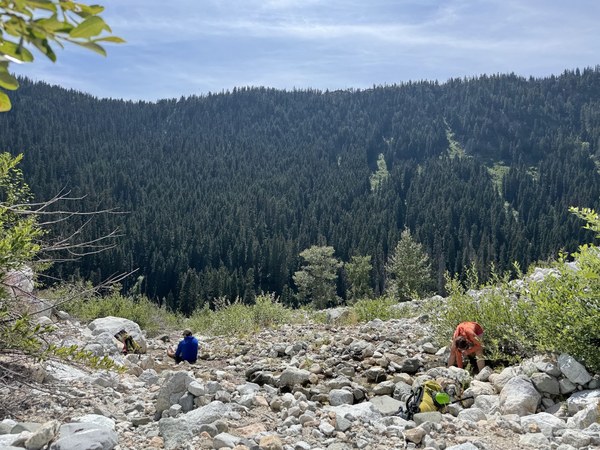
Refreshed and also wanting to get away from the bugs, we didn’t idle here for too long before departing. The trail toward camp from here was mostly very obvious, although there were still several large logs to ungracefully beach-whale ourselves over, and some more stomping through dead branches and brush before arriving at Park Creek camp.
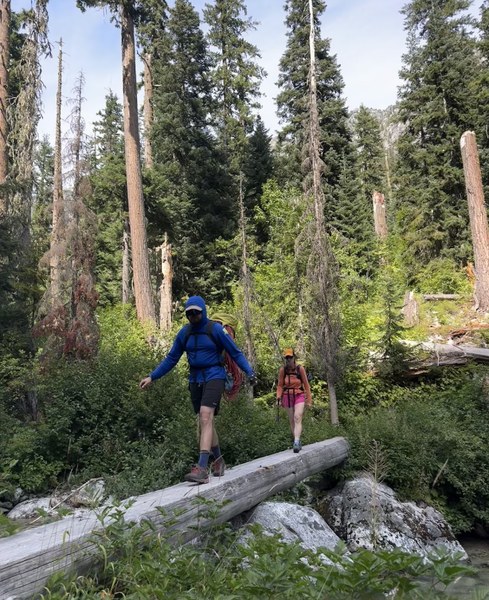
This was our first night at an established campground and boy did it feel luxurious! Big open campsites with logs and rocks placed strategically around fire rings (all campfires currently prohibited) and sturdy metal bear boxes. Our site also had a little trail to water access with a nice sit log surrounded by bushes full to ripe raspberries and huckleberries. How idyllic! It was 4:20pm, and we were all very happy having completed the most technical portions of the trip, with ample daylight to lounge by the creek, soaking our feet and relaxing.
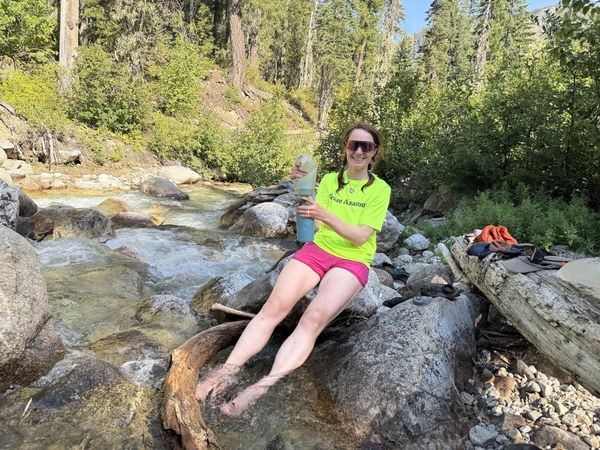
This was the warmest and lowest elevation camp. Jule had brought a bug net bivy propped up by a trekking pole. Tim and I were very envious of her while we sweated in our OR Helium bivies. We would have stayed outside if not for the bitey flies.
Day 4: Park Creek Camp -> Bridge Creek TH
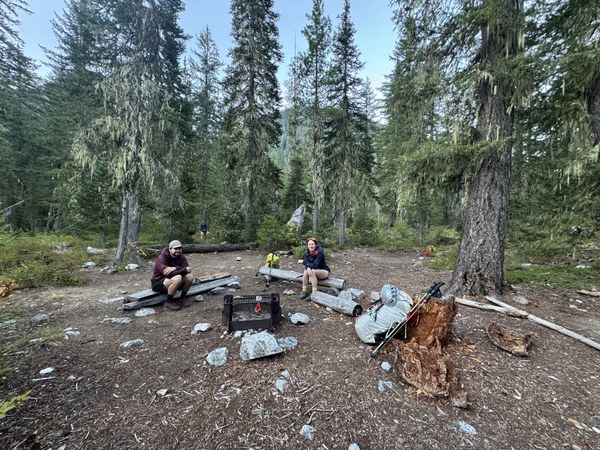
The hike back was interspersed with many breaks to gorge on the abundant huckleberries along the trail.
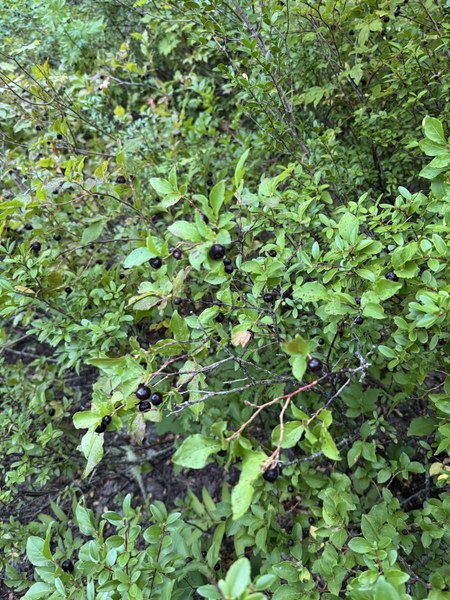
There were no route finding challenges on this well established trail, and the miles flew by quickly.
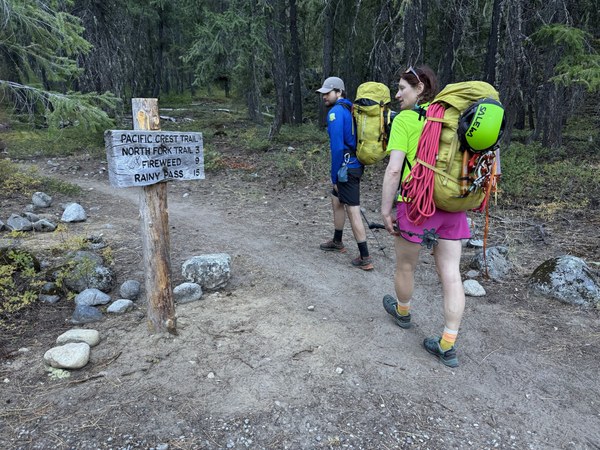
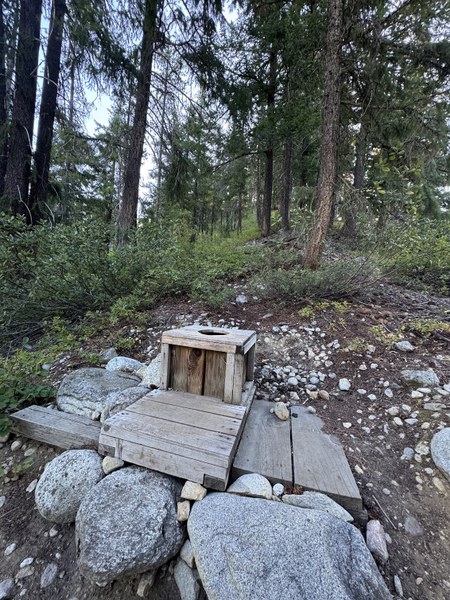
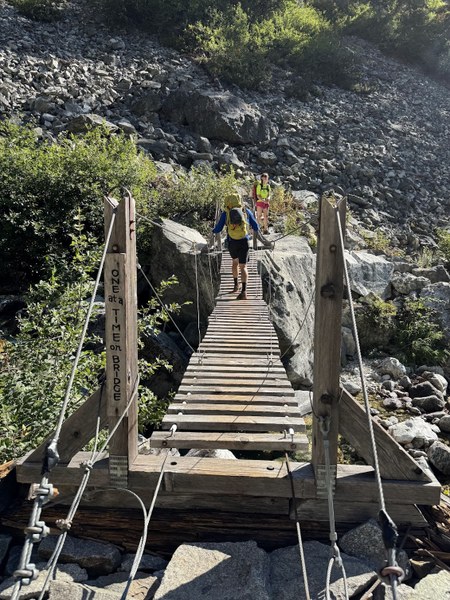
We made it back to the cars at exactly 1pm, and enjoyed a late lunch in Marblemount before heading back to Seattle.
Reflecting on our trip, I'm really glad we decided add on Storm King. The approach, from Bridge Creek TH or Stekehin, are both quite far for a trip specifically to summit Storm King, but adding it to our Goode trip only really added 6 hours to our day. Most importantly, it meant adding a day to our itinerary and making our last day's hike out a pleasant 15mi, 6.5hr hike out on easy trail with lots of berry-picking stops, rather than a long zombie walk back to the car.
Looking at our day by day stats, these are the elapsed times (not moving times):
- Day 1 - 15.9 miles, 3.7k' gain, 7:45hr
- Day 2 - 5.1 miles, 3.4k' gain, 12:41hr
- Day 3 - 10.4 miles, 1.9k' gain (7k' descent), 10:49hr
- Day 4 - 15.4 miles, 3.5k' gain, 6:06hr
This made for very manageable days, allowed for ample time to decompress in the evenings before the next day, and didn't tire us out too much from the driving on Day 1 and Day 4. I felt like our group was never too fatigued physically nor mentally, and we were in good spirits the entire time, even through the loose scree! I am so grateful and thankful to have come out with a stellar crew and successfully completed our objectives according to plan in the beautiful North Cascades.