Trip Report
Intermediate Alpine Climb - Glacier Peak/Frostbite Ridge
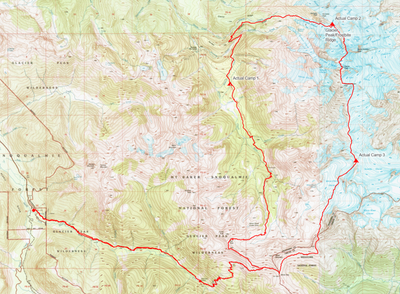
After years of dreaming and scheming, the Glacier Peak "Balloon" via Frostbite Ridge Route delivered an unforgettable alpine rollercoaster of joy, solitude, and diverse, technical terrain. With 41.77 miles and 13,840 feet of elevation gain, this adventure was a full immersion in the wild beauty of Glacier Peak.
 Rodrigo Toso
- Thu, Jul 17, 2025 — Sun, Jul 20, 2025
- Intermediate Alpine Climb - Glacier Peak/Frostbite Ridge
- Glacier Peak/Frostbite Ridge
- Climbing
- Successful
-

- Road suitable for all vehicles
Glacier Peak Balloon (Frostbite Ridge Route)
Intermediate Ice Climb | 41.77 miles | 13,840 ft gain
🎈 A Balloon Loop Over Glacier Peak
After years of dreaming and scheming since 2022, I finally climbed the full Glacier Peak "Balloon" via Frostbite Ridge Route—and it did not disappoint. Thanks to Frank and Magda for being the ideal partners on this alpine rollercoaster; their strength and sanity kept us moving when things got spicy.
We took the extended scenic route up the Frostbite Ridge and descended via the Cool and Gerdine Glaciers, forming the full "balloon" loop around Glacier Peak. This wasn’t just a climb. It was a full immersion in diverse and challenging terrain.
🥾 Day 1: The Long Walk In
- We started at the North Fork Sauk Trailhead and followed the river to Mackinaw Shelter, then up the switchbacks all the way to the PCT.
- At the PCT junction, our route diverged from the standard route: we took the PCT North towards Red Pass. The subalpine meadows, with wildflowers in full bloom, were breathtaking. Glacier Peak is my favorite climb thanks to such diverse scenery.
- At Red Pass, the views are magnificent. From here, you lose most of the elevation you gained, which is heartbreaking. It was a long descent to camp and the 45lb packs weighed heavy on the soul as we trudged through the forest for hours.
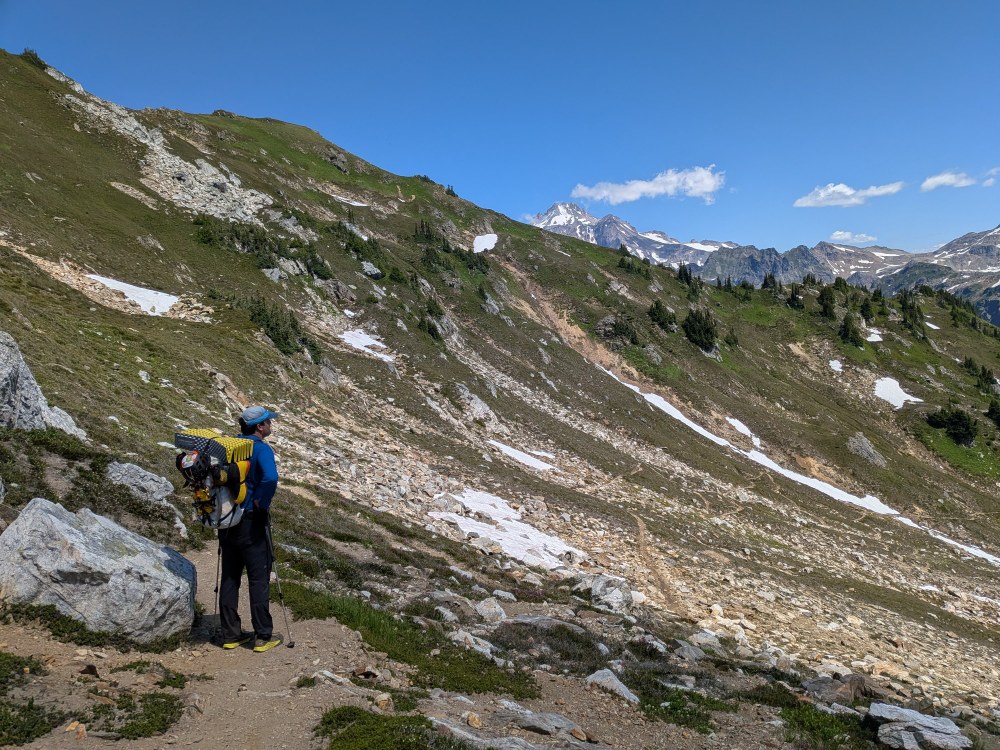
- Camp: in the forest, near a creek for convenient water access. Some mosquitoes but less than I expected. Coordinates: 48.10634, -121.17701.
- Stats: 16.9 miles, 5225’ elevation gain, 3496’ elevation loss.
- Time: 6:30am until 4:30pm.
- Notable gear: Arc’teryx Vertex Speed comfortable and light trail runners, and Feathered Friends down booties to rest my feet at camp.
🧊 Day 2: Moraine, Kennedy Glacier, and Whiteout to Camp
- We continued on the PCT up until Glacier Creek.
- At Glacier Creek, we diverged, following the ridge upwards towards Kennedy Glacier. Bushwhacking welcomed us into Glacier Peak’s version of a handshake—thorny and relentless. The terrain will switch from forest to scree as you climb above the tree line. Aim for the top of the moraine.
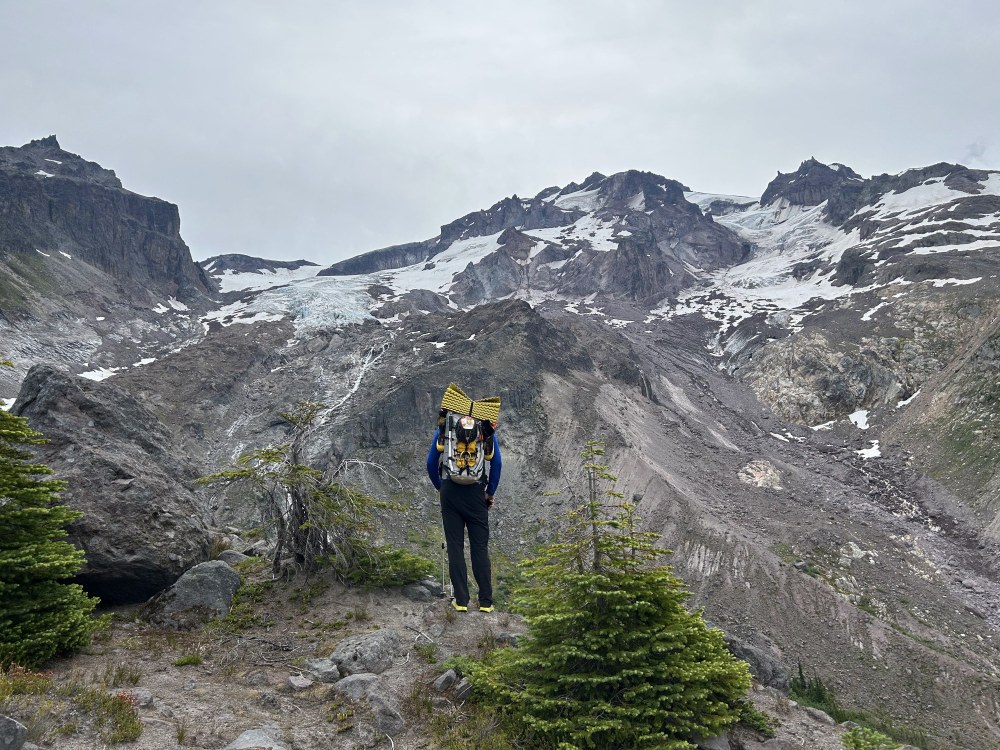
- From the moraine we could see the entire route for the remainder of the day.
- We then descended the moraine with just enough loose footing to keep us humble.
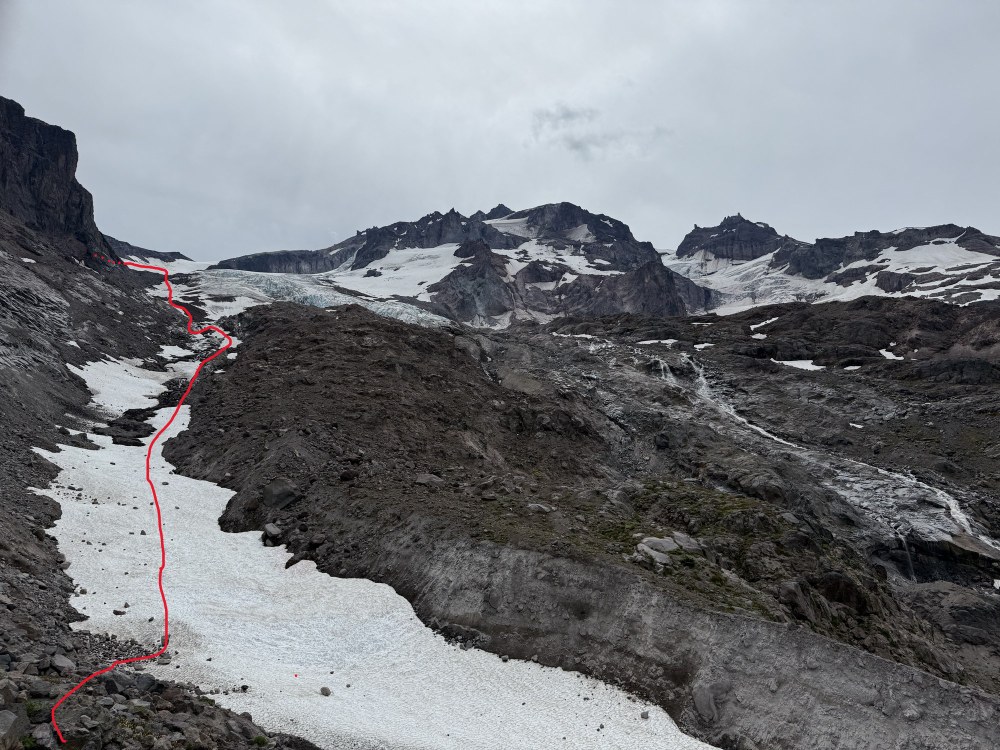
- We reached the toe of Kennedy Glacier, see above, where we faced: (1) rock-on-ice steps that required careful and measured steps, and (2) a waterfall traverse so slippery it felt staged for a Failarmy photo op.
- At some point we reached the proper Kennedy Glacier, navigating complex crevassed terrain. Here we opted to stay on the left, hugging the wall of Kennedy Peak, which trades off simpler navigation for an increased rockfall risk. Since the day was cold and overcast, we decided that rockfall was a lesser risk compared to navigating the more crevassed terrain on the right.
- Our plan was to camp at the col between Kennedy and Dusty Glaciers, elevation 8870’, right under the Frostbite Ridge proper. We were in a whiteout under light frozen rain, and it was hard to judge between the two options towards this goal: continuing up the Kennedy Glacier in a direct route, or taking the cleaver on the left; in the end, we took a hard left towards the cleaver but instead of proceeding up we decided it was enough for the day. Of course, after not too long, the clouds cleared, and we had beautiful blue skies, as shown on the photo below.
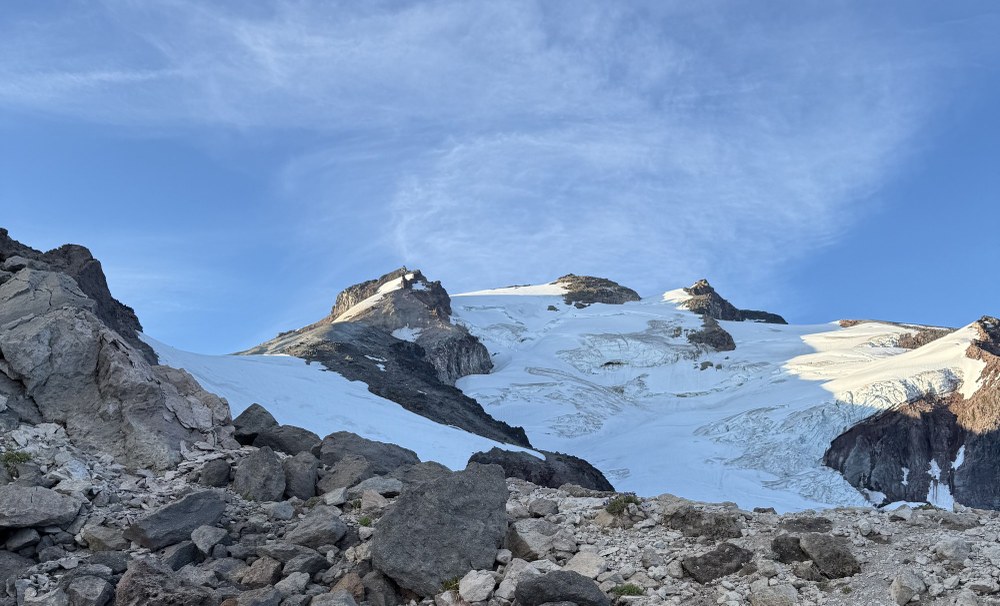
- Camp: on the col between Kennedy and Vista Glaciers, elevation 8090’. Coordinates: 48.12893, -121.11887.
- Stats: 5.76 miles, 4609’ elevation gain, 315’ elevation loss.
- Time: 7:10am until 4:30pm.
- Notable gear: trail runners up until the toe of Kennedy Glacier, then La Sportiva G5 Neo boots with Grivel G14 crampons. Glacier travel using a 7.3mm 70m rope.
🧗 Day 3: Pumice Ridge and Rabbit Parts and Ice Ramps and Summit Joy
- Took the glacier way to the Kennedy-Dusty col; for us, it was a moderately steep snow ramp (35 to 40 degrees) with only a few crevasses but a lot of rockfall evidence from the cleaver on the left. We started the day early to mitigate rock fall risk and it was easy to navigate.
- Next is Frostbite Ridge, basically a pumice ridge, a nightmare of disintegrating rock. You will travel SSE through the entire ridge. We found and used a snow finger on the Dusty Glacier side as much as possible to avoid entering the ridge proper.
- When the snow became thin, we entered the pumice ridge. 2 steps up, 1.5 steps down. Worse than Mount Saint Helens in the summer. Early on, I had a 10-ft au-cheval maneuver over a ridge of stacked volcanic biscuits. Every movement threatened collapse—your butt perched above real consequence. You can’t protect this, which is unfortunate. If you are lighter, you may get away with cat walking on top of it, but definitely not for me.
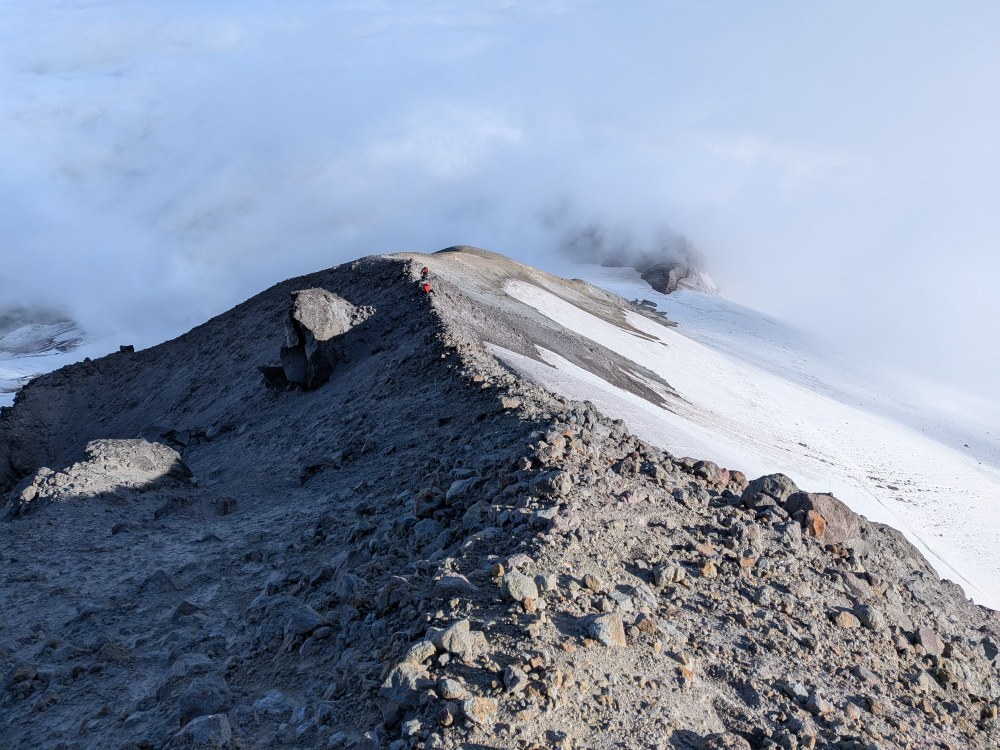
- Did I mention that the pumice ridge is steep? Here you go.
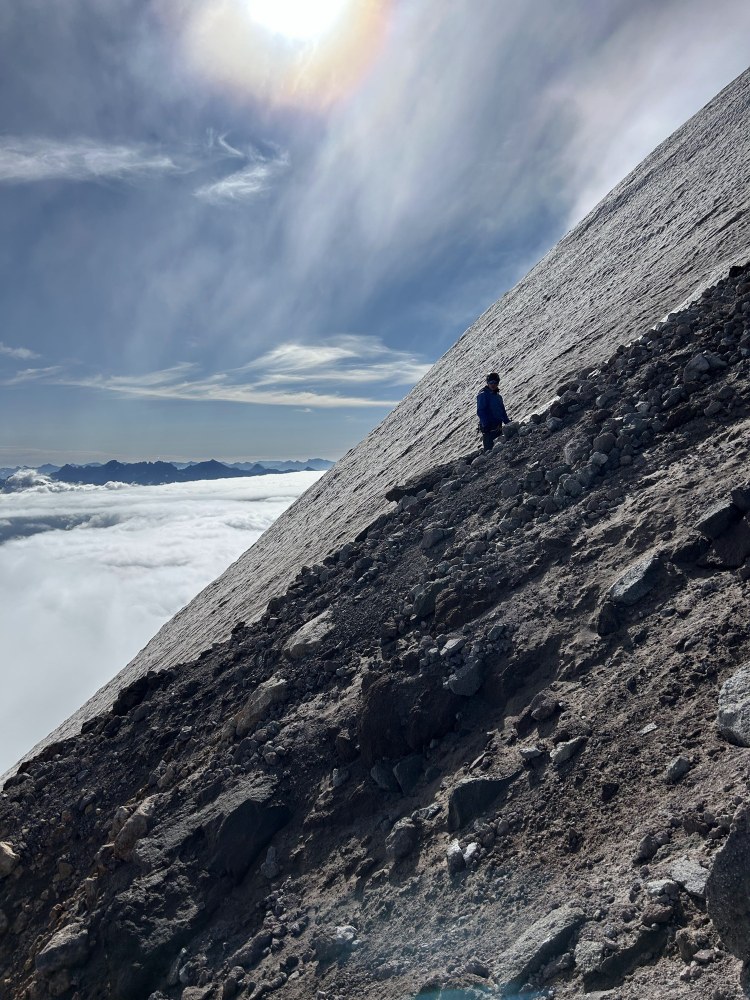
- Now we entered the surreal zone near the Rabbit's Dick and Ears (yes, real features).
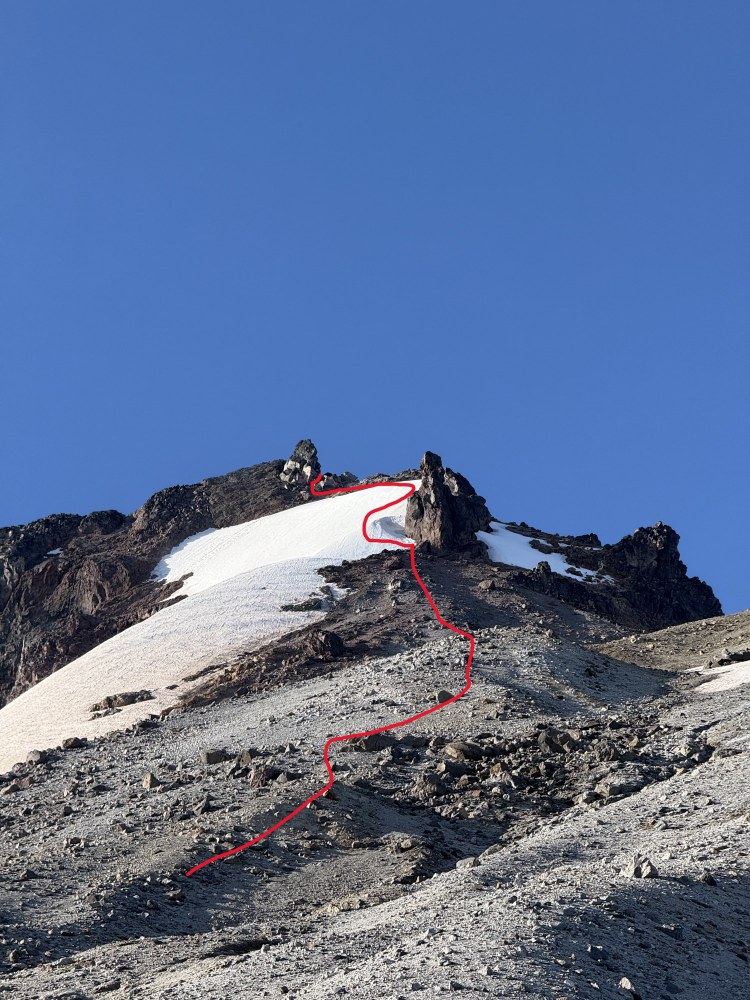
- We got to the Rabbit’s Dick and were faced with two options, going to the left (steep snow & ice) or to the right (class 3 scrambling). Most reports took the right, probably because the left variant becomes primarily ice later in the season.
- Magda went up first, taking the right-hand side option, and shouted from above that the left variant might be easier.
- Frank and I backtracked and went left. At first, we hit steep ice but moving to the left, away from the rock feature, gets you to steep snow (about 45-50 degree) and we could make easy bucket steps all the way up.
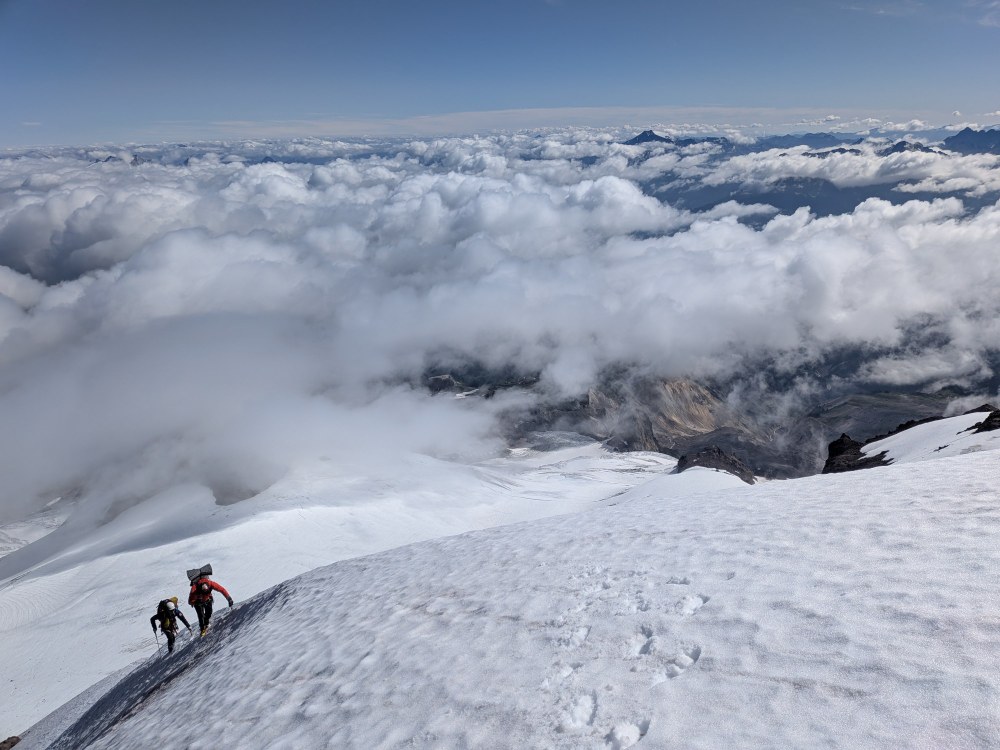
- As the slope angle eased, we saw Magda coming from the right-hand side, meaning she had to cross over to the left anyways. My suggestion is to take the left when possible.
- Once we hit the snow, we also saw the Rabbit’s Ear. Yes, only one. You don’t see both ears from below, only from above. But you clearly see that one from the snow ramp, so aim for it once you’re through the Rabbit’s Dick.
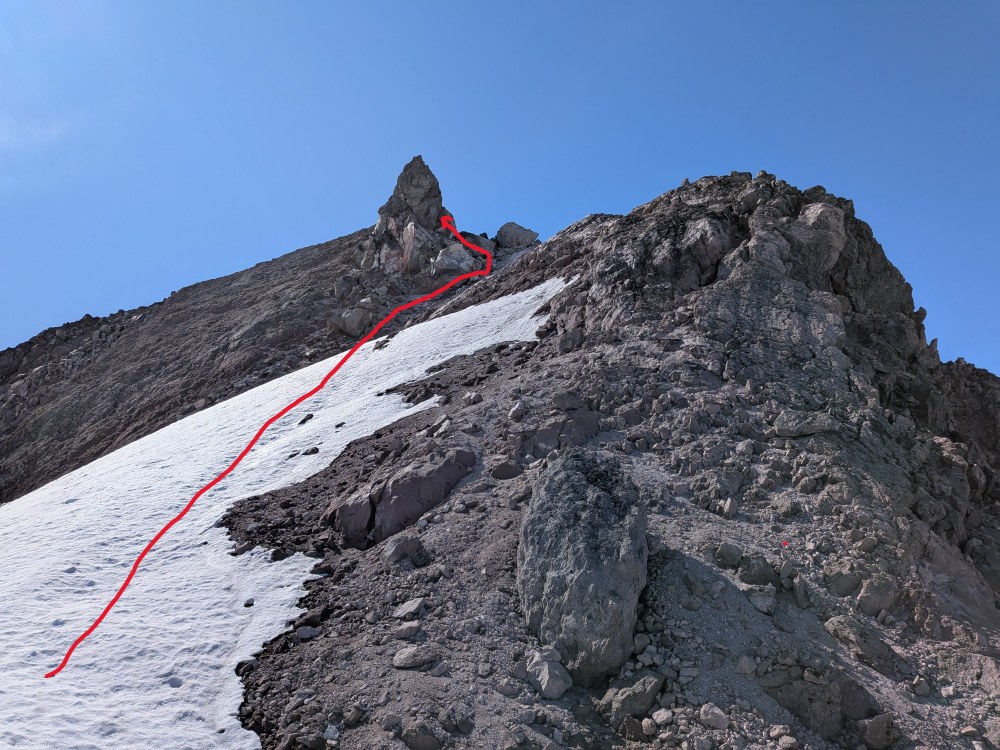
- From the Ears, you will travel SW towards the crater. The photo below shows the entire way as viewed from the summit. I will break it into logical sections next.
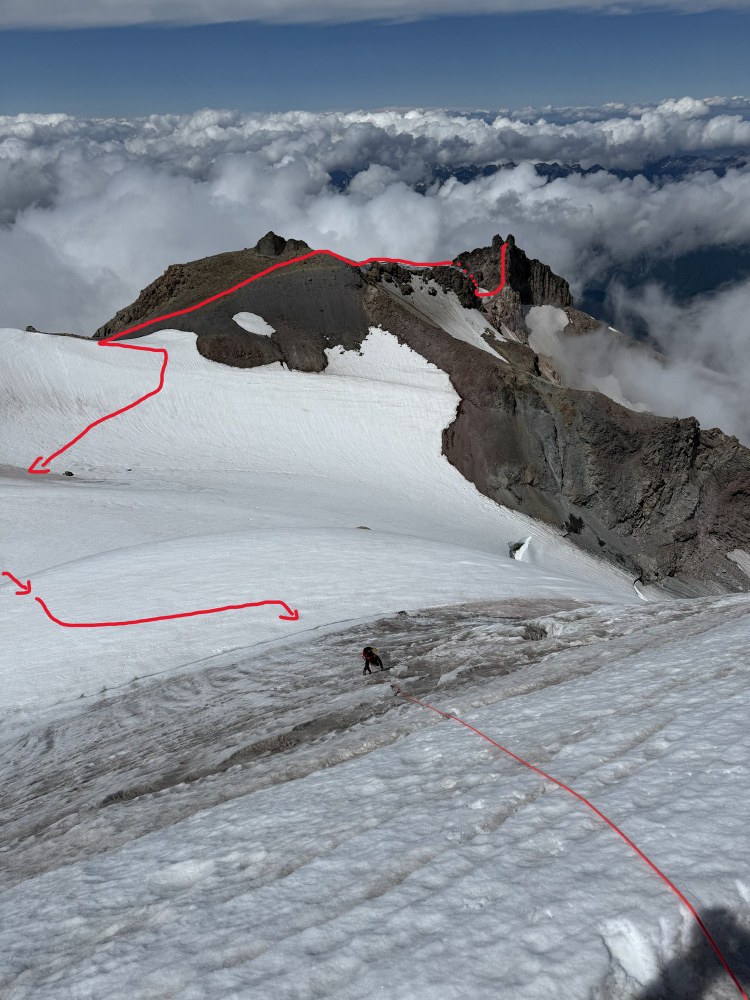
- First step: easier than expected class 3 down-scrambling. Photo below.
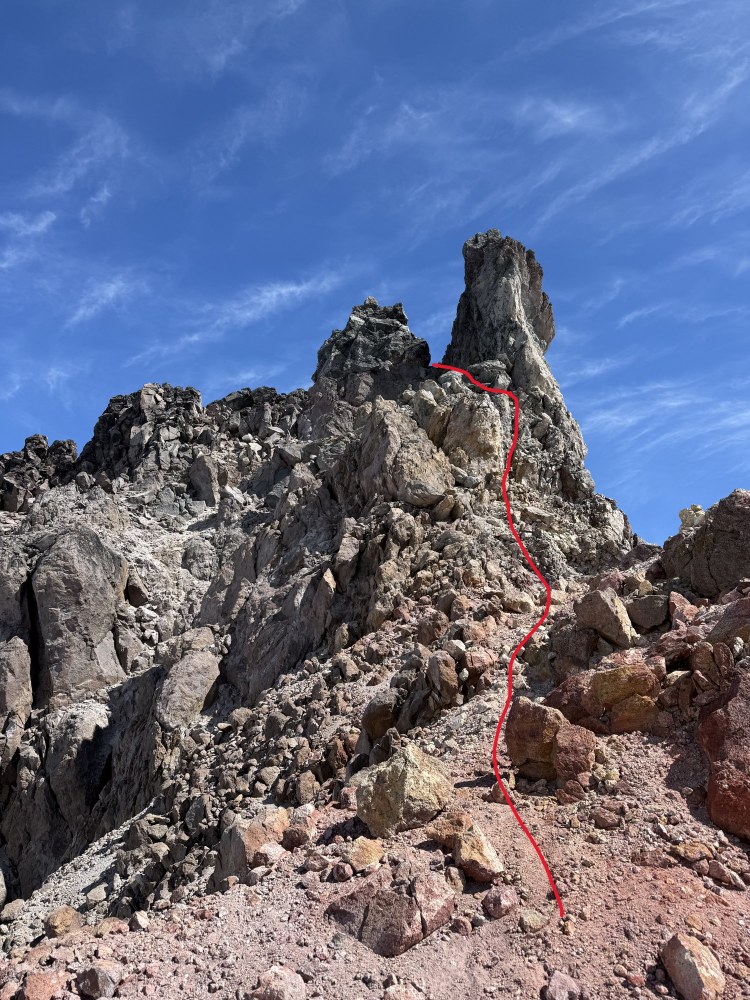
- Second step: Another steep ascent. Many trip reports mention ice here but for us it was just steep snow, probably 60-degree or so. We did not pitch this, nor did we rope up to cross the snow.
- Third step: A steep snow descent into Glacier Peak’s crater. About 50-degree snow, easing as you get down.
- Last step: Ice-ice-baby! There are two steep ice ramps, similar in grade and difficulty to the Kautz Route on Mount Rainier. Pick your ice climbing lines while on the crater.
- The first ramp is the steeper. The ice quality was great! We needed the full 70m to top it up, contrary to reports claiming that 60m was enough. But Magda picked the longest line, too, since she wanted all the fun after carrying her tools all the way to here!
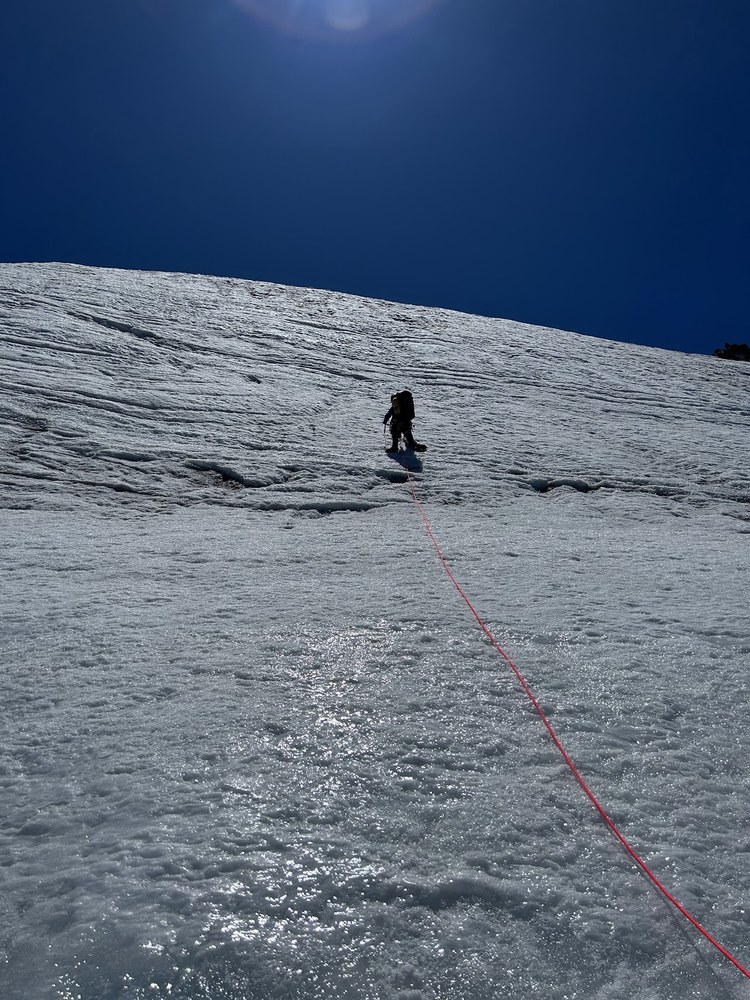
- The second ramp is longer. You will need two pitches of about 50m each, so plan accordingly. For us, we went to the left and Magda led a line to the seracs on the far left, where she leveraged a flat platform to build the belay station with 3 screws on clear glacial ice, beautiful. This first pitch was not great; the ice was too brittle and there was some snice too. The second pitch was golden, all the way to the summit ridge.
- The final steps to the 10,541-ft summit delivered relief and panoramic glory.
- We made our way down to Glacier Gap via the standard Cool and Gerdine Glacier route. There are plenty of trip reports for this route, so I won’t cover in much detail other than mentioning that there were a few open crevasses to navigate around. If you are planning a carryover climb in late season, time this portion of the trip carefully, as a late return will bring an increased risk of crevasse fall.
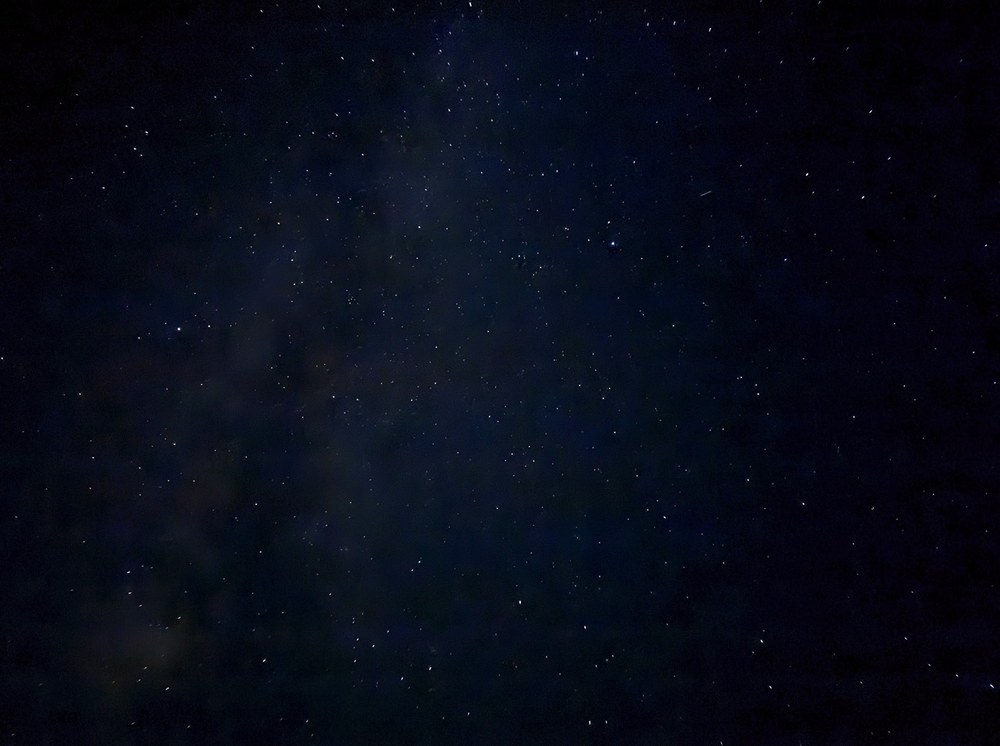
- Camp: Glacier Gap, elevation 7290’. Coordinates: 48.07715, -121.10538.
- Stats: 5.06 miles, 2950’ elevation gain, 3764’ elevation loss.
- Time: 6:30am until 6:50pm.
- Notable gear: boots most of the day, except for the down scramble from the Rabbit Ears, from the summit to the top of the Cool Glacier, and from Gerdine Ridge to Glacier Gap, where I switched to trail runners to rest my feet and move more efficiently. We brought and used 11 ice screws and 2 pickets, plus the 70m 7.3mm rope. Each of us brought and used two ice tools.
🏞️ Day 4: Descent from Glacier Gap to the trailhead (the standard route)
- The return was uneventful, with many flowing streams galore for hydration.
- Those last 14 miles of descent? A blur of aches, laughs, and trail banter.
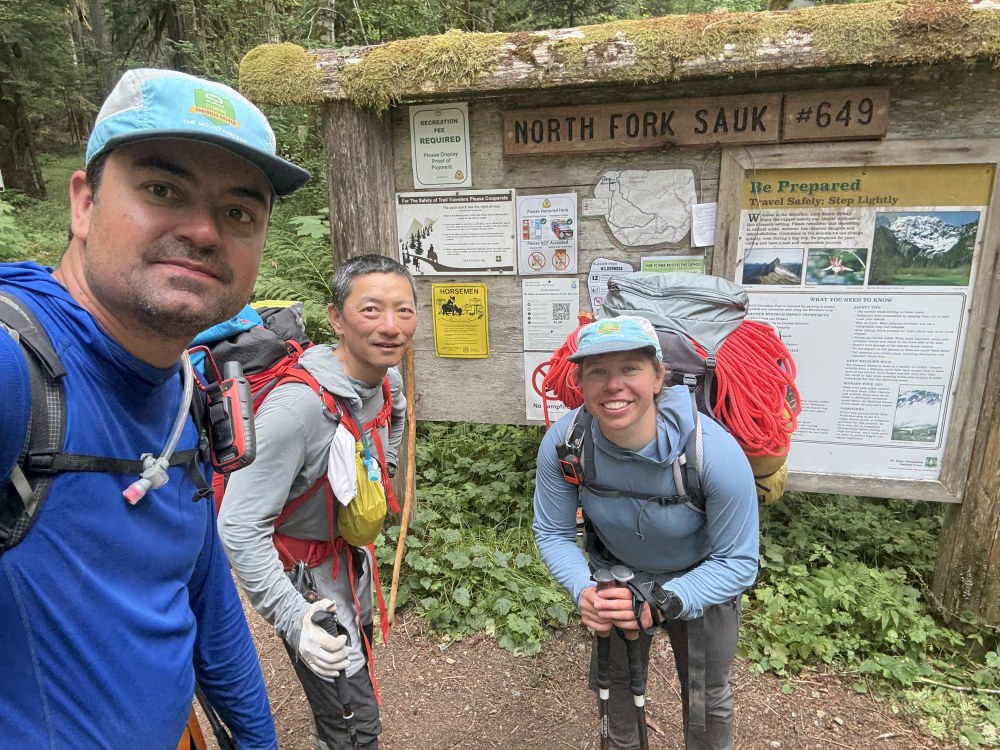
- Camp: Home sweet home.
- Stats: 14.05 miles, 1034’ elevation gain, 6257’ elevation loss.
- Time: 7:30am until 3:20pm.
- Notable gear: trail runners all the way.
Acknowledgements
- Minda Paul's Mountaineers trip report from 2023 is excellent. Without a GPX, I was able to create a track in Caltopo just from the description in the report. Brief but so accurate! Thank you, Minda.
- Trip report from 2023 hosted at the American Alpine Institute website. Very good, too! Thank you to the unknown author.
- Trip reports by jiri (2015) and EBrain (2020) at CascadeClimbers.com.