Trip Report
Flatwater Packraft - Winchester Wasteway
A springtime overnight packraft trip on central Washington's Winchester Wasteway in the Columbia Basin Wildlife Area
 Brian Collins
- Sat, Apr 12, 2025 — Sun, Apr 13, 2025
- Flatwater Packraft - Winchester Wasteway
- Winchester Wasteway
- Packrafting
- Successful
-

- Road suitable for all vehicles
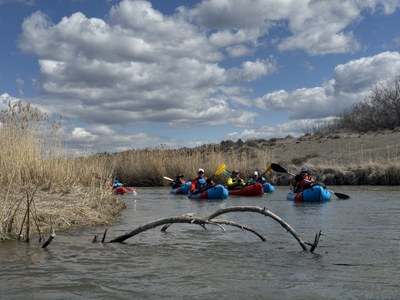
While inauspiciously named, the Winchester Wasteway is a delightful small stream that meanders circuitously through a unit of the Columbia Basin Wildlife Area on its way to the Potholes Reservoir. Streamsides were mostly dense thickets of tall reeds, linear patches of Russian olive trees (not yet leafed out), or steep banks cut into black-sand dunes—the sand is black because it’s derived from basalt.
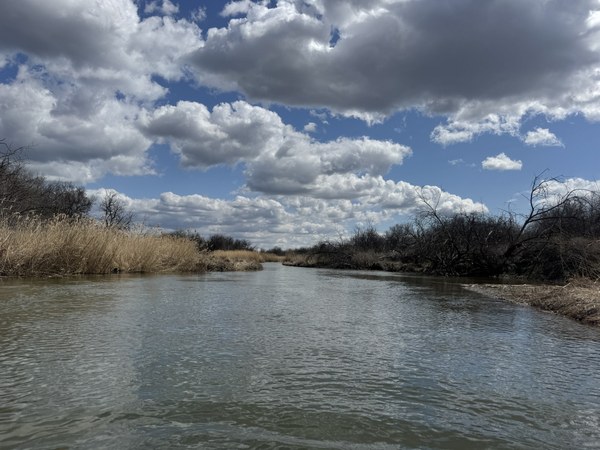
Winchester Wasteway (photo: Max McDermott)
Above, we saw dozens of sandhill cranes and several pelicans among other birds; at water level, beavers and beaver lodges, and muskrats and their lodges.
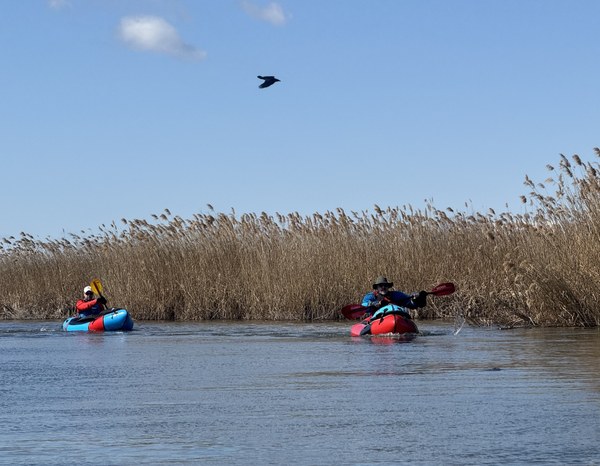
Into the wind (photo: Max McDermott)
We paddled from the Dodson Road WDFW access to a WDFW river access point on Road C SE, 7 straight-line miles, but 16+ river miles, and spent the night about half-way along. Some of us drove over the afternoon before and camped at Potholes State Park, which was close (7 miles) to our next-morning’s meeting place at the take-out, uncrowded, and quiet, other than bird song in the day and coyote choruses at night.
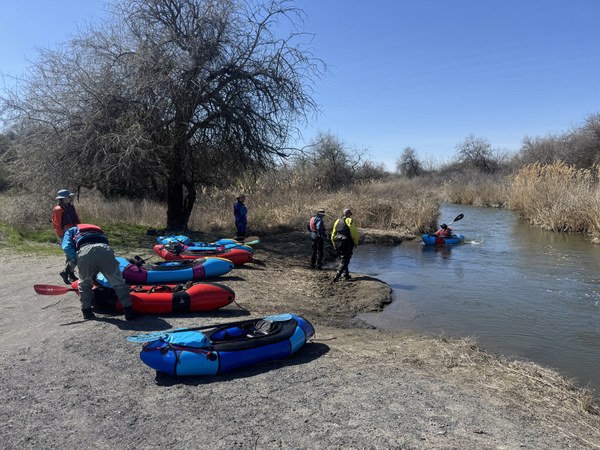
Take-out at Road C SE (photo: Max McDermott)
The first few miles of the route wind through shallow, wide ponds and wetlands, and a sense of humor is helpful when stranding and having to get out and walk in muddy shallows. In this part of the trip, GPS with satellite imagery is helpful for finding an important and not-obvious turn.
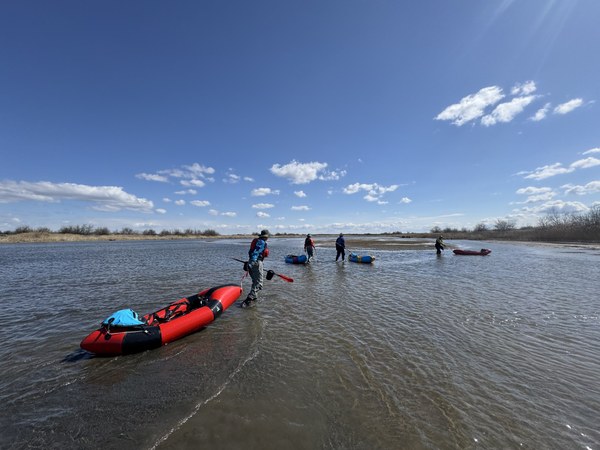
Ha! (photo: Max McDermott)
The rest of the route for the most part follows a defined channel, and route finding was straightforward at flow splits or abandoned meanders.

Paddling by streamside Phragmites (photo: Andrew Pedersen)
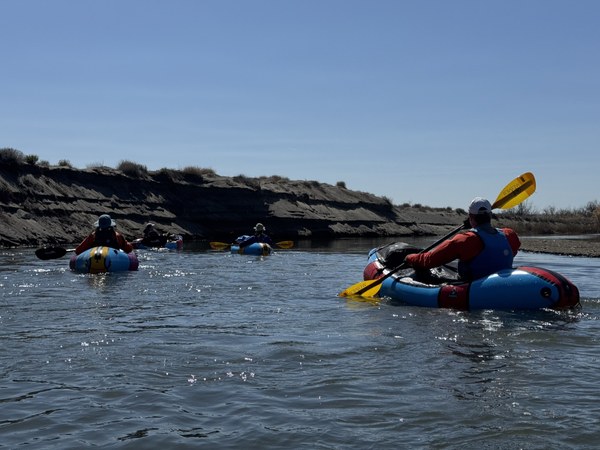
Paddling past a black-sand dune (photo: Max McDermott)
It was sunny and mostly in the 50s or low 60s, great for paddling and for camping. The water flowed at a moderate pace. We completed the trip in a relaxed two days with several stops each day, paddling most of the time, at a low-to-medium level of effort.
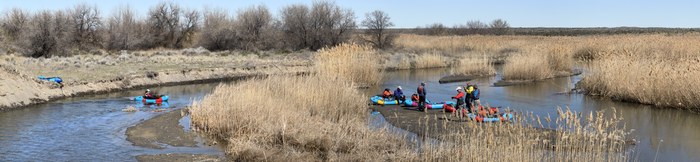
Snack bar (photo: Max McDermott)
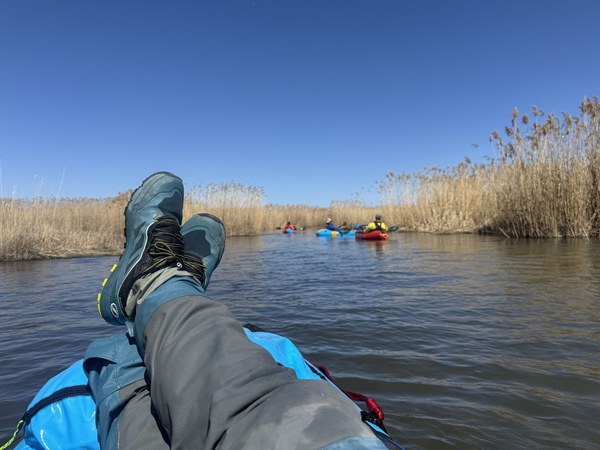
(photo: Max McDermott)
The wind came up in the afternoon and evening of the first day, but it wasn’t hard to find shelter behind a line of trees. The temperature at night dropped below freezing but warmed rapidly after sunrise.
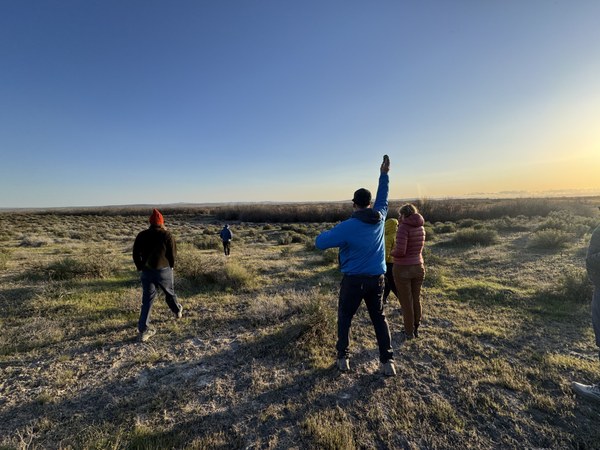
River bocce (photo: Max McDermott)

Sunset at camp (photo: Robert Kaye)
April is a great month for this trip—flows are at a good level (springtime flows are steady, consisting of irrigation return flow from the Columbia Basin Project, hence the “Wasteway” name)—it’s not too hot or too cold, it’s out of hunting season, and the mosquitoes aren’t out yet.