Trip Report
Day Hike - Sequalitchew Canyon & Dupont Bluff
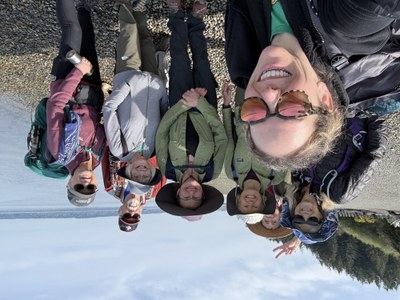
This 5-mile hike began at the Sequalitchew Creek Trail head, proceeded to Puget Sound, then backtracked to the connecting trail to the Dupont Bluff Trail. We then walked through Dupont neighborhoods back to the parking lot. The weather was fantastic, the views breathtaking, and all reported a decent, not challenging workout.
 Rikki McGee
- Thu, Apr 30, 2026
- Day Hike - Sequalitchew Canyon & Dupont Bluff
- Sequalitchew Canyon & Dupont Bluff
- Day Hiking
- Successful
-

- Road suitable for all vehicles
-
Parking between City Hall and Police Department is plentiful, and no permit is required. The trailhead has picnic tables and a restroom. The only other restroom is towards the end of the urban return walk. There are springs that create small areas of mud on the Sequalitchew Trail - passable on a clear sunny day, can be messy on a rainy day (never impassable from my experience). The beach is a typical Sound rocky and can be slippery when the tide is out. The switchback trail leading to the bluff may be steep for some and can be tricky when muddy, but great on a dry day. The 1+ mile walk to the parking lot is on sidewalks and an urban trail. Can't wait to hike it again.
This was a dry sunny day with trails generally clear. There is much history associated with this area:
- At the start of the trail, the flume dam or diversion culvert illustrates part of the watershed manipulation by the military, developers, and other humans. The spring-fed Sequalitchew Lake (on JBLM) stormwater drains off, and natural flow into wetlands greatly supports Edmons Marsh's health and the water flow in the Creek. Looking to the left on the trail, you will notice an unnatural and shallow beginning of water flow after the diversion channel. Creek canyons are often shallow initially, but this one creates an artificial flow that does not reflect a naturally flowing creek.
- The creek has had many inhabitants, including the Nisqually tribe, the Hudson Bay Company (1832), the DuPont Company (1906), and Weyerhaeuser (1976).
- The Nisqually people named Sequalitchew the “place of long run out tide.” At the end of the trail, low tides reveal a broad intertidal zone habitat. Evidence of human presence dates to 5,700 years ago. They lived in a year-round village near the mouth of the creek. During the summer months, the village was extended onto the beach.until 1855-1856, when tribes were required to move onto the reservation.
- DuPont produced explosives at the top of the canyon, and a narrow-gauge train took explosives down the canyon and brought raw materials from the harbor to the plant. The creek provided hydroelectric power to the plant and village. Remember, explosives were transported down this canyon. The trail has been re-engineered since the train, but it was not much wider.
- DuPont Wharf was 36 feet wide and 300 feet long. It was the receiving and shipping point for raw materials and finished explosives.
- In the 1980s, a significant repository of toxic materials was discovered. Cleanup began in the 1990s, and eventually, 4,000 barrels of hazardous waste were removed. This cleanup was second in scope only to Hanford.
- The current restoration plan intends to restore the water flow from the outlet of Sequalitchew Lake (on JBLM) through Edmonds Marsh to the shore of Puget Sound, a 3.5-mile distance.
- An Estuary/Brackish Marsh is located at the end of the trail just before the railroad berm, separated by a narrow culvert that allows the freshwater of the creek to blend with saltwater from Puget Sound. Themeandering, muddy bottom creek supports fish and invertebrates in this area, which provide food for birds such as herons and eagles. Wetland grasses and plants help to manage flooding by holding soil in place. Lyngby’s sedge, seacoast bulrush, seashore saltgrass, marsh cinquefoil, and gumweed.
Lots of spring-blooming plants. The Great Chain Fern is worth looking for as it is uncommon. Keep an eye out for stinging nettle, from Spring through Fall. Also lots of chipmunks!
It is well worth taking a break at the beach. Views are incredible, very quiet, and usually wildlife to observe - eargles, seals/otters, other seabirds, and possibly orcas. The bluff trail is mostly flat with a few low elevation changes; views of the Sound are wonderful.