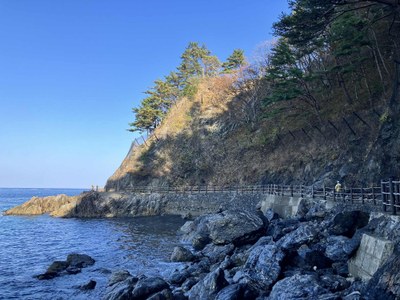
Japan: Michinoku Coastal Trail
The Michinoku Coastal Trail (MCT) is a 1,000 km hiking route along Japan’s northeastern Pacific coast, stretching from Aomori to Fukushima. It offers stunning views of cliffs, beaches, and fishing villages while connecting travelers with the region’s culture and recovery after the 2011 tsunami. The trail is well-marked, welcoming both long-distance trekkers and day hikers.
The Michinoku Coastal Trail offers an experience that is both deeply scenic and profoundly meaningful, weaving together dramatic nature, layers of history, and everyday life. Built as part of the recovery after the 2011 Great East Japan Earthquake, the trail carries a sense of purpose—you walk not just through landscapes but through communities that have rebuilt with quiet strength. This adds an emotional depth to the journey, as each village, seawall, and harbor tells a story of resilience.
Scenically, the trail is stunning and constantly shifting. The Sanriku Coast is famous for its coastline—steep, folded cliffs created over millions of years—so the terrain ranges from soaring viewpoints like Kitayamazaki and Kurosaki to narrow coves where the sea is emerald and still. Trails climb pine-covered headlands with sweeping ocean views and then descend into fishing ports where boats bob in the tide. There are sea caves, rocky shelves, tidal pools, pebble beaches colored by minerals, and long stretches of rugged, wind-carved coastline. Remote sections feel wild and invigorating, while others pass through farmland, river valleys, and calm forest paths.
The cultural experience is equally rich. The MCT runs through small towns where life is tied to the sea—places with morning fish auctions, family-run inns, and centuries-old shrines tucked into cliffside groves. Local people who still dry seaweed and mend nets by hand often greet hikers warmly, offering directions, conversation, or a bit of local insight. Meals reflect the region’s identity: fresh seafood like sea urchin, scallops, and flounder; local vegetables; simple but deeply comforting home-style dishes; and regional specialties that vary from town to town. Folk stories, old pilgrimage routes, tsunami markers, and coastal temples give the trail a sense of living history.
Nature and wildlife are always present. The coastline is home to seabirds, osprey, seasonal wildflowers, and dramatic geology. Spring brings cherry blossoms against deep blue seas; summer offers lush greenery and calm bays; autumn glows with fiery foliage on the cliffs; and winter, though harsher, reveals a stark, beautiful solitude.
What also makes the Michinoku Coastal Trail unique is its flexibility. Because it runs through so many villages and transport hubs, it can easily be broken into day hikes—each offering its own character—or attempt the entire 1,000-kilometer journey. Accommodations range from small seaside inns and campsites to larger hotels in port towns, making it approachable for many types of hikers.
Altogether, the Michinoku Coastal Trail is a place where rugged nature, warm human connection, and quiet reflection come together. It offers not just a scenic hike, but an invitation to slow down, reflect, and connect with both the landscape and the spirit of the people who call it home.
GETTING THERE: The primary gateway to the MCT is Tokyo, Japan, which is a major airport with international service. Flights from Seattle to Tokyo are approximately 11 hours long on a non-stop flight to cover the 4,788 mi distance. From Tokyo to the Northern Start (Hachinohe, Aomori Prefecture) 412 miles:
- Take the Tohoku Shinkansen from Tokyo Station to Hachinohe Station — about 5 to 3 hours.
- From Hachinohe, take a local train or bus to the Kabushima Shrine area, the official starting point of the trail.
There are multiple potential ending points if just doing sections of the trail with easy access to high-speed trains or buses back to Tokyo.
- Seasons: April, May, June, September, October, November
- Weather: View weather forecast
- Difficulty: Easy, Moderate, Strenuous, Very Strenuous
- Length: 60.0 mi
- Land Manager: Mountaineers Seattle Program Center
- Parking Permit Required: None
- Recommended Party Size: 12
- Maximum Party Size: 12
- Maximum Route/Place Capacity: 12
There are no resources for this route/place. Log in and send us updates, images, or resources.