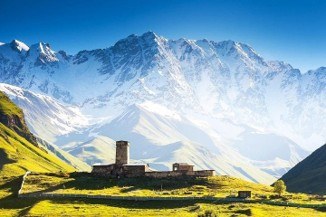
Trek Village to Village through the High Caucasus Mountains of Georgia
Hike among dramatic peaks between welcoming village guest houses, immersed in centuries-old culture and history, through the high Caucasus mountains of Georgia.
Bordering Europe, Asia and the Middle East, the Caucasus region is one of the most biologically, culturally and linguistically diverse regions in the world – yet one that few have had the chance to explore. Georgia, the country situated at the western end of the Caucasus, offers travelers everything from warm coastlines to quiet wine valleys to dramatic snowy peaks and mountain lakes, as well as a rich history and culture that stretches from 6th century kingdoms and medieval Christian traditions through years of Soviet control and a turbulent independence. Now (with the exception of South Ossetia and Abkhazia along the Russian border) Georgia is rated as Level 1 by the US State Department, one of the most secure countries in the world to visit, with minimal unrest and low levels of crime. This mix, along with welcoming people and a wide network of village guest houses and trails, makes Georgia a hiker’s paradise offering an unparalleled diversity of natural beauty and cultural riches, while still being relatively undiscovered and uncrowded. 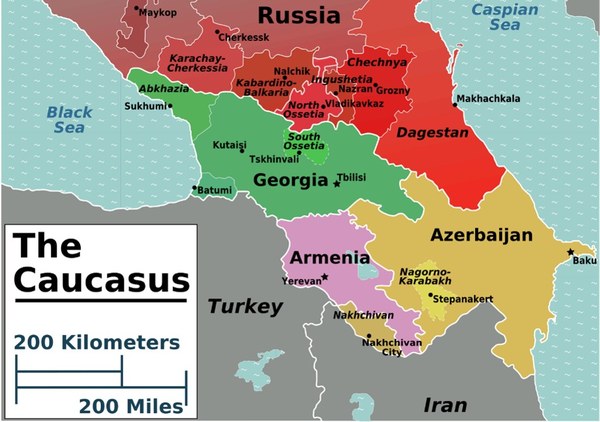
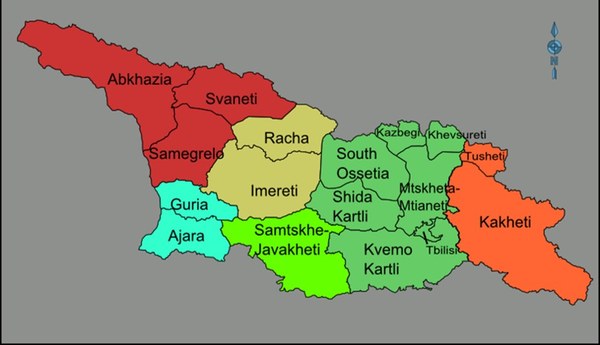
The country offers a wide range of dramatic and interesting adventures on foot from day trips to challenging multi-day trekking and backpacking expeditions. Some of the major hiking regions and hikes to cultural and natural highlights are described below:
1. Svaneti: Medieval Villages and Towering Peaks
Location: Northwestern Georgia
Best Time to Hike: June to September
Svaneti is famous for its rugged beauty, medieval villages, and UNESCO-listed watchtowers. The region is home to some of Georgia’s highest peaks and offers a variety of trails that cater to all levels of hikers. Mestia, the main town in Svaneti, serves as a hub for many hiking routes. The Transcaucasian Trail includes sections of the high Caucasus in this region.
Top Hiking Trails in Svaneti
- Mestia to Ushguli. Moderate to Challenging, 55 km (4 days). One of the most famous multi-day treks in Georgia, the trail from Mestia to Ushguli takes you through picturesque valleys, pastures, and ancient villages. Ushguli, one of the highest continuously inhabited villages in Europe, is a UNESCO World Heritage site. Along the way, you’ll pass by traditional Svaneti towers, alpine meadows, and breathtaking views of Mount Shkhara, Georgia’s highest peak.
- Chalaadi Glacier Hike. Easy to Moderate, 8 km (3–4 hours round trip). This relatively short trail starts from Mestia and follows the Mestiachala River to the Chalaadi Glacier. It’s an easy day hike with stunning views of the glacier and surrounding mountains.
- Koruldi Lakes Hike. Moderate, 16 km (6–7 hours round trip). Starting from Mestia, this hike takes you to the scenic Koruldi Lakes, offering panoramic views of the Caucasus Mountains. The trail passes through alpine meadows with wildflowers in summer, and the lakes themselves reflect the surrounding snow-capped peaks including stunning views of Mount Ushba, the twin-peaked giant of Svaneti.
2 Kazbegi: Iconic Peaks and Glaciers
Location: Northeastern Georgia
Best Time to Hike: June to September
Kazbegi (now officially called Stepantsminda) is home to some of Georgia’s most iconic landscapes. With Mount Kazbek towering over the region, this area is famous for its dramatic mountain scenery and the iconic Gergeti Trinity Church. Kazbegi offers a mix of day hikes and more challenging mountain treks.
Top Hiking Trails in Kazbegi
- Gergeti Trinity Church and Mount Kazbek Base Camp. Moderate to Challenging, (1 day to Gergeti Trinity Church, 2 days to Mount Kazbek Base Camp). The hike to Gergeti Trinity Church, perched on a hilltop with Mount Kazbek in the background, is one of the most famous hikes in Georgia. From the church, you can continue towards Mount Kazbek Base Camp at Betlemi Hut, offering views of glaciers and the possibility of summiting Kazbek for experienced mountaineers.
- Gveleti Waterfall Hike. Easy, 3 km (1.5 hours round trip). A short and easy hike to the beautiful Gveleti Waterfall, located just a short drive from Stepantsminda. It’s a pleasant hike, suitable for all skill levels, through a scenic gorge.
- Truso Valley Hike. Easy to Moderate, 22 km (7 hours round trip). The Truso Valley is a hidden gem with ancient ruins, abandoned villages, hot springs, and mineral springs that color the ground with vibrant hues. The hike takes you through a wide valley with stunning views of the surrounding mountains.
3. Tusheti: Untamed Wilderness and Cultural Riches
Location: Northeastern Georgia
Best Time to Hike: Late June to Early October
Tusheti is one of the most remote regions in Georgia, known for its wild landscapes, shepherd culture, and untouched nature. The region is accessible only by a dramatic mountain road that opens in late spring. Omalo, the main village, is the starting point for many hikes in the area, and horseback treks are offered here.
Top Hiking Trails in Tusheti
- Omalo to Shatili Trek (4-5 Days). Challenging; 70 km (4-5 days). This trek takes you through some of the most remote and scenic areas of Georgia, crossing the Atsunta Pass at 3,431 meters. It connects Tusheti with Khevsureti, another remote region, and ends in the medieval fortress village of Shatili. The trail features high mountain passes, deep valleys, and ancient stone villages.
- Dartlo to Parsma Hike. Moderate. 12 km (5-6 hrs RT). This hike takes you through the pristine Pirikita Alazani Valley, passing through the beautiful stone villages of Dartlo and Parsma. The trail follows a scenic river and offers spectacular views of the valley.
- Omalo to Diklo Fortress Hike. Easy to moderate. 15 km (5-6 hours round trip). This hike from Omalo to Diklo Fortress is one of the best day hikes in Tusheti. The trail takes you through rolling hills, alpine meadows, and remote villages, ending at the ancient Diklo Fortress, which overlooks the border with Dagestan.
Other regions to consider:
4. Khevsureti
Located 170 kms north-east of Tbilisi on southern and northern slopes of Caucasus, Khevsureti is the most underrated touristic region in Georgia. Only a few foreign visitors travel to this region because of the road conditions and unfamiliarity with the region. Nature and landscape here are quite different from Tusheti, divided by deep gorges, steep slopes and cliffs. You can visit majestic Abudelaurebi Green, Blue and White alpine lakes, and guest houses in centuries-old medieval defensive villages of Shatili and Mutso.
5. Racha
Racha is a mountainous region in western Georgia, situated in the upper-Rioni river valley and surrounded by the Greater Caucasus mountains. Most of Racha is covered by vast forests of pine, oak, beech. The region is famous of its wine and food. Along with culture, visitors also can undertake outdoor activities. Three days trekking to Udziro lake is one of the most spectacular trail in Georgia. Hikers can also undertake one or two day hiking to Buba glacier and Notsara valley.
6. Borjomi-Kharagauli National Park
Borjomi-Kharagauli National Park is located in the central part of Georgia in the eastern part of the lesser Caucasus Mountains. Borjomi-Kharagauli National Park tourist route offers hiking, horse riding, biking, snowshoes, cultural and educational tours, and function throughout the year. Favorite trails include the Lomistma Trail, the Snow Shoes Trail, the Panorama Trails, and the Kvabiskhevi Gorge Trail.
7. The Transcaucasian Trail
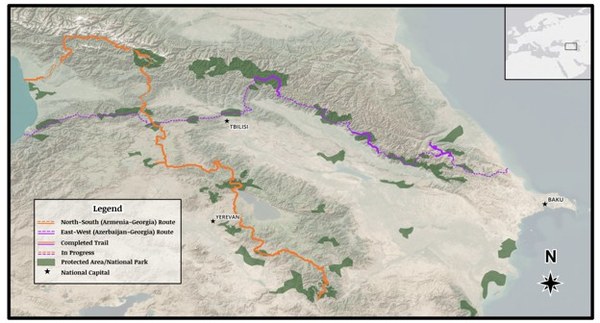
The Transcaucasian Trail (TCT) is a world-class, long-distance hiking trail, which when complete, will span more than 3,000km in length, following the Greater and Lesser Caucasus Mountains through Georgia, Armenia and Azerbaijan,and connecting roughly two dozen national parks and protected areas in the region. Volunteer trail crews began working on the TCT in 2016 in Svaneti, Georgia and in 2017 in Dilijan, Armenia, and as of today, 1500 km of hiking trails have been connected across Georgia and Armenia. A thru-hike across the two countries — though still immensely challenging — is now possible and includes sections of the Svaneti Caucasus described above. The vision ultimately includes expanding the trail all the way across the Greater Caucasus into Azerbaijan. Read more about the trail and its history, get trail notes and maps, and find out how to volunteer and donate at https://transcaucasiantrail.org/en/home.
Hiking Tips for Georgia
- Best Time to Hike:The ideal hiking season in Georgia is from June to September. Outside of this period, some trails may be inaccessible due to snow.
- Accommodation:Many multi-day hikes, especially in Svaneti and Tusheti, have guest-houses or homestays in villages along the route, offering basic amenities and authentic Georgian hospitality.
- Guides and Maps:It’s advisable to hire a guide for more remote regions like Tusheti or challenging routes, though popular trails such as those in Kazbegi can be done independently. Always carry a map or use a GPS device as trail markings can be sparse.
- Permits:No permits are required for most hikes, but for treks close to the Russian border (like in Kazbegi and Tusheti), it’s a good idea to check the latest requirements with local authorities or to go with a local guide.
Getting to Georgia from the United States
There are three international airports in Georgia: Tbilisi, Batumi and Kutaisi. Of these, the airport for the capitol Tbilisi offers the best connections to the mountain hiking regions. International flights to Georgia arrive in Tbilisi from Seattle via Frankfurt, Munich, Istanbul, Doha, Zurich and London Heathrow.
Getting Around in Georgia
Big cities like Tbilisi, Batumi, and Kutaisi have solid infrastructure, including public buses, taxi apps, and good road networks. In rural areas like Tusheti or Svaneti, expect fewer scheduled services, rough roads, and long waits between connections. Moving between trekking regions can take many hours on the road. If you want the flexibility to stop at particular tourist sites and trailheads, a rental car or hired driver are essential. See https://www.expatden.com/georgia/transportation-in-georgia/ for more specifics!
- Seasons: July, August, September, October
- Weather: View weather forecast
- Difficulty: Easy, Moderate, Strenuous, Very Strenuous
- 11,000 ft
- Land Manager: Land Manager Varies
- Parking Permit Required: see Land Manager
- Recommended Party Size: 12
- Maximum Party Size: 14
- Maximum Route/Place Capacity: 14
There are no resources for this route/place. Log in and send us updates, images, or resources.